|
|
portfolio |
 |
  Can You Hear Can You Hear
Me Now?
Alcatel-Lucent USA Inc. reaches out and touches its customers with an engaging mobile event that exceeds its face-time goals by more than 200 percent.
In the 134 years since the telephone was invented, phone companies have always had difficulty communicating with their customers. For example, when early — and rather terrified — users worried you could catch viruses from callers on the other end of the line, the telecommunication giants of long ago used a strategy of marketing with authority figures to ease consumers’ fears. One company even assembled clergy to hear a chorus singing hymns over the phone lines to convince credible influencers of public opinion that the only catchy thing coming over the wires was an angelic tune and not a phone-borne disease.
It’s easy to snicker at that
quaint customer-relations
problem, but even today,
telecomms still wield a similar
strategy of reaching out to
influencers in order to
dial up more sales.
That’s the situation
in which Alcatel-Lucent USA Inc.
found itself. Indeed,
it can even trace
its roots back to those years when the telephone was as much an object of anxiety as it was awe. Co-founded in 1877 by Alexander Graham Bell himself, the Murray Hill, NJ-based company now delivers voice, data, and video technology to a vast range of private corporations and governments worldwide.
However, Alcatel-Lucent felt it still wasn’t getting through to enough of those it pegged as influencers among its clients, despite annual
appearances at more than 100
conferences, seminars, and trade shows, including the International Cellular Telecommunications and
Internet Association show. “We
were getting the
C-suite customers,” says
Lisa Horianopoulos, the company’s director for event marketing in North America, “but we knew from our sales force that we weren’t seeing the influencers who often help guide the buying decisions.”
Those under-the-radar authorities — usually engineers and technical personnel — might subtly guide purchasing
decisions in a corporation the way a president’s unofficial “kitchen cabinet” can informally direct his political agenda. Typically, these influencers don’t often travel to Alcatel-Lucent’s usual venues of trade shows and conferences, and prefer an approach tailored expressly to their needs.
 Recognizing that the company wasn’t connecting with those influencers and wanting to capture more mindshare at all levels among them, CMO Allison Cerra directed the company to find a high-impact way of targeting them that they wouldn’t, well, hang up on. That was when, in an industry whose entire existence is based on communicating by converting sound into disembodied streams of electricity and back again, Alcatel-Lucent decided to reach out and touch customers the old-fashioned way — face to face. “We were going to take our message right into our customers’ backyard,” Horianopoulos says. Recognizing that the company wasn’t connecting with those influencers and wanting to capture more mindshare at all levels among them, CMO Allison Cerra directed the company to find a high-impact way of targeting them that they wouldn’t, well, hang up on. That was when, in an industry whose entire existence is based on communicating by converting sound into disembodied streams of electricity and back again, Alcatel-Lucent decided to reach out and touch customers the old-fashioned way — face to face. “We were going to take our message right into our customers’ backyard,” Horianopoulos says.
The company’s resulting strategy was three-fold: Look at current and prospective customers, learn which products and services are most relevant to them, and then use a mobile exhibit to craft presentations for them that would be almost as individual as their telephone numbers. Aided by its area sales reps, Alcatel-Lucent would also identify the influencers in their respective customers’ companies (they ranged across the board from C-level management to IT workers), and what they most wanted to know about — wireless broadband, perhaps, or zero touch photonics, a highly advanced networking technology. It designed the mobile event to address those needs, along with recreation opportunities and information that would draw these clients in like a tractor beam.
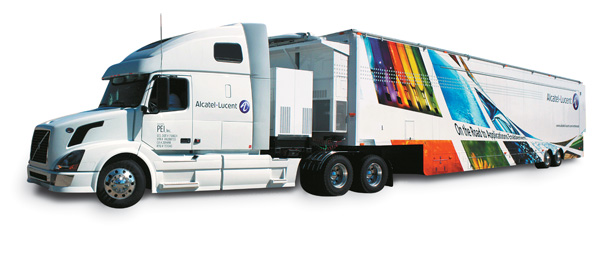
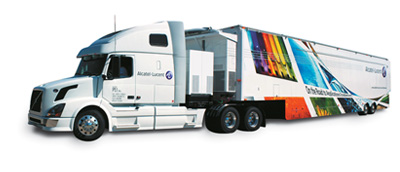
With the help of Chestnut Ridge, NY-based MC², Kentucky Trailer Technologies of Walled Lake, MI, and Nashville, TN-based PK Pictures Inc., the company soft launched the “Alcatel-Lucent Mobile Marketing Tour” in late November 2009 with a 53-foot, double-expandable trailer in Plano, TX. After that single stop, the company decided to go full bore in 2010, slating more than 30 cities for week-long stays at a pace of about four per month. To stoke clients’ interest in the tour, Alcatel-Lucent sent a save-the-date e-mail about a month in advance, and had the sales teams call and alert target clients as well. The company also listed a vanity URL in the e-mails to track and gauge customers’ interest regarding the tour.
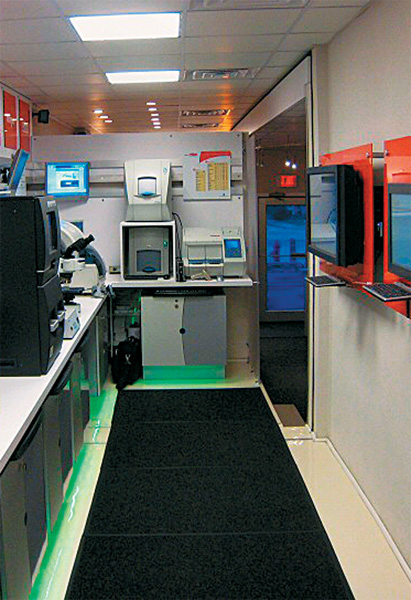
Arriving outside a customer’s headquarters on a Monday, the on-board staff of three performed a three-hour setup. Then they spent the rest of the day rehearsing with the local sales reps and technical presenters on how to use the 88 46-inch LCD monitors that covered the trailer’s interior.By Tuesday morning when the doors opened, the tour was ready for business. The staff then welcomed customers at a rate of 60 to 80 per day.
Attendees may have expected corporate drones from “Dilbert,” but what they got was more like entertainment from Disney. Inside the trailer, customers were surrounded by IMAX-like presentation areas, where company staff showed 15- to 60-minute videos on topics as diverse as e-health care and next-generation wireless technology. With area sales reps providing insight on their customers at each location — especially the influencers the company rarely met at trade shows and other events — Alcatel-Lucent was able to optimize the amount of time and information the clients received.
 Afterward, if the weather was temperate enough, customers could chill in an awning-covered reception area outside and chow down on snacks, including pastries and burgers. And, should they be so inclined, attendees could climb a walkway that led to an observation deck on top of the trailer, where they could sit, relax, and take in the wide-open view. Afterward, if the weather was temperate enough, customers could chill in an awning-covered reception area outside and chow down on snacks, including pastries and burgers. And, should they be so inclined, attendees could climb a walkway that led to an observation deck on top of the trailer, where they could sit, relax, and take in the wide-open view.
With the tour conveniently staying in one place for a week, attendees had the opportunity to visit again and again ... and again. Returning several times over the course of the tour’s long layover, visitors were able to catch more presentations and ask follow-up questions based on what they’d seen.
Without a previous mobile tour to serve as a benchmark, however, Alcatel-Lucent decided to start small and uncomplicated when it came to measuring the tour’s success. It calculated mindshare based on the amount of time customers spent in the trailer and the number of follow-up meetings booked. Alcatel-Lucent initially hoped 100 to 125 customers would visit an average of one hour overall at each stop, but it quickly discovered that attendees were spending three to five hours at the tour, exceeding its face-time goal by at least 200 percent.
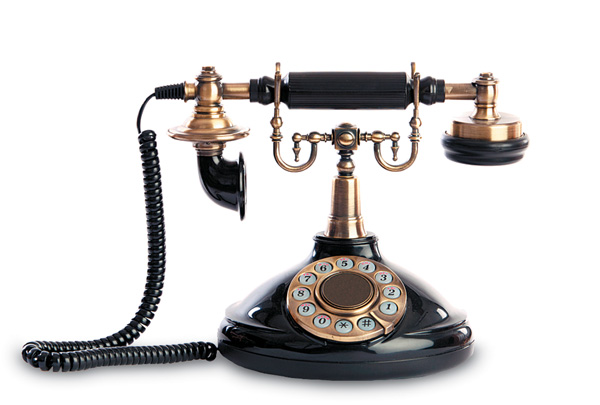
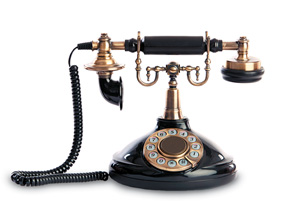
By proactively reaching out to current clients and the unofficial influencers inside their respective organizations with custom-tailored mobile events, Alcatel-Lucent created a marketing promotion that, like the iconic black rotary phone introduced in 1937, set a standard for the company to build on — and for others
to follow for years to come.
  The Ailment and The Ailment and
the Odyssey
To revive its relationship with customers, BioMérieux Inc. prescribes a booster shot of mobile events, and achieves a 1,000-percent return on investment.
Back when cathedrals were the skyscrapers of ancient Europe, caravans weighted down with the cutting-edge medical science of the day traveled through the dark forests to reach their far-flung audiences. These ancestors of 21st-century mobile marketers brought healing salves and miracle balms to thousands of customers who would never otherwise have known about them.
Today, the Dark Ages are long vanished, but the strategy behind those mobile tours of yore remains for companies like BioMérieux Inc. The Durham, NC-headquartered manufacturer of diagnostic equipment for food, pharma, health-care, and other industries, had traditionally displayed its wares — some of which weighed 300 to 400 pounds each — in only the most highly attended of the 140 trade shows at which it exhibits annually. But in 2008, when an ailing economy caused traffic at those exhibitions to plummet by 25 to 33 percent, the company prescribed not a radical
new remedy, but an evolution of an existing strategy:
a mobile event program.
 In fact, BioMérieux already had a sizeable mobile-marketing program in place. In May 2006, it sent a 45-foot-long bus on what it dubbed the “Innovation in Motion” tour to 54 cities. Showing four types of lab diagnostic equipment at medical facilities and food-related businesses such as Cargill Inc., the company continued into 2007, when the tour traveled to 75 more cities. But now, with trade show attendance in distress, and in a highly competitive market where customers need to test and examine the complex and often costly technology in person, BioMérieux’s need to cultivate its customers wasn’t just important — it was mandatory. Thus, the company decided on an even stronger dose of its own medicine. In fact, BioMérieux already had a sizeable mobile-marketing program in place. In May 2006, it sent a 45-foot-long bus on what it dubbed the “Innovation in Motion” tour to 54 cities. Showing four types of lab diagnostic equipment at medical facilities and food-related businesses such as Cargill Inc., the company continued into 2007, when the tour traveled to 75 more cities. But now, with trade show attendance in distress, and in a highly competitive market where customers need to test and examine the complex and often costly technology in person, BioMérieux’s need to cultivate its customers wasn’t just important — it was mandatory. Thus, the company decided on an even stronger dose of its own medicine.
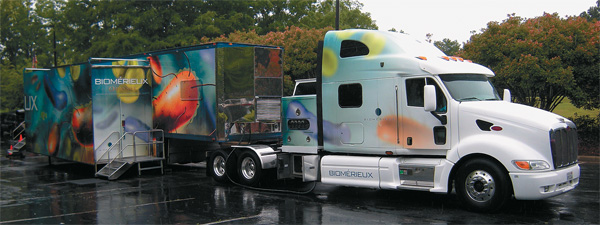
In May 2008, BioMérieux and the Pittsburgh division of Milwaukee-based Derse Inc. designed and then dispatched a much more impressive 85-foot tractor-trailer (operated by Las Vegas-based ExhibiTrailers) on what they dubbed the “Odyssey Tour: Advancing Diagnostics to Improve Public Health.” Making 50 stops the first year, the Odyssey appeared at hospitals and clinics much the same as its predecessor, “Innovation in Motion,” had.
BioMérieux lured its target audience of lab managers and technicians with a flurry of pre-tour direct mail, e-mail, and bi-monthly newsletters promising something they wanted but didn’t have sufficient time or adequate budget to get: hands-on experience with BioMérieux’s systems for everything from emergency medicine to emerging pathogens. But this tour wasn’t just about the technology, it was also about the educational opportunities they could experience to advance their careers.
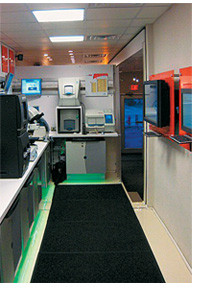
Knowing that many of its current clients pursue Professional Achievement in Continuing Education (PACE) certification in their medical-technology field, BioMérieux tweaked its mobile strategy to offer a lure that would be difficult for them to resist — presentations and training in a slide-out, 15-by-20-foot classroom that could host up to 18 visitors at a time. Surrounded by BioMérieux branding and products, some visitors spent hours inside attending sessions on antibiotic stewardship, microbial genotyping, and more. While some classes offered general updates on the medical-technology field, others offered credits toward PACE certification.
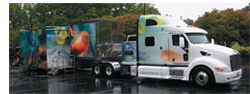 When clients boarded the Odyssey, BioMérieux staff — consisting of up to 10 sales reps and tech consultants from the regional offices — collected their contact info and escorted them to the galley for refreshments. After they noshed and networked, visitors could watch presentations
on 50-inch screens about the BioMérieux hardware that verifies the processes for producing vaccines, insulin, and intravenous fluids are safe. Then they could observe staff demonstrating the Odyssey’s 10 different pieces of equipment, including BioMérieux’s new Tempo and Vidas technologies that ensure food safety, as well as microbe-mapping devices that analyze bacteria’s DNA to sleuth out where it originated. The company also focused on an industry hot topic: multidrug-resistant organisms (MDRO). The staff explained how BioMérieux technology could help prevent the spread of MDRO — aka super bugs — that affect more than 1.7 million Americans each year. When clients boarded the Odyssey, BioMérieux staff — consisting of up to 10 sales reps and tech consultants from the regional offices — collected their contact info and escorted them to the galley for refreshments. After they noshed and networked, visitors could watch presentations
on 50-inch screens about the BioMérieux hardware that verifies the processes for producing vaccines, insulin, and intravenous fluids are safe. Then they could observe staff demonstrating the Odyssey’s 10 different pieces of equipment, including BioMérieux’s new Tempo and Vidas technologies that ensure food safety, as well as microbe-mapping devices that analyze bacteria’s DNA to sleuth out where it originated. The company also focused on an industry hot topic: multidrug-resistant organisms (MDRO). The staff explained how BioMérieux technology could help prevent the spread of MDRO — aka super bugs — that affect more than 1.7 million Americans each year.
The road show’s results grew like something out of “The Andromeda Strain.” In cities where the trailer stopped at clinics, labs, or hospitals, the tour received an average of 70 or more visitors. The length of the visits ranged from 15 to 30 minutes or more, which is as much as six times as long as the average visitor lingers in one of the company’s trade show booths. Moreover, the return on investment for the tour exceeded 10 times the cost, surpassing expectations by about 50 percent.
While the tour stopped in more than 70 cities in 2009, it plans to hit at least 35 more in 2010. Meanwhile, its metrics,
much like bacteria, have adapted to its environment
and changed to suit the company’s needs. Instead of just counting and tracking the number of attendees at each stop, BioMérieux now tabulates how many attendees are present from any given institution, discovering a direct correlation between how well represented that institution is and its likelihood of future purchases. By evolving an existing strategy and taking its Odyssey Tour directly to clients, BioMérieux continues to spread its brand awareness around the country.
  Warning: This is Warning: This is
a Marketing Test
National Instruments Corp. tests mobile events to sell its measurement systems and surpasses its sales goals by as much as 200 percent.
After the Great Depression pummeled the country’s long-held belief that the future might be brighter than the bleak present, businesses turned to events to lift beleaguered spirits. Beginning with the 1933 Century of Progress Exposition in Chicago, companies held extravagant events where they presented attendees with long-distance telephone calls, color TVs, and robots that talked. With eyes as big as the moon and mouths open in perpetual astonishment, visitors crowded into these events as if they were the seventh game of the World Series. Capitalizing on that enthusiastic reception, many companies sent these events on the road in locales as diverse as San Diego, Dallas, Cleveland, and beyond to give those who rarely traveled in those lean years a chance to witness the scientific marvels for themselves.
So when National Instruments Corp. (NI) needed to reconnect with its client base during an economic crisis that has now dragged on 70 percent longer than the worst of downturns since the Depression, the maker of hardware and software that turns standard PCs into test and measurement systems for industrial automation went back to the future.
NI turned to the same strategy that worked so well back when the cutting-edge technologies of the day were nylons and ballpoint pens: a mobile exhibit that brought new technologies to an audience eager to see them but who were often unable to, hamstrung by their companies’ slashed budgets.
The Austin, TX-based company has had an extensive trade show and seminar program to reach a line-up of clients that counts Texas Instruments Inc. and Microsoft Corp. in its ranks. Whether it was microscopically small expos like the Instrumentation Representatives Information Services (IRIS) show, with nearly 150 attendees, or much larger shows such as the Embedded Systems Conference (ESC), with approximately 3,000, NI needed them all to cultivate long-term relationships with buyers.
That’s because those customers are often finicky engineers — the plaid-shirted, taped-eyeglasses, pocket protector-wearing cliché of popular culture — who shy away from marketing hyperbole like vampires do tanning beds, and who tend to start out doing business with small, logical steps, making conservative purchases. Once their trust has been won with a reliable product, hands-on experience, and a face-to-face relationship with technically knowledgeable staff, they may become repeat buyers.
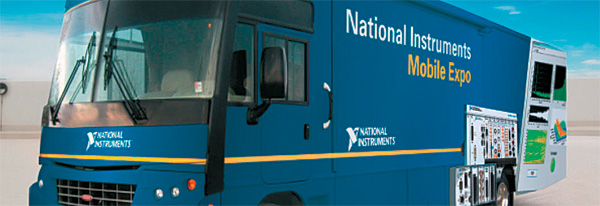
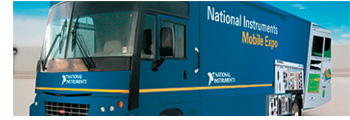
 However, with the economy and overall trade show attendance becoming as sluggish as a dial-up modem, it was more difficult to jump-start the sales cycle — which often drags on for months and sometimes years. So in 2008, NI decided to hit the road fast and furious with a mobile event that would initiate new relationships with customers and rekindle old ones. Rigging a 38-foot trailer with five areas to demonstrate several of its products, the company launched a nationwide road show it dubbed the “NI Mobile Expo Tour” in February of 2008. However, with the economy and overall trade show attendance becoming as sluggish as a dial-up modem, it was more difficult to jump-start the sales cycle — which often drags on for months and sometimes years. So in 2008, NI decided to hit the road fast and furious with a mobile event that would initiate new relationships with customers and rekindle old ones. Rigging a 38-foot trailer with five areas to demonstrate several of its products, the company launched a nationwide road show it dubbed the “NI Mobile Expo Tour” in February of 2008.
But like PC users who have done everything right with their computers except plug them in, NI overlooked one basic but utterly crucial component the tour couldn’t succeed without: publicity. At first, the company only mentioned the tour in a routine e-mail newsletter it sent out to customers roughly every six weeks. As a result of that so-low-key-you-couldn’t-hear-it promotion, attendance at the first few events drew as much as 30 percent fewer people than anticipated. “Just because you build it, does not mean they will come,” says Chris Bombarger, NI’s events manager. “You’ve got to promote it.”
NI learned its lesson fast. The company got back up to speed with
a two-step approach
to promote the events. First, NI’s sales force identified “foxes” inside targeted companies. Not the carnivores with the pointy muzzles and bushy tails, but NI-friendly influencers — a category that ranged from executives in C-suites to members of purchasing departments — who would spread the word about the tour inside their particular high-tech henhouses. Once sales reps pinpointed those evangelists, NI called and e-mailed them starting approximately one month before the truck arrived until two days before it drove up. It also snail-mailed each fox up to 20 posters and 100 fliers advertising the upcoming NI visit that they could then post and pass out to others in their organizations. Next, its sales reps sent pre-recorded voicemails to the foxes over the course of a month as reminders of NI’s upcoming visit.
When the trailer arrived at its destination at around 9 or 10 a.m., the event staff, consisting of a driver and a few area sale reps, set it up in less than 15 minutes. The simple prep — turn on the testing machines inside, open the doors, pull out an awning, and set up a folding table for lead collection — was all that was necessary, because NI deliberately designed the trailer to be as free of frills as an Amish dress. It knew how suspicious its audience, especially engineers, were of marketing garnishes and hoopla. Inside, customers found five areas to show-and-tell several
of NI’s products, such as its audio- and video-testing tools — such as a wireless tire-pressure monitoring system and a radio-frequency identification (RFID) monitoring device for electronic toll-collection systems now common in an estimated 25 states. It also demonstrated the speed of its PXI bus, the electrical conductor between several circuits that allows instrument-system developers to connect measurement and control sectors on computer hardware.
 While each demonstration only took three to five minutes — roughly the same amount of time as in-booth demos — anecdotal reports from NI suggested that, on average, visitors stayed longer at the event than they did in the exhibit at shows. Comfortable on their home turf, mobile-tour attendees felt their time on site was more flexible than at a trade show, where they’re sprinting to as many booths as they can reach before the show closes. Just as importantly, since many of the tour’s attendees were often the unofficially influential who typically don’t get the opportunity to travel to trade shows, they relished being the focus of vendors’ attention as well as having the opportunity to talk shop with them and pore over their product offerings. While each demonstration only took three to five minutes — roughly the same amount of time as in-booth demos — anecdotal reports from NI suggested that, on average, visitors stayed longer at the event than they did in the exhibit at shows. Comfortable on their home turf, mobile-tour attendees felt their time on site was more flexible than at a trade show, where they’re sprinting to as many booths as they can reach before the show closes. Just as importantly, since many of the tour’s attendees were often the unofficially influential who typically don’t get the opportunity to travel to trade shows, they relished being the focus of vendors’ attention as well as having the opportunity to talk shop with them and pore over their product offerings.
Traveling to a total of 125 companies in 2008 and 2009, NI received 30 to 100
visitors per stop, exceeding its expectations by about 10 percent. It also measured success in what it termed “quote dollars” — i.e., quotes for products officially requested by customers within 60 days
after the tour visited a company. While staying as silent as a mime about the specific
amounts involved, NI’s Bombarger discloses that quote dollars surpassed the company’s goal by 10 to 20 percent.
With a track record like that in tow, NI extended the tour for 40 weeks in 2010, even as the harsh economic climate persists with the tenacity of a stalled weather front. “In a time of tight budgets, customers can’t always come to you,” Bombarger says. “That’s why the tour is more than just a simple promotional vehicle. It’s an investment in our customers, whose dividends will pay off in the future when things are a little brighter.” e
|
|
|
|
 |