working ideas |

|

Cerner Corp., an IT solutions provider for the health-care industry, wanted as many of its associates as possible to attend a prep meeting prior to the 2007 Cerner Healthcare Conference. But it couldn’t require all of them to travel to the Kansas City Convention Center and attend in person. So Cerner made the meeting, which included a PowerPoint presentation, available via live teleconference, and for later viewing by taped broadcast using Microsoft Live Meeting. By making the information available in three different formats, Cerner made sure its message got to employees — whether or not the employees actually got to the event.
|


 Technical content is crucial to the success of Honeywell Process Solutions’ Annual Honeywell Users Group (HUG) Americas Symposium. Getting the company’s busy engineering customers to share field-implementation stories and technical solutions at the event, however, was a struggle. “Even though many engineers want to present at the event, they don’t necessarily have the time to work on all of the documentation necessary to answer our call for proposals,” says HUG Americas director Mara Weber. Weber’s solution? Do the work for them. Technical content is crucial to the success of Honeywell Process Solutions’ Annual Honeywell Users Group (HUG) Americas Symposium. Getting the company’s busy engineering customers to share field-implementation stories and technical solutions at the event, however, was a struggle. “Even though many engineers want to present at the event, they don’t necessarily have the time to work on all of the documentation necessary to answer our call for proposals,” says HUG Americas director Mara Weber. Weber’s solution? Do the work for them.
In 2004, she engaged Industry Source, an Arizona-based writing-services firm, and began offering free writing assistance to those interested in presenting at the event. Representatives from Industry Source use a standard interview template to gather data from Honeywell’s customers, then assist the customer presenters by turning that information into presentable content. The services include PowerPoint slide creation and graphics support, and abstract, biography, and white-paper writing.
So far, the strategy has worked, resulting in a 30-percent increase in the number of session proposals Honeywell has received since 2004. “Before, we were begging for proposals and often had to fill the agenda with Honeywell marketing content,” says Weber. “Today, we actually have to turn some customers down because so many proposals are being submitted.”


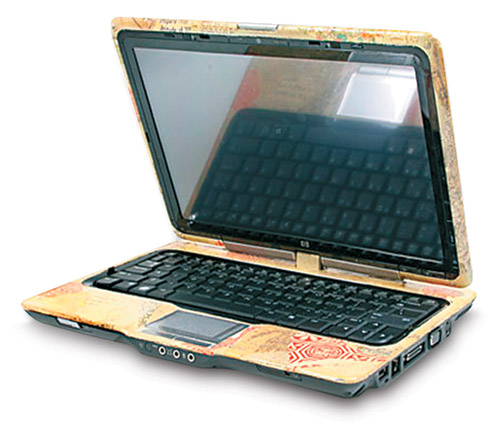
 In today’s fashion-forward world, everything from cell phones to iPods are blinged out or bedazzled. To keep up with the trend — and
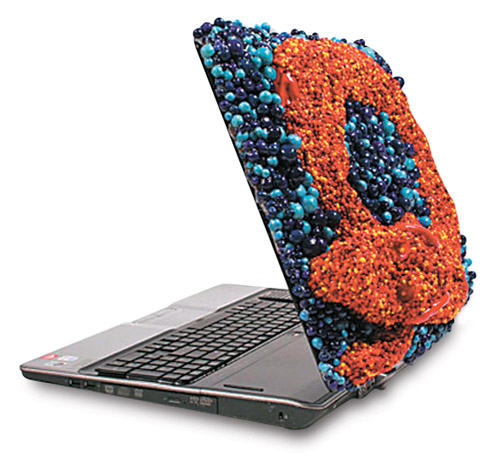
to do a little good in the process — PC Magazine teamed up with Hewlett-Packard Development Co. to create The Computerlicious Design Experience. In today’s fashion-forward world, everything from cell phones to iPods are blinged out or bedazzled. To keep up with the trend — and
to do a little good in the process — PC Magazine teamed up with Hewlett-Packard Development Co. to create The Computerlicious Design Experience.
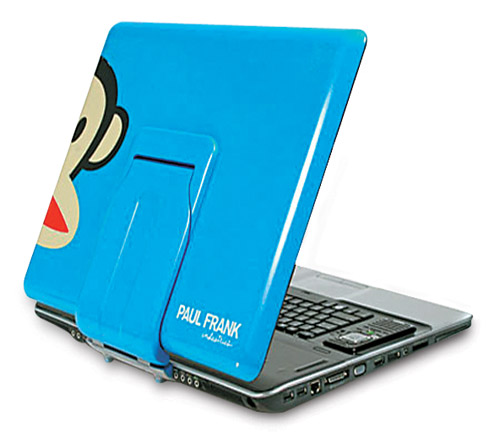
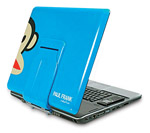
To promote its 25th anniversary party, held at MGM Grand’s Tabu Ultra Lounge, PC Magazine asked 10 fabulous and fad-conscious designers — such as sculptor Peter Harper, handbag diva Rebecca Minkoff, home furnishings designer Suzan Fellman, and musical artist Nelly — to design and personalize an HP laptop that would be displayed during the event. Using a variety of experimental and environmentally conscious materials, such as metal, spray paint, markers, and leather, the designers created tricked-out, fully functional works of art.
|
 Starting in December 2007, PC Magazine promoted its anniversary event by featuring the chosen Computerlicious designers Starting in December 2007, PC Magazine promoted its anniversary event by featuring the chosen Computerlicious designers 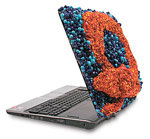 on its Web site, www.go.pcmag.com/computerlicious, which showcases images of the designs along with artists’ profiles and behind-the-scenes footage of the artists at work on their creations. on its Web site, www.go.pcmag.com/computerlicious, which showcases images of the designs along with artists’ profiles and behind-the-scenes footage of the artists at work on their creations.
Following the event, which attracted more than 300 people including key technology leaders, each designer laptop was auctioned off online, with all proceeds benefiting the nonprofit National Cristina Foundation, which donates computer equipment to nonprofit organizations and schools.
In one fell, yet fashionable, swoop, PC Magazine not only generated badly needed bucks for a worthy cause, it created an event promotion that was as stylish as it was successful.
|

In 2007, the Project Management Institute Inc. (PMI) decided it was time to punch up the big reception at the 39th edition of its annual North American Global Congress, which attracts nearly 3,000 project-management pros each year. Problem was, the entertainment budget was a squeaker.
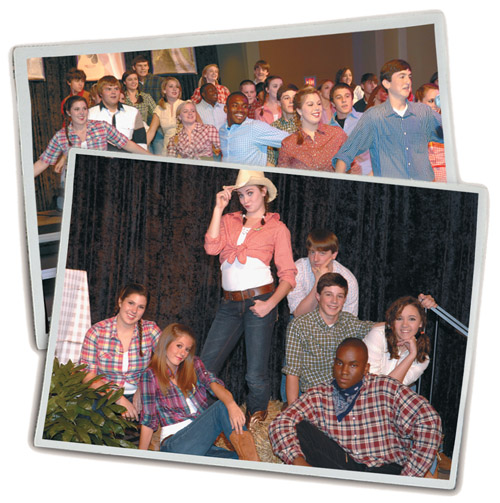
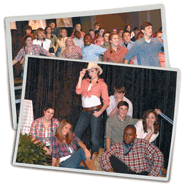 Thankfully, PMI reception sponsor International Institute for Learning (IIL) devised a creative solution that had attendees kicking up their heels at the hoedown-themed evening reception. As guests entered the room, they found young people dressed in cowboy attire and posed around the room, mannequin-like, on hay bales. As the reception ramped up, the cowboys and cowgirls surprised guests with a live choreographed country-music performance. Thankfully, PMI reception sponsor International Institute for Learning (IIL) devised a creative solution that had attendees kicking up their heels at the hoedown-themed evening reception. As guests entered the room, they found young people dressed in cowboy attire and posed around the room, mannequin-like, on hay bales. As the reception ramped up, the cowboys and cowgirls surprised guests with a live choreographed country-music performance.
But the real surprise was that these performers weren’t pros — they were high-school students. The strategy is the brainchild of IIL special events director Archie Messersmith, who seeks out event-city high schools with strong show-choir programs, then offers them a budget-friendly $1,500 to perform at the reception.
Surprisingly, it has been easy to convince the school principals to allow the kids to perform. “It’s a win-win. The kids earn $1,500 for their performing-arts department while experiencing real, live performing,” Messersmith says. “Our guests love it because it reminds many of their own kids. If we hired pros, it wouldn’t be as exciting.” The only challenge, he reports, is ensuring the reception’s bar vendors do not serve alcohol to the underage performers.
|

When apparel company Hanesbrands Inc. wanted less brand “impression” and more one-on-one experience for its new ComfortSoft men’s underwear, it took a “Hanes-on” approach to product trials.
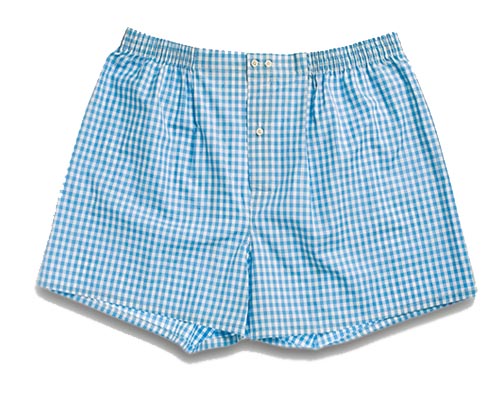
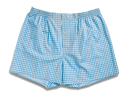 Managed by St. Louis-based brand-marketing firm Ngage, the Hanes ComfortZone road show pops up at guy-friendly venues such as baseball games, drag races, and country-music concerts. There, “Comfort Force Girls” draw men to ComfortZone changing booths, where the more audacious visitors can don pairs of ComfortSoft underwear on the spot, walking away in the new drawers while their old pairs are sealed in bags labeled “toxic waste.” Outside of the changing booths, Remote ComfortZones welcome men with plasma TVs, couches, food, drinks, and music — everything a guy needs to feel at home. Managed by St. Louis-based brand-marketing firm Ngage, the Hanes ComfortZone road show pops up at guy-friendly venues such as baseball games, drag races, and country-music concerts. There, “Comfort Force Girls” draw men to ComfortZone changing booths, where the more audacious visitors can don pairs of ComfortSoft underwear on the spot, walking away in the new drawers while their old pairs are sealed in bags labeled “toxic waste.” Outside of the changing booths, Remote ComfortZones welcome men with plasma TVs, couches, food, drinks, and music — everything a guy needs to feel at home.
During just four weeks in 2007, more than 250,000 consumers experienced the ComfortZone environment, while another 53,000 visitors hit the ComfortZone Web site.
|

United Parcel Service of America Inc. (UPS) can track its first package back more than 100 years to the company’s founding as the bicycle-based American Messenger Co., in Seattle, in 1907. But despite its rich history, the global package-delivery service decided to focus on the future for its centennial celebration in 2007.
“We are proud of our heritage, but the focus of the celebration was not our history,” says CEO Mike Eskew. “This Centennial was meant to mark the start of UPS’ next 100 years and the bright future that we are pursuing right now.”
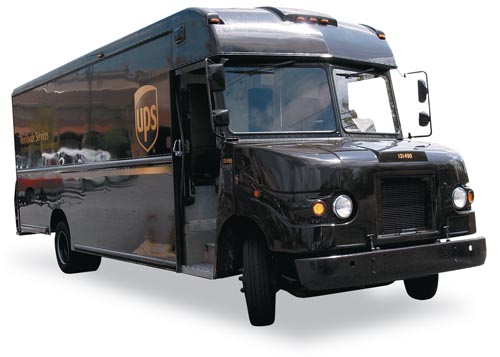
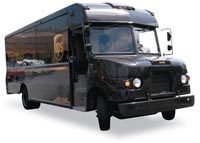 The now Atlanta-based company, along with St. Louis-based Spark Agency, created a mobile exhibit to take UPS’ centennial celebration on the road for both employees and customers. Traveling to 62 cities across the United States and to seven international locations, the road show, which launched in New Orleans to celebrate the reopening of a package facility damaged during Hurricane Katrina, featured interactive exhibits and activities to teach visitors about the company’s values and achievements. The now Atlanta-based company, along with St. Louis-based Spark Agency, created a mobile exhibit to take UPS’ centennial celebration on the road for both employees and customers. Traveling to 62 cities across the United States and to seven international locations, the road show, which launched in New Orleans to celebrate the reopening of a package facility damaged during Hurricane Katrina, featured interactive exhibits and activities to teach visitors about the company’s values and achievements.
Although the events nodded at the company’s history with a corporate timeline, the majority of the exhibits emphasized the company’s technological advances, its commitment to community service, and employees’ accomplishments. Customer kiosks throughout the event identified how UPS worked with partners and customers to solve their business challenges, while a “UPSers wall” displayed pictures of 100 employees recognized for “service excellence in their everyday work.”
Attendees could also experience first-hand a day in the life of a UPS employee through the UPS Challenge, in which customers competed in simulated activities such as loading a package hand-truck and balancing cargo on a jet. Participants could even put the signature brown trucks to the test, racing miniature UPS trucks pinewood-derby style.
UPS underscored its future-focused theme with the final display in the exhibit, which featured a picture of an astronaut with the slogan, “To the moon by noon. Wherever the future is going, we’re going too.”
|
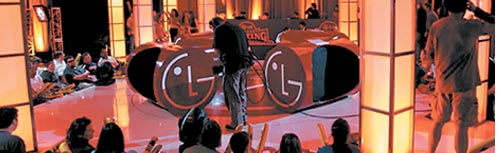

RU IM savvy? Chances are, if yr under 20, it’s yr favorite way 2 get the 411 to and from your social network. That means big business for mobile-communications companies. As IMing (and the mobile market as a whole) heats up, so does the competition for the fickle digits of young buyers, who flock to the newest, coolest, gadgety-est mobile phones.
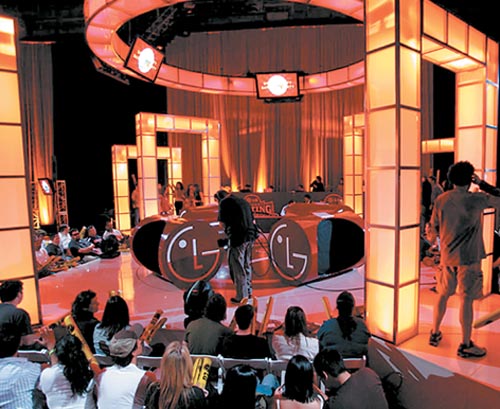
To get the attention of these fleet-fingered IMers, LG Electronics MobileComm USA Inc., which aims to take second place in the North American mobile market away from rival Samsung, offered up a series of competitive events to learn who had the fastest — and most accurate — fingers in the West (and East, for that matter).
Called the LG National Texting Championship, entry was free and open to anyone who owned an activated LG EnV or V phone. The tournament, which featured preliminary rounds on the West Coast and in New York before the national final in New York, pitted groups of text masters against one another in several rounds. Each texter was tasked with typing a message that appeared on overhead screens; the texter to do so in the shortest amount of time — with no mistakes or abbreviations — and send it to the correct recipient advanced to the next round of competition.
The event winner was a 13-year-old Pennsylvanian named Morgan Pozgar, who walked away with a $25,000 prize and the title of LG National Texting Champion after texting “supercalifragilisticexpialidocious” in a mere 42 seconds. But the big winner was LG, which scored runaway Google domination with more than 43,000 event mentions, including videos on prominent gearhead Web sites and media channels such as CNET, InformationWeek, MSNBC, YouTube, and Slashphone.
|

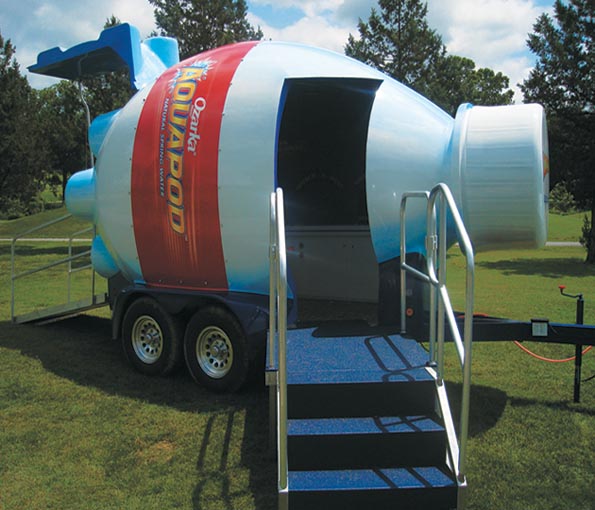
In a beverage market that is saturated with corn syrup-laden juice boxes, sodas, and drink mixes, Nestlé’s Aquapod — an 11-ounce spherical-shaped bottle of water — has to make a lot of noise to get noticed. So, Nestlé teamed up with Universal Consulting Group to put together the Aquapod Mobile Marketing Tour. The goal? To convince kids that the Aquapod is a fun alternative to the bright colors and sugary-sweet flavor of other beverage options, while underscoring the parent-pleasing health benefits as well.
An 11-foot Aquapod vehicle was outfitted with kid-friendly games and accompanied by the Aquapod Squad, a group of brand ambassadors that educated kids and parents on the importance of drinking water.
The tour stopped in 117 cities in 2006, and 39,000 children participated in Aquapod activities. In the end, attendees drank it all in — including 600,000 product samples.
|
|