exhibit design |
 |
|

 esign, as I see it, is arguably the No. 1 determinant of whether a product-service-experience stands out — or does not, says business-management guru Tom Peters in his book, “Tom Peters Essentials: Design.” “Damn few ‘get it,’” he explains. “Most people consider design a surface thing, a ‘prettifying’ thing, an after-the-fact cosmetic-makeover thing … but design is right at the heart and soul of business.”
Peters, along with the Apples, Nikes, and Targets of this world “get it.” They know beyond a shadow of a doubt that design-driven products, experiences, and businesses — and yes, even trade show exhibits — pay big dividends. And like it or not, you “get it,” too.
When your vacuum sucked its last dust ball, you didn’t settle for Sears’ newest Hoover. You hightailed it to Target for a Dyson — a cyclone-wielding, HEPA-filtering, dust bunny muncher. Plus, you banished the free toothbrush from your dentist to grout-scrubbing duty, and picked up a colorful Colgate 360 with the built-in tongue scrubber.
But even if you “get it” from a design standpoint, what say you of color?
What does your exhibit’s color palette say about your company and its products and services? Are your color combinations and placements driving traffic to key points in your exhibit? Do your colors judiciously highlight key products and messages? Is you color palette outdated?
While many exhibit managers have boldly marched alongside Peters into the design-driven frontier, they still view color as the Paris Hilton of exhibit design — eye-catching to be sure, but utterly lacking in substance. Rather, color and form are to design what kindling and sparks are to fire. Color is an inextricable element of design — one that speaks volumes about your company, one that drives or limits sales, and one for which exhibit managers bear ultimate responsibility and control.
Amid the design-driven revolution, it’s time to ratchet up your color consciousness — or at least take your color wheel out for a spin — to revisit the critical role color plays in exhibit design and effectiveness as well as the basic connotations and emotional reactions associated with specific colors.
Basic Instincts
If you’re still thinking, “Color is just fluff, and it has no bearing on how my company is perceived or how many leads we collect,” consider your toilet brush.
The funky blue handle on Michael Graves’ “magic wand” was one of the main reasons you loved the brush. Similarly, color is the shiny bauble that makes you think you need a tongue-brushing toothbrush available in trendy shades of pastel green, blue, purple, and orange — or a dirt-sucking Dyson in shocking shades of pink, purple, yellow, and blue. It’s why Karim Rashid’s “Oh Chair” in jarring red is oh so seductive. It’s why you’re keen on the colorful iPod nano, when Bill Gates is your hero. And it’s why you ignore plain stand mixers and drool over the KitchenAid version, available in hues such as mango, boysenberry, bayleaf, and cinnamon.
“Color is an attention-getting tool — it’s often the first thing the eye sees when it looks at an object,” explains Leatrice Eiseman, color consultant, color forecaster, author, and founder of the Eiseman Center for Color Information and Training in Bainbridge Island, WA. “When it comes to non-verbal communication, color is the most instantaneous way to convey messages and meanings.”
In fact, according to Eiseman, people have no choice but to pay attention to color. “Humans have a psychological, physiological, and associational response to color, which is so engrained in the human psyche that we respond to color without overtly knowing we’ve had a reaction,” says Eiseman, also the director of the Pantone Color Institute, where she participates in research regarding consumer color preferences and contributes to Pantone’s color forecasts.
“For example,” she continues, “humans can’t help but pay attention to red. It’s the color of fire and blood, which are both life sustaining and life threatening. When we see red, there’s a physiological reaction, and we can’t help but pay attention to the color.” This instinctual reaction is exactly why red is used on fire trucks, stop signs, and traffic lights, and why red cars get the most traffic tickets.
|
Color Commentary
People often have instinctual responses to color, which are typically based on past experiences or their environment (how many of us were taught that red means hot, and blue means cold?). In her book, “Pantone Guide to Communicating with Color,” Leatrice Eiseman offers the following generalizations about color connotations, providing insight into what a particular color says about your company or your product. |

YELLOW
Yellow says sunshine, light, and warmth. Light yellow is cheerful, mellow, and
soft, and may be described as delicious and citrusy. However, the yellow/black combination triggers instinctual associations to stinging insects, which makes it a powerful, attention-getting combination for signage. |

BROWN
Color of hearth, home, and earth, brown exudes substance and stability, and it’s considered durable, wholesome, and organic. Designer coffees and luscious chocolates have elevated brown to a new sophisticated stature filled with rich espresso colors, sensual tastes, and polished brown leathers. |

RED
Playing off our instinctual responses, red is virtually unignorable. It’s aggressive, passionate, provocative, exciting, seductive, dynamic, and sexy. When red tones are deepened to burgundy, people still view the tones as exciting, but also rich, refined, expensive, and authoritative. |

GREEN
Most people associate green with nature, foliage, freshness, spring, and renewal. Deep greens and emerald greens are elegant, safe, and secure, conjuring images of money and prestige. Yellow-green hues are fabulous for floral motifs, however they are often associated with illness. |

NEUTRALS
Beige, gray, and taupe impart dependability and durability. Like ancient buildings, they are solid, enduring, and classic. Always in style, neutrals are safe and non-offensive, and they won’t date a product. Silver grays suggest a technologically advanced look and minimal, sparse, and sleek spaces. |

PINK
Shocking hot pinks offer a feeling of youth, fun, excitement, and wild abandon. Vibrant, voluptuous pinks, however, offer a more sophisticated appeal, and magenta and fuchsia are perceived as sensual and theatrical. Lighter pinks offer a sense of sweetness, romanticism, and healthy optimism. |

BLUE
The unending symbol of water and sky, blue is reliable, dependable, committed, and trustworthy. While it inspires confidence, it is also calming, restful, soothing, and tranquil. Navy blues suggest authority and credibility, brilliant blues are dramatic and dynamic, and light blues are playful. |

WHITE
Imparting purity, clarity, cleanliness, and simplicity, white is the ultimate contrast to black. Pure white is the minimalist clean slate against which all other colors can contrast. Off whites are friendly, while vanilla and creamy whites are perceived as delicious, light, pleasant, and tasty. |

ORANGE
Orange is playful, gregarious, happy, and childlike. In graphic applications, however, it can provide a giddy, comedic, and almost cartoon-like impression. Radiating warmth and vitality, orange does well in ethnic themes and cultures. Lighter shades suggest nurturing and approachability. |

PURPLE
Radiant intensities suggest New Age philosophies, which offer a futuristic quality appropriate for cutting-edge technologies. Deep purple is regal and majestic, suggesting higher value. Lavender suggests sweet tastes and floral scents, and its connotations are sentimental and genteel. |

BLACK
Black is perceived as impenetrable, powerful, and dramatic. Somber associations of the past have given way to connotations of sophistication, drama, and elegance. Black seems to weigh more than other colors, offering special appeal
to equipment for which weight implies durability. |
|
On the other hand, blue is the color of water and sky — constants in every part of the world and throughout all of human history. Thus, blue conjures associations of constancy, reliability, trustworthiness, and confidence — which is why navy blue is the color of choice for most police uniforms, why surgeons wear blue scrubs, why
so many company logos include blue, and why Big Blue isn’t Big Purple.
In the world of exhibits, then, color is not only the first thing attendees can’t help but see in your booth, but when paired with effective design, color is the magnet that draws attendees into your exhibit and out of the sea of sameness that surrounds them.
Once inside your space, color serves multiple purposes — as a non-verbal way-finding tool leading attendees through your exhibit and key areas of interest, a spotlight drawing attention to key products in low-traffic areas, and a psychological alarm clanging out messages in bright shades of red. Color draws attendees’ immediate and instinctual attention, and if the exhibitor has chosen wisely, color speaks volumes without uttering a word.
|
The History of Color
Color is a reflection of what’s going on in society — including everything from gender roles and fashion trends to military actions and economic transitions. So if you want to know where color is headed, your first indicator is the social and economic world around you. Leatrice Eiseman takes us on a tour of color throughout the ages. Highlights include the popular colors inspired by the Golden Age of Hollywood and the conservative tones found in the power suits of the ‘80s. |
 Saturated with the intense colors of the ‘60s, people in the ‘70s opted for the more modest down-to-earth tones of harvest gold, rust, and avocado. Late in the decade, however, disco’s frenetic strobe lights and then-glamorous glitter balls gave birth to vibrant colors once again. |
 Following the Depression’s drab, nearly colorless fabrics, women of the 1930s looked to film to lift their spirits and literally lighten their worlds. Taking a cue from on-screen goddesses such as Jean Harlow, women and interior decorators opted for white, off-white, and pastel colors. Following the Depression’s drab, nearly colorless fabrics, women of the 1930s looked to film to lift their spirits and literally lighten their worlds. Taking a cue from on-screen goddesses such as Jean Harlow, women and interior decorators opted for white, off-white, and pastel colors.
|

Spawned by the launch of the information age and its rapid exchange of information, color saw drastic changes
in the ‘80s. Santa Fe, mauve, and sunset colors ruled the first part of the decade, while power black and corporate blue emerged when the economy surged. |

During World War II, somber, war-weary people opted for standard-issue colors, such as battleship gray, navy, and military khaki, utilitarian fashion trends targeted
Rosie the Riveter, and muted tones and durable heavy-duty fabrics reflected the seriousness of the age. |
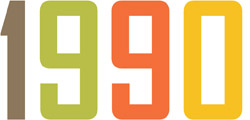
When the economy slumped, people played it safe with neutral colors. As environmental-consciousness rose, green and yellow-red earth tones along with recycled-paper beige took center stage. As the economy improved in the mid-‘90s, colors brightened along with the mood. |

Rosie the Riveter turned in her tool belt and became Susie Homemaker. With women back in their “rightful place,” society re-feminized them with the birth of the Barbie doll and an order to “think pink.” Everything from lipsticks to Edsels to typewriters came in pink and pastel colors. |

Better educated about color and more demanding about design, consumers became more daring and sophisticated with their color combinations. While color trends are still emerging, consumers expect color to provide an emotional impact on almost all areas
of their lives. |

The ‘60s drug culture, combined with the social and sexual revolution, led to the growth of brilliant flower-power colors and psychedelic patterns. The Beatles sang about yellow submarines, while color TVs went mainstream, bringing star-driven color trends to the masses. |
 Colors on the Horizon
What’s new in the world of color? Pantone Inc.’s “Fashion Color Report Fall 2007” names these 10 colors as the fall fashion season’s most important color trends to keep an eye on. |
|
Selecting Color
Given color’s importance, selecting appropriate colors for your exhibit can seem daunting. However, pawning the entire task off on your exhibit designer isn’t an option. While good designers certainly understand color, nobody knows your company and its exhibit-marketing strategy better than you. And ultimately, it’s your head on the chopping block if your color choices are skewed. That’s why a basic understanding of color connotations and rudimentary color-selection criteria isn’t just a nice thing to have, it’s a must-have for any exhibit manager.
While the color-selection process isn’t nearly as laborious and complex as most people think, there are no magic-bullet answers or formulas to follow. “Your choices are geared by your individual context. You must consider everything from the messages you want to convey about your company and product to which colors are best suited to your target audience and your current product packaging. You can’t just use a color because it’s a hot trend. If it’s not appropriate for your brand, it’s dangerous,” Eiseman says. “But you can freshen up brand colors and work around them a bit by skewing them and straying slightly from the exact values and intensity.”
Given the endless variables between companies, exhibits, and audiences, color selection isn’t a step-by-step process with a handy set of illustrated instructions. The best manual you’ve got, however, is a broad understanding of the connotations carried by each color. With this new-found knowledge of color and a solid understanding of your exhibit’s context, you can confidently select colors based on facts and research, not guesses and whims. Plus, you can count yourself as one of Peters’ “damn few that ‘get it’” — in terms of both design and color. e
|
|
|
|



