
Napa Valley, CA, is a wine-lover’s Mecca. But you don’t have to live in — or even visit — Napa Valley to experience the wine-country lifestyle. That’s the message wine-maker Beringer Vineyards brought to consumers and the media when it outfitted an Airstream Safari Special Edition trailer in a Napa Valley theme and traveled to a series of events in New York, Chicago, Austin, TX, and Los Angeles in Fall 2006.
At each stop on the Beringer “How to Get to Napa Valley” tour the trailer played host to an urban picnic, intended to show visitors how to bring the Napa Valley lifestyle into their own homes.
According to Lisa Duszak Novak, vice president at integrated-communications and public-relations agency Ruder Finn/West, which worked with Beringer to develop the tour, the culture of Napa Valley is not only about wine, but also homegrown ingredients, and local and regional cuisine. “We wanted to take that mentality on the road in a unique way and show people in other cities that they don’t have to jump on a plane to experience our lifestyle,” she says.
Armed with an in-house executive chef who performed cooking demonstrations on site, Beringer showed visitors how to entertain wine-country style by showing attendees how to pair its wines with their own local delicacies — from takeout in Manhattan to barbecue in Austin.
“Choosing a wine is difficult enough, let alone pairing a wine with dinner, and many people tend to get overwhelmed by it all,” Duszak Novak says. “Beringer’s goal was to show people that wine doesn’t have to be complicated, and to demonstrate how approachable the Napa lifestyle really can be.”



After it merged with Veritas Software Corp. in July 2005, Symantec Corp. needed to unite two legacy user conferences into one and introduce its redefined brand to conference-goers. To do so, it enveloped attendees — quite literally — in the company’s revamped brand as they arrived at the conference by deploying a full-motion video tunnel.
The 40-foot-long-by-16-foot-high tunnel designed by Obscura Digital in San Francisco welcomed attendees to the Symantec Vision 2006 user conference, funneling them into the general-session room of San Francisco’s Moscone West center.
As attendees passed through the tunnel, they encountered moving, conceptual, vector-based line art integrated with Symantec’s new brand message: “protection: infrastructure, information, interactions.” The messaging and line art seamlessly synchronized into a continuous pattern that ran along the roof of the tunnel and wrapped around its sides, creating an enveloping effect that blasted attendees with Symantec’s key message points from the moment they arrived at the general session.
The immersive experience clearly united the hallmarks of the legacy products of both companies — namely, security software from Veritas and Symantec’s storage and backup applications — and created a holistic framework for attendees to quickly understand the positioning behind the wide range of products and services now available to all users under the post-merger brand.

|
|
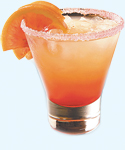

To demonstrate its openness to forming innovation partnerships with customers, food-ingredient manufacturer Archer Daniels Midland Co. (ADM) hosted a Market Research Happy Hour for 150 of its customers at the 2006 Institute of Food Technologists Show.
ADM invited three of its research partners to present up-to-date insight into specific food-industry segments, the projected business effects of nutrition trends, and consumer behavior and segmentation. Attendees sampled foods tied to the reported trends, and enjoyed cocktails, music, and networking.

Talk about planning ahead. In January 2005, the participants in a top-secret initiative at Volkswagen of America Inc. (VW) — dubbed the Moonraker Project — began to research what the consumers of the future, circa 2015-2020, will seek in their lives, their environments, and, of course, their vehicles.
In late 2005, this ad hoc task force of trend scouts revealed its findings. But not in the usual PowerPoint- kind of way. Instead, the Moonraker Project showcased its key predictions with a series of four life-sized, three-dimensional Life Settings depicting futuristic consumer lifestyle themes and the new GX3, a VW concept car.
The four Life Settings included a natural biosphere meant to represent environmentally aware consumers of the future; a welcoming safe haven entirely enveloped in a red membrane, representing calm and relaxation; a family-focused utilitarian workspace; and an adaptive-technology-driven environment.
Before the installations were unveiled to the public, VW held a series of events for internal staff and its numerous partners that had contributed time, technology, and materials to the research and the sets. The VW staff and partners saw the environments for the first time and gleaned their own insights into what consumers of the future will want at home and at work.
Another benefit of the project and the unveiling events, says Stefan Beese, a production designer at Los Angeles-based architecture firm Graft LLC, which designed the sets, is that the project opened the door for future collaboration with atypical partners, including vendors such as sneaker company Royal Elastics Inc., which contributed sneaker-customization materials to the project, and Holopro-Germany, which pitched in a holographic projection screen.


To solicit input and glean new insights into the marketplace it serves, Sage Software Inc. in Irvine, CA, asked the 2,900 partners and resellers who attended its 2006 Insights Conference to submit questions to the Sage executive team when registering for the event.
Conference organizers reviewed the questions, weeded out redundancies, and fed the questions up the Sage food chain for answers.
The attendee-submitted questions informed a keynote panel and Q&A session led by members of the company’s executive team. At the session, the questions were displayed on a large screen at the front of the room, which also displayed multiple-choice answer options. Audience members used instant-polling devices to make selections. Within minutes, results were displayed for all in the room to see. Sage executives then provided their own in-depth answers to each question.
The session provided an educational experience for Sage’s partners, and gave them an opportunity to interact directly with Sage executives and feel like they were being heard. Sage executives left the session equipped with valuable insights and plenty of customer-driven ideas. |
Beam-signing events and “topping-off” ceremonies are long-standing traditions in the construction world, but the Raleigh Convention Center in Raleigh, NC, took an unconventional approach to celebrating its own progress last October when it hosted “Lunch in the Lobby” for more than 500 community luminaries, investors, prospective and confirmed customers, and the construction workers building the center.
The event took place outdoors on a concrete slab marking the footprint of the building’s yet-to-be-completed lobby. The goal was to celebrate several project milestones, including 500,000 safe construction man hours, the strong community support for the project, and the steady flow of meeting wins from customers who already have pre-booked events at the convention center, which is scheduled to open in 2008.
“Right now, we are selling a convention center that opens in 2008 and a hotel for which the first shovelful of dirt hasn’t yet been turned,” says convention center director Roger Krupa. “So our customers and stakeholders are buying into a virtual hotel and a convention center that is only a quarter of the way done. But these customers are still signing contracts. Having the opportunity to rub shoulders with 300 construction workers and see how committed they are to the project, and to personally walk into the future lobby of the building and see all of the cranes and equipment sitting there before them not only built pride in everyone’s support for and contributions to the project, it also engendered a sense of confidence in our progress.”

Being all things to all people may be an impossibility, but Volvo Trucks came quite close at its 2006 North American Truck Conference in Savannah, GA.
The seven-day event featured three waves of programming for four groups of Volvo stakeholders, who attended the conference on different days — beginning with North American Volvo dealers and followed by salespeople, customers, and the industry press.
Using common content and a common event infrastructure as a platform, the sales, marketing, and PR departments within Volvo Trucks worked together pre-event to tailor conference content and messaging for each audience. The approach not only delivered cost efficiencies for the company, but also ensured an audience-focused event with clear, consistent messaging at its core, says David Curry, creative director at Campos Creative Works Inc. in Santa Monica, CA, which worked with Volvo to develop the conference.
For example, Volvo Trucks tweaked its core messaging to its dealer-attendee wave by presenting it in a dealer-specific context: How to help dealers increase their franchise values. For salespeople, the company focused on how benefits and features of the Volvo Trucks brand can help them increase their sales performance. For the press, the company offered fewer sessions and more drive time.
In the end, more than 90 percent of Volvo’s core content remained the same across all three waves. How the company presented that information, though, was clearly tailored to the hot buttons of each individual attendee group.
“Historically, event marketing has revolved around a series of small one-offs, each of which has traditionally been run by a different department,” Curry says. What events like Volvo’s North American Truck Conference signify, he adds, is the future of event marketing — a future in which various departments within organizations work closely together to “create a common infrastructure that will support the entire spectrum of event marketing.”

With its old-style Main Street district, verdant parks and small-town feel, Verrado, a planned community nestled in the foothills of the White Tank Mountains in Buckeye, AZ, is something of an aesthete’s paradise. The community’s unique vibe, however, is “extremely difficult” to portray in TV or print ads, says Verrado experiential marketing manager Liz O’Brien, “so getting people out here to experience the life we have to offer is key.”
Relying on the tenet that happy customers are a marketer’s best spokespeople, Verrado holds an annual Founders’ Day celebration to recognize the trailblazing residents who first bought into the development, and to draw outsiders to the community to experience firsthand what Verrado has to offer. In addition to making the event open to the public, Verrado also hands out extra free tickets to its residents to encourage them to invite their friends and extended family to the event.
Those who attend the event get a taste of every aspect of Verrado life — from a lazy afternoon softball tournament and barbecue to an evening cocktail party and variety show. The Founders’ Day celebration also features a big-name rock concert as part of the event. (Grammy Award-winner Train headlined in 2006.)
Last year, the concert alone drew more than 3,000 residents, investors, and potential home buyers to Verrado’s grounds. Good for business? Definitely. According to the community developer, it aims to grow the Verrado neighborhood from its current size of 1,000 homes to more than 11,000 units within the next 10 to 12 years. “We do see a spike in sales after an event like Founders’ Day, says O’Brien, “but most important for us is creating buzz and excitement around the festivities.”
Current residents don’t just attend the Founders’ Day event; they’re directly involved with the planning and execution as part of a welcome committee that meets new prospects at a Saturday morning breakfast event held as part of Founders’ Day. These resident evangelists informally share their experiences as part of the Verrado community at the breakfasts, becoming familiar and friendly faces to the prospective homeowners throughout the weekend activities. They also guide visitors to various events, and make introductions to other homeowners.
|



