editorial
Muscle Memory

“We didn't invent trade shows. We inherited them. They represent humanity's oldest behavior.”
But outside? Outside was something else entirely. This was no tourist attraction. Cloaked women, bodies hunched to protect themselves from the rain, shouted at vendors as they selected the best fish, freshest cuts of meat, and most aromatic spices to feed their families. I trusted my companion to lead me through the throngs as I studied their faces. And although I couldn't understand the language, I did understand the meaningful eye contact and knowing smiles they exchanged. The annoyance expressed as they haggled with their neighbors wasn't annoyance at all. It was simply part of the ritual of buying and selling.
And it was a familiar ritual to this land that 1,700 years ago served as a hub for the trade routes that made up the Silk Road. The link between East and West. The place where multiple cultures converged.
It wasn't only silk and spices that moved along these routes. It was art. Tradition. Information. Rather than passing through never to return, traders came back and built reputations, competing for attention in a place where being remembered mattered.
We didn't invent trade shows. We inherited them. They're the continuation of humanity's oldest behavior: gathering to exchange what we make, what we know, and what we believe. On the Silk Road, the goods and network made the system function. The relationships and trust made it thrive.
As I watched the market that day, a similar dynamic played out. It wasn't the goods that created the magic. The magic unfurled in the exchange. And that's why in modern trade shows, we design environments where that exchange can happen.
In this issue, you'll read about another global exchange hub: EuroShop, a triennial gathering that sets international standards in trade show design. The winners of our EuroShop Stand Design Awards are featured here. Those that rose to the top brought compelling atmosphere, activations, and color to the show floor — design elements that encouraged people to linger long enough to build the relationships and trust that make our industry thrive.
Over the centuries, we traded caravans for convention centers, but we're still acting out what's etched in our cultural DNA. The impulse to get people to stop. And the desire to feel intrigued enough to want to stay. That's the very essence of connection. E



Editorial
Muscle Memory
We didn't invent trade shows. We inherited them. They represent humanity's oldest behavior.
Exhibitor Q & A
Staff Training
I want to make sure my staff goes to our next show prepared to speak to anyone who walks into our booth.
Ask Dan
Problem Solving
I want to encourage my staff's creative problem-solving at shows. How can I do that?
Exhibiting 101
David Versus Goliath
In a sea of show-floor behemoths, a small booth can employ the proverbial slingshot to hit above its weight.
Fuel
Ideas That Work
Queue the Experience, Build-a-Brand, Pillow Talk, and more
Products
New Tools
Three Can't-Miss Product Launches
Fixing Snafus
Location, Location, Relocation
When your perfectly installed booth needs to relocate twice in one day...
Archive
Message in a Bottle
1895: The Bordeaux Exposition features a giant bottle of absinthe
Quiz
Cross Examination
Decipher the clues to fill out the crossword puzzle with some of our industry's peculiar jargon and slang.
Design Awards
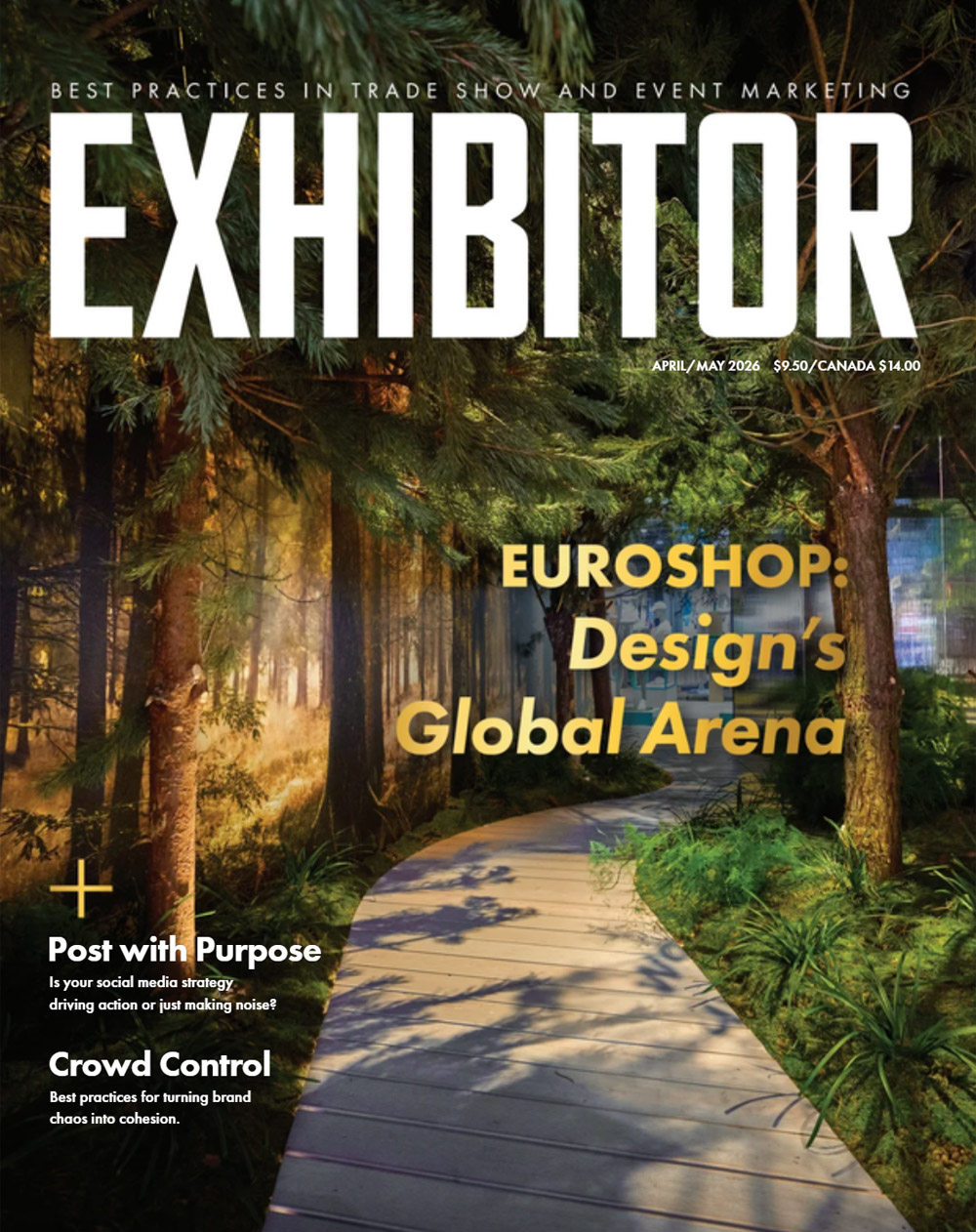
EuroShop: Design's Global Arena
Every three years, EuroShop sets the tone for what retail and exhibit design will become.
International
Designing with Purpose
When it comes to sustainability and experiential design, the world's best stands are raising the bar.
Portfolio
Serving Up Style
Six innovative designs that turned traditional hospitality into memorable highlights of the exhibition experience
Social Media
Posting with Purpose
If your social media strategy is just announcing your booth number, you're missing the point.
Experiential
Ready! Steady! Activation!
Providence, Rhode Island offers plenty of inspiration for event planners trying to engage the public.
Brand Strategy
Crowd Control
Five companies, big and small, show how they de-clutter their multiple brands.