exhibiting 101
David Versus Goliath

In a sea of show-floor behemoths, a small booth can employ the proverbial slingshot to hit above its weight. By Betsy Earle
Exhibitors often want to have the biggest booth on the show floor, but you don't need a huge number of square feet or an unlimited budget to make an impact. Try these methods to steal some of that all-important attendee attention from the giants on the trade show floor. Although small booths can't outspend the giants on the show floor, they can outmaneuver them.
Planning Your Approach
Let your prospects know that you're exhibiting before they get to the show. Use marketing outreach and social media platforms to let your prospects know you'll be attending an upcoming show. Then pre-schedule meetings and demonstrations. If there are 1,500 booths at a show, most attendees won't be able to see every exhibitor. Instead, they go to a show with a plan about who they want to see. If you get on their shortlist before they arrive, they'll seek you out. Sometimes a show can help you with your outreach by letting you piggyback on their pre-show communications. This method will cost money, but it could be money well spent because your message will get blasted out to the show's entire database. Those lists aren't for sale, so purchasing space is often the only way to reach every single person registered to attend an event. Pro tip: Send that blast close to the show opening so you reach the attendees who sign up last-minute.
Schedule visits with your customers. Customers are your number one fans, so encourage them to visit your exhibit to learn about your new products and services, become more knowledgeable about the ones they already use, and meet new team members. It costs fewer marketing dollars to keep a current customer than it does to find a new one, so nurture those people when they come to your booth. Consider a special giveaway or another sort of recognition. Also keep in mind that your customers know lots of other people, and there's a great chance that they'll be walking around the show with their buddies. You never know who they will show up with.
Consider being a bigger fish at a smaller show. If you're unsure about the impact you can make as a small exhibitor at a large show, consider booking a larger footprint at a regional show. It might cost less per square foot than purchasing a smaller exhibit at a pricier expo. I'm not recommending that you skip the big show, but you might have better results starting small because the biggest shows don't always offer the most bang for your buck. If you study the prospectus, you can determine the percentage of attendees who are in your market. Consider this scenario: If one show has 40,000 attendees and 5 percent of those attendees are in your target, that's 2,000 people. If another show has 5,000 attendees and 20 percent are in your market, that's 1,000 people. If you're trying to gain a presence in that larger show, there could be 38,000 people walking by your booth who don't have any interest in what you offer. There many events to choose from when you're deciding where to exhibit. Sometimes it might take a few years and a bit of trial and error to find that perfect show.
Punch Above Your Weight on the Show Floor
Lighting matters. Lighting is relatively inexpensive, and you can take advantage of backlights and overhead lights that quickly brighten up your space. If your goal is setting yourself apart from others, it could be as simple as being a little bit brighter. Many modern exhibits come with built-in LED strip lights or simple stem lights that can be attached to the top of your structure. While some cities require these to be installed by union labor, other cities allow you to put up your own. Be sure you're aware of the rules before taking the plunge.
Craft creative and clear messaging. When it comes to words on the back wall, less is more. If you're in a small inline booth, there's a great chance you'll only have one wall to display the information you want attendees to remember. Your instinct might be to get wordy, but don't. Your exhibit is a 3-D advertisement. Keep your message super simple and creatively impactful so that people can quickly glean what you want them to know.
Mini upgrades help. Can you afford a corner booth? If you can, you'd have a little bit more space than you would with an inline. Inline booths typically have rules that allow exhibitors to build only 4 feet tall to keep the sightline open down the aisle. Corner booths have fewer height restrictions, thus giving you additional cubic space for a tall display such as a product shelving unit or monitor kiosk.
Use audiovisual to tell a story. Audiovisual can get expensive, and it's a waste of money if it's not used effectively. But let's say you have a great product that's difficult to show in a small space. Use audiovisual to show that you're bigger than your booth. Don't waste money on a boring corporate presentation. Instead, focus on information that will make an impression in a quick, fun, interesting way.
Create live activations and experiences inside your booth space. The more interactive you can make the booth, the more likely people are to stop by. If there's something interesting for them to see, like a game or entertainer, that might pique their interest enough for them to pause even if you weren't on their planned list of exhibitors to visit. Consider hosting in-booth autographs with a celebrity who resonates with your audience, inviting a guest speaker, or planning a game or activity. Create something memorable for your attendees and remember that you can hook passersby if they see a crowd forming. Consider using in-booth contests as attention-grabbers. But remember that not all leads are created equal. Sometimes people show up just for the ballot or free swag. I recently observed an inline booth that hired a famous person to speak and sign autographs. The aisle was packed during his 30-minute appearance, but once the speaker left the space, everything got quiet. If that brand were my client, I would have challenged them to understand the benefit of the celebrity interaction. From the outside looking in, it didn't seem to generate a lot of business.
Add some unexpected bells and whistles. There's always an opportunity to add something in your space that's different from a standard back wall or reception counter. While some of these custom props might require an initial financial investment, they will make you stand out on the show floor. I recently saw a life-size soda can with the company branding digitized on the exterior. This is an expensive example, but you can find some stand-out items in the decor section at your local Home Goods. A few colorful pillows for your couch, colorful decor items on your table, plants, or string lights can make your booth an inviting place to be.

Make the Interaction Count
Train your booth staff. Good booth staff that engages with attendees can make all the difference when it comes to their experience. Train your staff to know how to engage and listen to the attendee and respectfully end the conversation if the person is not a fit. A lot of booth staff members tend to overshare product information instead of listening and asking questions to qualify a visitor. If you train your staff to ask questions, there's a greater chance your attendees will walk away with what they need — even if what they need from you is nothing.
Take advantage of the lead retrieval system. Lead retrieval can act as an extension to your booth staff and make your post-show follow-up much easier. Teach your booth staff about the badge scanning and lead retrieval process. Most systems allow you to preconfigure survey questions in advance of the show or create questions that let your team take notes quickly onsite. You can ask questions about which product category interests them or even where they are in their buying cycle. By preconfiguring your lead retrieval system with qualifying questions and teaching your staff how to use the system, you will get home with a pre-vetted database of people you can follow up with.
Pay careful attention to details. Unfortunately, I see a lot of exhibitors with unkempt spaces. They didn't bother to steam their fabric walls or vacuum their space or tidy up the boxes overflowing with extra promo items. Clutter makes a space look smaller and less professional, so hide all laptop bags, purses, backpacks, and coffee cups from the public eye. Another favorite tip of mine is to pack a handheld steamer into your kit. All you have to do is fill it up with water at the convention center and you can get all the wrinkles out of your graphics. While you're at the show, if you notice that your counter has dings or your structure has bends, leave time for repairs before your exhibitry ships to the next show.
Work the Whole Show
Maximize your out-of-booth experience. Most trade shows are full of networking opportunities, such as after-hours gatherings, networking sessions, and speaker sessions. And even if the convention itself doesn't offer fantastic networking, there's a great chance that someone from your expo is in the coffee line in the hotel lobby, in the elevator, or at the restaurant down the street. Remember that the networking doesn't stop at the border of your booth space, and you should always be prepared to chat with someone in the wild. A true salesperson is always engaging with others because you just never know who you're going to meet.
The biggest booth on the floor may draw the eye, but it doesn't always win the conversation. With the right strategy, a small exhibit can do exactly what David did: land a well-placed shot and succeed in capturing everyone's attention. E

Planning Your Approach
Let your prospects know that you're exhibiting before they get to the show. Use marketing outreach and social media platforms to let your prospects know you'll be attending an upcoming show. Then pre-schedule meetings and demonstrations. If there are 1,500 booths at a show, most attendees won't be able to see every exhibitor. Instead, they go to a show with a plan about who they want to see. If you get on their shortlist before they arrive, they'll seek you out. Sometimes a show can help you with your outreach by letting you piggyback on their pre-show communications. This method will cost money, but it could be money well spent because your message will get blasted out to the show's entire database. Those lists aren't for sale, so purchasing space is often the only way to reach every single person registered to attend an event. Pro tip: Send that blast close to the show opening so you reach the attendees who sign up last-minute.
Schedule visits with your customers. Customers are your number one fans, so encourage them to visit your exhibit to learn about your new products and services, become more knowledgeable about the ones they already use, and meet new team members. It costs fewer marketing dollars to keep a current customer than it does to find a new one, so nurture those people when they come to your booth. Consider a special giveaway or another sort of recognition. Also keep in mind that your customers know lots of other people, and there's a great chance that they'll be walking around the show with their buddies. You never know who they will show up with.
Consider being a bigger fish at a smaller show. If you're unsure about the impact you can make as a small exhibitor at a large show, consider booking a larger footprint at a regional show. It might cost less per square foot than purchasing a smaller exhibit at a pricier expo. I'm not recommending that you skip the big show, but you might have better results starting small because the biggest shows don't always offer the most bang for your buck. If you study the prospectus, you can determine the percentage of attendees who are in your market. Consider this scenario: If one show has 40,000 attendees and 5 percent of those attendees are in your target, that's 2,000 people. If another show has 5,000 attendees and 20 percent are in your market, that's 1,000 people. If you're trying to gain a presence in that larger show, there could be 38,000 people walking by your booth who don't have any interest in what you offer. There many events to choose from when you're deciding where to exhibit. Sometimes it might take a few years and a bit of trial and error to find that perfect show.
Punch Above Your Weight on the Show Floor
Lighting matters. Lighting is relatively inexpensive, and you can take advantage of backlights and overhead lights that quickly brighten up your space. If your goal is setting yourself apart from others, it could be as simple as being a little bit brighter. Many modern exhibits come with built-in LED strip lights or simple stem lights that can be attached to the top of your structure. While some cities require these to be installed by union labor, other cities allow you to put up your own. Be sure you're aware of the rules before taking the plunge.
Craft creative and clear messaging. When it comes to words on the back wall, less is more. If you're in a small inline booth, there's a great chance you'll only have one wall to display the information you want attendees to remember. Your instinct might be to get wordy, but don't. Your exhibit is a 3-D advertisement. Keep your message super simple and creatively impactful so that people can quickly glean what you want them to know.
Mini upgrades help. Can you afford a corner booth? If you can, you'd have a little bit more space than you would with an inline. Inline booths typically have rules that allow exhibitors to build only 4 feet tall to keep the sightline open down the aisle. Corner booths have fewer height restrictions, thus giving you additional cubic space for a tall display such as a product shelving unit or monitor kiosk.
Use audiovisual to tell a story. Audiovisual can get expensive, and it's a waste of money if it's not used effectively. But let's say you have a great product that's difficult to show in a small space. Use audiovisual to show that you're bigger than your booth. Don't waste money on a boring corporate presentation. Instead, focus on information that will make an impression in a quick, fun, interesting way.
Create live activations and experiences inside your booth space. The more interactive you can make the booth, the more likely people are to stop by. If there's something interesting for them to see, like a game or entertainer, that might pique their interest enough for them to pause even if you weren't on their planned list of exhibitors to visit. Consider hosting in-booth autographs with a celebrity who resonates with your audience, inviting a guest speaker, or planning a game or activity. Create something memorable for your attendees and remember that you can hook passersby if they see a crowd forming. Consider using in-booth contests as attention-grabbers. But remember that not all leads are created equal. Sometimes people show up just for the ballot or free swag. I recently observed an inline booth that hired a famous person to speak and sign autographs. The aisle was packed during his 30-minute appearance, but once the speaker left the space, everything got quiet. If that brand were my client, I would have challenged them to understand the benefit of the celebrity interaction. From the outside looking in, it didn't seem to generate a lot of business.
Add some unexpected bells and whistles. There's always an opportunity to add something in your space that's different from a standard back wall or reception counter. While some of these custom props might require an initial financial investment, they will make you stand out on the show floor. I recently saw a life-size soda can with the company branding digitized on the exterior. This is an expensive example, but you can find some stand-out items in the decor section at your local Home Goods. A few colorful pillows for your couch, colorful decor items on your table, plants, or string lights can make your booth an inviting place to be.
Make the Interaction Count
Train your booth staff. Good booth staff that engages with attendees can make all the difference when it comes to their experience. Train your staff to know how to engage and listen to the attendee and respectfully end the conversation if the person is not a fit. A lot of booth staff members tend to overshare product information instead of listening and asking questions to qualify a visitor. If you train your staff to ask questions, there's a greater chance your attendees will walk away with what they need — even if what they need from you is nothing.
Take advantage of the lead retrieval system. Lead retrieval can act as an extension to your booth staff and make your post-show follow-up much easier. Teach your booth staff about the badge scanning and lead retrieval process. Most systems allow you to preconfigure survey questions in advance of the show or create questions that let your team take notes quickly onsite. You can ask questions about which product category interests them or even where they are in their buying cycle. By preconfiguring your lead retrieval system with qualifying questions and teaching your staff how to use the system, you will get home with a pre-vetted database of people you can follow up with.
Pay careful attention to details. Unfortunately, I see a lot of exhibitors with unkempt spaces. They didn't bother to steam their fabric walls or vacuum their space or tidy up the boxes overflowing with extra promo items. Clutter makes a space look smaller and less professional, so hide all laptop bags, purses, backpacks, and coffee cups from the public eye. Another favorite tip of mine is to pack a handheld steamer into your kit. All you have to do is fill it up with water at the convention center and you can get all the wrinkles out of your graphics. While you're at the show, if you notice that your counter has dings or your structure has bends, leave time for repairs before your exhibitry ships to the next show.
Work the Whole Show
Maximize your out-of-booth experience. Most trade shows are full of networking opportunities, such as after-hours gatherings, networking sessions, and speaker sessions. And even if the convention itself doesn't offer fantastic networking, there's a great chance that someone from your expo is in the coffee line in the hotel lobby, in the elevator, or at the restaurant down the street. Remember that the networking doesn't stop at the border of your booth space, and you should always be prepared to chat with someone in the wild. A true salesperson is always engaging with others because you just never know who you're going to meet.
The biggest booth on the floor may draw the eye, but it doesn't always win the conversation. With the right strategy, a small exhibit can do exactly what David did: land a well-placed shot and succeed in capturing everyone's attention. E
Betsy Earle, CTSM, is the managing director and founder of Event Driven Solutions LLC. Earle obtained her MBA at the University of Miami and earned her Diamond-level CTSM designation in 2018. [email protected]
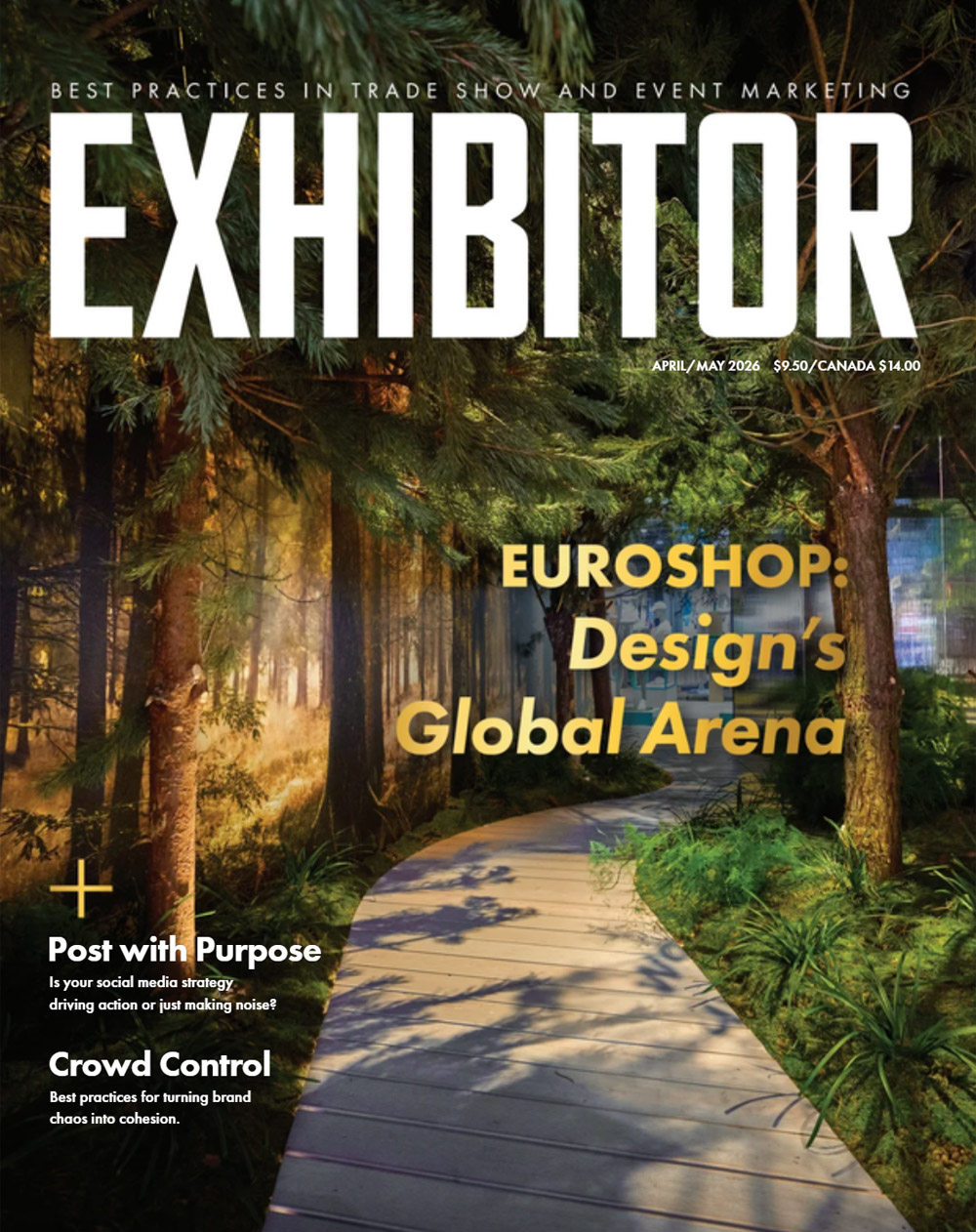
Editorial
Muscle Memory
We didn't invent trade shows. We inherited them. They represent humanity's oldest behavior.
Exhibitor Q & A
Staff Training
I want to make sure my staff goes to our next show prepared to speak to anyone who walks into our booth.
Ask Dan
Problem Solving
I want to encourage my staff's creative problem-solving at shows. How can I do that?
Exhibiting 101
David Versus Goliath
In a sea of show-floor behemoths, a small booth can employ the proverbial slingshot to hit above its weight.
Fuel
Ideas That Work
Queue the Experience, Build-a-Brand, Pillow Talk, and more
Products
New Tools
Three Can't-Miss Product Launches
Fixing Snafus
Location, Location, Relocation
When your perfectly installed booth needs to relocate twice in one day...
Archive
Message in a Bottle
1895: The Bordeaux Exposition features a giant bottle of absinthe
Quiz
Cross Examination
Decipher the clues to fill out the crossword puzzle with some of our industry's peculiar jargon and slang.
Design Awards
EuroShop: Design's Global Arena
Every three years, EuroShop sets the tone for what retail and exhibit design will become.
International
Designing with Purpose
When it comes to sustainability and experiential design, the world's best stands are raising the bar.
Portfolio
Serving Up Style
Six innovative designs that turned traditional hospitality into memorable highlights of the exhibition experience
Social Media
Posting with Purpose
If your social media strategy is just announcing your booth number, you're missing the point.
Experiential
Ready! Steady! Activation!
Providence, Rhode Island offers plenty of inspiration for event planners trying to engage the public.
Brand Strategy
Crowd Control
Five companies, big and small, show how they de-clutter their multiple brands.