research |
 |
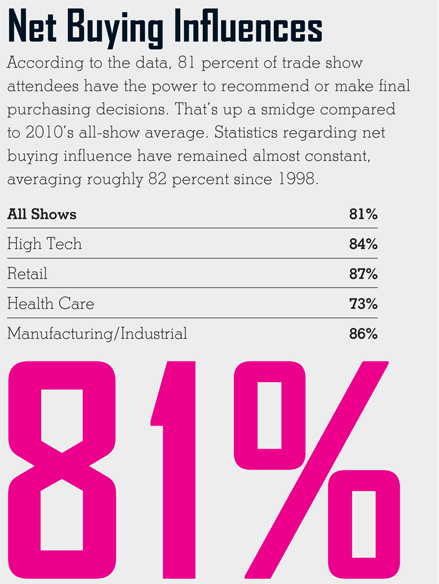
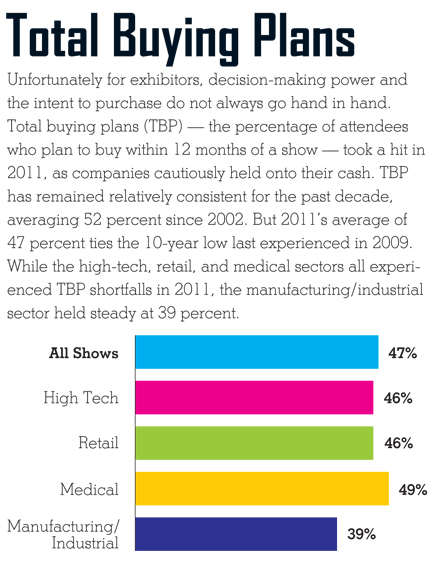
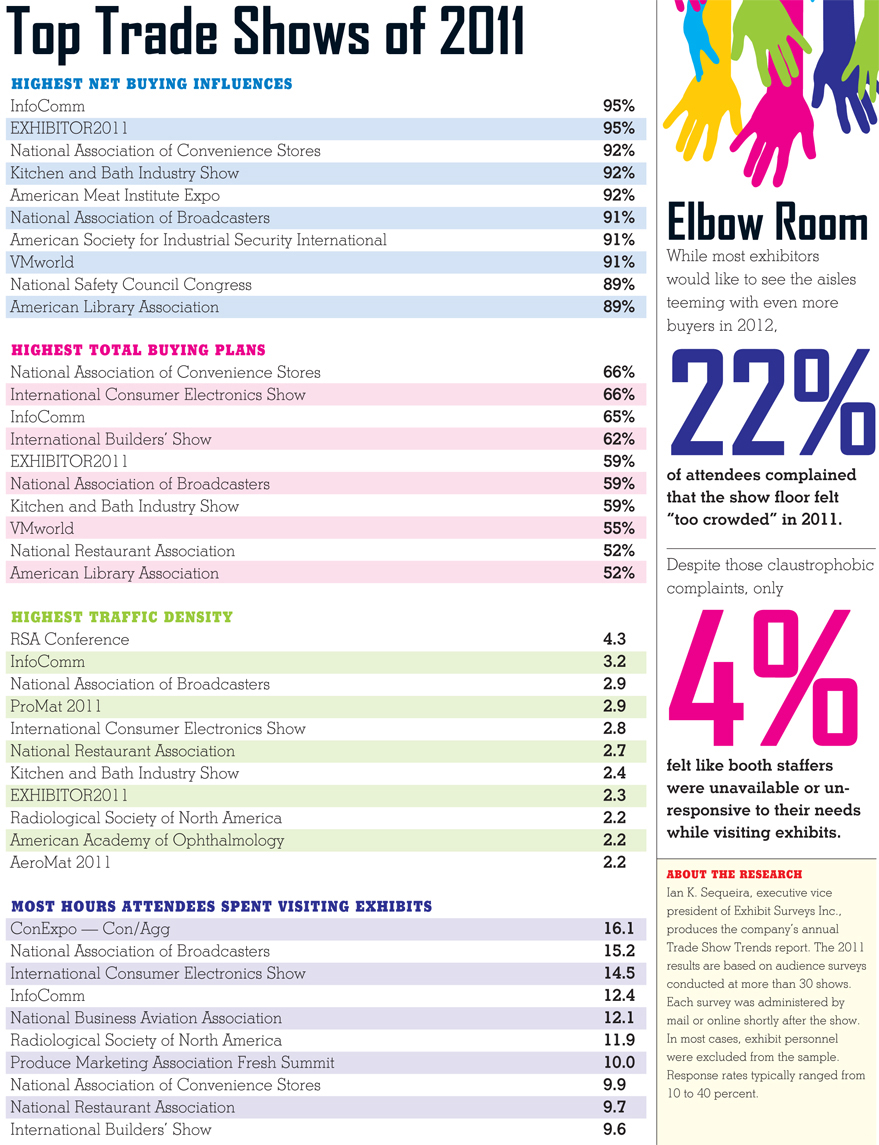
 ast year was a mixed bag for exhibit marketers. While attendance at many shows increased, some shows still saw slippage. Similarly, attendee quality held steady, but those decision makers seemed less interested in signing on the dotted line. So what are we to make of 2011? ast year was a mixed bag for exhibit marketers. While attendance at many shows increased, some shows still saw slippage. Similarly, attendee quality held steady, but those decision makers seemed less interested in signing on the dotted line. So what are we to make of 2011? According to Red Bank, NJ-based Exhibit Surveys Inc., the industry saw its ups and downs in the past year, but nothing to indicate its vital signs are much different than in 2010. Did we find a foothold upon which to gain traction following the Great Recession? It appears so. Did we see the incremental gains we optimistically predicted 2011 might bring? Not so much. Each year, the exhibit- and event-research firm polls attendees from more than 30 U.S. shows to determine the effectiveness of exhibit marketing. The company's 2011 Trade Show Trends report includes valuable information about exhibit performance, show-floor traffic, and trade show attendees, broken down into four industry sectors: high tech, retail, medical, and manufacturing/industrial. The good news is that trade shows continue to attract attendees who recommend, specify, and/or make final purchasing decisions. The bad news is that a lower percentage of them actually planned to make a purchase in 2011. In 2009, total buying plans (TBP) - the percentage of attendees who anticipate buying within 12 months of a show - hit a 10-year low of 47 percent, the obvious casualty of an uncertain economy. But in 2011, TBP returned to that 10-year low, following a 3-percent improvement in 2010. That less-than-desirable bit of data isn't surprising as corporate America continues to cling to its cash. While overall economic concerns may have eased in 2011, fears of a so-called "double-dip recession" left businesses justifiably cautious when it came to doling out the dough. Still, 2011 had its silver linings. For one, the survey determined that 36 percent of attendees, on average, are first timers to any given show. That translates into a vital show-floor marketplace with new buyers coming into the mix, preventing exhibitions from becoming stale opportunities with the same buyers from the same companies attending the same shows year after year. Furthermore, 35 percent of attendees reported that their purchase intentions were more favorable after visiting companies' exhibits. Considering that most exhibitors are, ultimately, looking to inch attendees toward a purchase, this metric proves that shows have the potential to deliver the kind of measurable bottom-line results they're after. The following information represents some of the highlights from this year's report, along with a list of last year's top trade shows. E |
  |

For a list of all the shows included in the survey click here.
|



Magazine Topics
Marketplace

- Audiovisual Equipment
- Convention Centers
- Event Data Analytics
- Event Design and Production
- Exhibit Fabrication
- Exhibit Producers
- Exhibit Rental
- Experiential Agency
- Flooring
- Graphics
- International Exhibit Producers
- Kiosks
- Lead Retrieval
- Modular Exhibit Systems
- Portable Display Systems
- Shipping and Transportation
- All Companies
eTrak Online Sessions
July 28, 2026
3050R Focus on Attention: How to Optimize your Messaging on the Trade Show Floor
Aug. 4, 2026
6010R The Basics of Event Planning and Management ‑ Part I
Aug. 6, 2026
6011R The Basics of Event Logistics and Implementation ‑ Part II
Aug. 13, 2026
7110R Don't Hesitate, Go Negotiate!
Sep. 22, 2026
2101R Show Ready: Your Guide to Trade Show Operations
All Sessions >>
3050R Focus on Attention: How to Optimize your Messaging on the Trade Show Floor
Aug. 4, 2026
6010R The Basics of Event Planning and Management ‑ Part I
Aug. 6, 2026
6011R The Basics of Event Logistics and Implementation ‑ Part II
Aug. 13, 2026
7110R Don't Hesitate, Go Negotiate!
Sep. 22, 2026
2101R Show Ready: Your Guide to Trade Show Operations
All Sessions >>