insight
Breaking Barriers
Few issues have changed the business landscape like that of accessibility. Now disability consultant Steven Mifsud shows how we can create even deeper, more meaningful change. By Charles Pappas
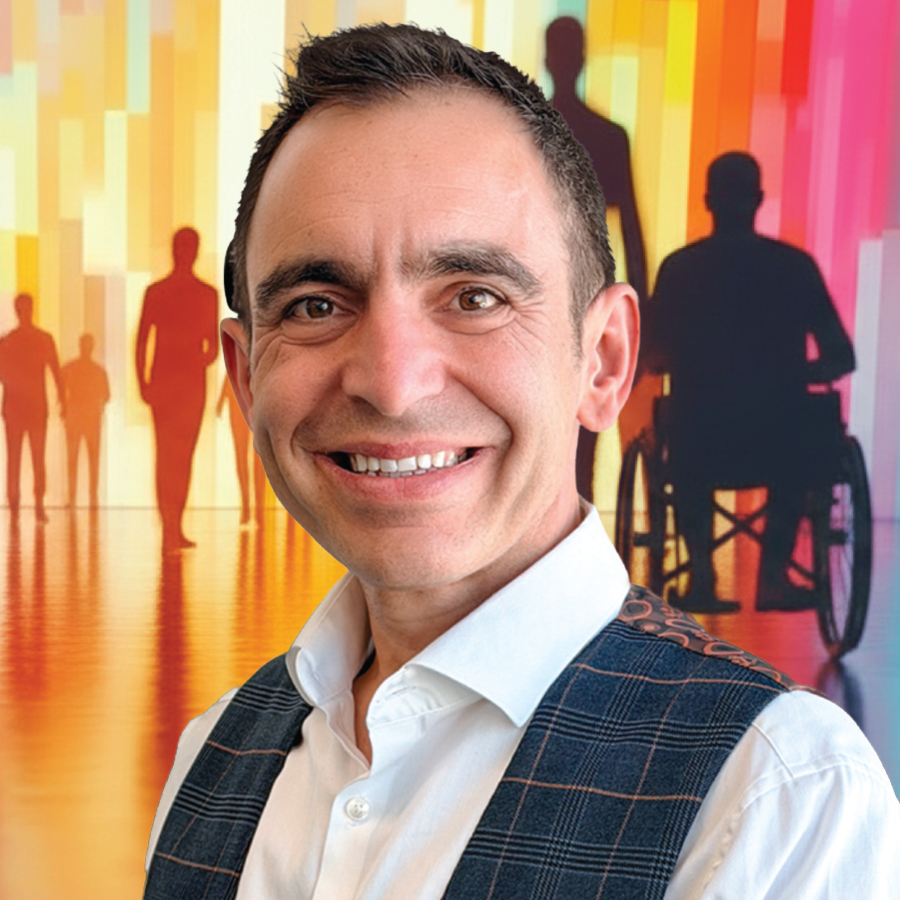
Steven Mifsud MBE
Steven Mifsud MBE is an internationally recognized accessibility leader, consultant, and the founder of Direct Access, a global accessibility and inclusion consultancy operating across built environments, digital platforms, policy, and inclusive design. As director of accessibility, he leads multidisciplinary teams delivering strategic advisory services, audits, and implementation programs for governments, public agencies, and private-sector organizations in the United States, Europe, and the Middle East. Mifsud is known for advancing accessibility beyond compliance toward systemic, people-centered inclusion embedded within design, operations, and governance. He has been awarded an MBE (Member of the Order of the British Empire) for services to accessibility and inclusion and holds an honorary doctorate recognizing his leadership and impact in the field.
The advances were laudable, but Steven Mifsud knows there is much more to be done. The founder of Direct Access, an accessibility and inclusive design consultancy that helps clients create barrier-free physical and digital environments, Mifsud is pushing the definition of accessibility beyond its current limitations. We sat down with him to see what trade show environments are lacking and what it means when accessibility stops being a requirement and starts becoming a competitive advantage.
EXHIBITOR magazine: The term “accessibility” seems to be fading in usage, replaced by the broader “inclusivity.” Is this just a faddish change in nomenclature or is there something larger at work here?
Steven Mifsud: Accessibility traditionally comes from the context of disability rights. It focuses on removing barriers so that people with disabilities can use products, services, and environments — think screen readers, wheelchair ramps, and captions. It's often tied to compliance standards.
Inclusivity, on the other hand, is a wider umbrella. It includes accessibility but also considers many other dimensions of human difference: race, gender, language, culture, age, socioeconomic status, and more. It's less about meeting specific technical requirements and more about creating environments where everyone feels able to participate. So there is a change in language, reflecting evolving values and a deeper shift in mindset, toward designing for human diversity.
EM: Often, individual exhibitors can't do much about what a convention center or venue offers in terms of inclusiveness. What could exhibitors do to make their booths, demos, and staff interactions more inclusive?
SM: Exhibitors and organizers may not control the venue, but they have a lot of influence over how inclusive their own space and interactions feel, and that's often what attendees remember most.
At the booth level, small design choices go a long way. Keeping entrances open and uncluttered, allowing enough space to move comfortably, and offering both standing and seated interaction options makes the space usable for more people. It also helps to provide multiple ways to engage — for example, short, printed summaries, captioned videos, or self-guided materials — so attendees aren't forced into a single format or pace.
Demos should be flexible. Allow attendees to choose how deep they want to go, keep explanations clear, and offer alternatives for highly physical or equipment-heavy experiences. Captions on monitors are especially valuable in noisy environments.
Communication should prioritize clarity over jargon. Simple, readable messaging and high-contrast visuals make it easier for everyone to quickly understand what you do, especially in a busy trade show setting.
Staff interactions are often the biggest factor. Good practice is to avoid assumptions, ask open-ended questions, and adapt to the attendee's communication style. Offering options (“quick overview, deeper demo, or just a takeaway?”) helps people engage in a way that suits them without feeling singled out. If something isn't working — let's say people are hesitating to enter, struggling to hear, or disengaging — small changes on the spot can make a big difference.
Overall, the shift is from a fixed, one-size-fits-all setup to a more flexible, human-centered approach that allows more people to participate comfortably. Once a conference starts, things don't have to be static until it's time to dismantle. Adjust to the requirements of the audiences and visitors when possible.
EM: How can exhibitors and event organizers better support attendees with, for example, sensory sensitivities, fatigue, chronic pain, or neurodivergence?
SM: A big improvement is reducing sensory intensity. Exhibitors can lower audio, avoid flashing visuals, and create calmer booth environments. Even small signals, like welcoming quieter conversations, can make a space feel more approachable. It also helps to give people control over how they engage. Offering options lets attendees manage their energy and attention.
Seating is critical but often overlooked. A simple chair with well-constructed armrests or a small rest area can make the difference between someone with fatigue or chronic pain being able to engage or not.
Demos should be clear, paced, and predictable. Slowing down, structuring information, and avoiding overload makes content easier to process, especially in noisy environments.
Finally, staff should normalize different interaction styles — allowing pauses, rephrasing, or offering written info without making assumptions. The goal is to reduce pressure and let people engage in the way that works for them. The mindset needs to be about shifting from “Can people access this?” to “Can they participate comfortably and sustainably?”
EM: What role should digital inclusivity play, from registration to mobile apps to post-event follow-up?
SM: Digital inclusivity should be treated as a core part of the event experience, not an add-on, because it shapes every stage from first contact to follow-up.
At registration, that means simple, accessible forms (clear language, logical flow, screen-reader compatibility, and not forcing unnecessary steps). For event apps and on-site tech, it means designing for real-world use: readable text, strong contrast, easy navigation, captions on video, and not relying solely on things like QR codes or fast connectivity. And be sure to always offer alternatives.
During the event, digital tools should reduce friction, not add it. They should help people navigate schedules, access content in different formats, and engage at their own pace. Post-event, inclusivity means making your content available in flexible, accessible formats such as recordings with captions, summaries, and transcripts, so people who couldn't attend everything (or who need to go at a different pace) still get value. Overall, digital inclusivity ensures people do more than just get in. It ensures that they can access, understand, and benefit from the experience on their own terms.
EM: What's an example of an accessibility change that improved the experience for everyone, not just attendees with disabilities?
SM: A great example that helps everyone is adding captions to presentations and video content. While originally intended for attendees who are deaf or hard of hearing, captions benefit almost everyone at a trade show — people in noisy halls, non-native speakers, or anyone trying to follow complex information. It also helps with retention, since people can both see and hear the content.
This simple change consistently improves clarity, comprehension, and overall engagement for a much wider audience. There are many apps and software solutions that can automate this (with simple tweaks). Today, 80 percent of social media videos are watched without sound and with captions. We are now accepting of captions whereas 10 years ago perhaps we were not so accepting.
EM: What would an inclusive trade show look like to you five years from now?
SM: I personally hope that five years from now, an inclusive trade show would feel seamless and human-centered, where diversity in ability, communication style, and energy level is anticipated rather than retrofitted. Booths would be flexible. For example, they would offer clear pathways, adjustable seating, and multiple ways to engage (interactive demos, takeaways, captioned videos), so attendees can participate at their own pace. Noise, lighting, and sensory intensity would be adjustable or signaled, with quiet zones available throughout the show floor for those who need them.
Digital tools, from registration to event apps, would be fully accessible, offering alternative formats, clear navigation, and multilingual support. Staff would be trained to adapt to different needs naturally, without assumptions or awkwardness. Networking and learning experiences would include both high-energy and structured options, making social interaction optional, not required.
As society ages and the number of people with disabilities grows, inclusivity isn't just ethical or a compliance requirement. It's smart business. Designing for accessibility expands your potential audience and strengthens long-term loyalty. E
missed connections
Because trade shows are high-pressure physical and social environments, Mifsud says, failures in inclusivity tend to show up very clearly. Most of these lapses stem from a single underlying issue: designing for the so-called “average attendee,” a person who doesn't actually exist. Here are several of the mistakes Mifsud says he most commonly encounters when spending time at an event or trade show.
 1. Compliance Without Usability
Venues are often proudly labeled as accessible, yet the lived experience of attendees can tell a different story: Ramps that meet regulations may be too steep or blocked by equipment; registration desks might rise too high for someone using a wheelchair to comfortably reach; and once booths, cables, and crowds fill the aisles, pathways frequently become too narrow for safe passage. Even stages sometimes lack step-free access, which means voices might be excluded before they've even had a chance to be heard. True accessibility isn't just about meeting requirements; it's about creating spaces that work for the people who need them.
 2. Booth Design That Excludes by Default
Many exhibitors design booths with visual flair that sacrifice usability. For instance, high counters can limit eye-level interaction with people or products, quickly turning what should be a pleasant networking moment awkward. If seating isn't available, attendees who can't stand for long durations find themselves sidelined. Touchscreens and interactive features are often positioned out of reach of some attendees, and complex VR or digital demos lack accessible alternatives. An elegant booth that shuts people out doesn't just miss out on a connection, it also misses out on a potential sale.
 3. Overstimulation and No Quiet Spaces
Trade shows are environments flooded with sensory overload. Think loud music, flashing screens, and ceaseless announcements. The modern thought surrounding inclusivity extends beyond physical access because limits also can be sensory and cognitive. Bright, high-contrast lighting floods every corner, leaving few places for calm reflection. Without quiet rooms or decompression zones, the environment can easily overwhelm attendees, especially those who are neurodivergent, live with anxiety or PTSD, or simply crave a moment of rest. Creating accessibility today means designing to help reduce overstimulation as much as designing for mobility.
 4. One-Size-Fits-All Communication
The way information is delivered at events often assumes everyone learns and processes the same way. Miss something once, and there's rarely another way to catch up. Fast-paced presentations breeze by without captions. Sign language interpreters are absent. Slides overflow with text too small to read. Staff lean entirely on spoken explanations. Overall, this communication style alienates attendees who rely on visual or text-based cues. True inclusion means giving everyone equal footing in understanding what's shared.
 5. Lack of Language Accessibility
Many trade shows attract an international audience, but even in those cases, multilingual support is often an afterthought. Informational items rarely come translated, and staff seldom speak more than one language. Add in jargon-heavy phrasing that even native speakers wrestle with, and you've built an invisible barrier around critical information. Moreover, live sessions go untranslated or unsubtitled, making non-native speakers spectators rather than participants. Inclusivity in communication means making knowledge — not just access to it — universal.
 6. Networking That Favors Extroverts
Networking is often painted as the beating heart of exhibitions, but few events offer guided networking, and attendees can feel pressure to spark introductions on the fly. These conditions disadvantage introverts, neurodivergent individuals, and those navigating a new language or culture. More inclusive formats, such as small-group discussions or mentorship roundtables, can make networking an open door instead of a closed circle.
 7. Food and Drink Oversights
Many social events at shows revolve around food, yet accessibility concerns rarely reach the menu. Dietary options for vegans, halal, kosher, or allergen-sensitive attendees may be limited or even entirely absent. Labels often fail to clarify ingredients, while buffets placed in crowded areas are difficult to navigate. Inclusive meals mean everyone can participate comfortably.
 8. Scheduling That Ignores Human Needs
Trade shows are notorious for their marathon pace. Long days pass without designated rest areas, and back-to-back sessions can stretch for hours with little time to rest or recharge. This can disproportionately affect people managing chronic illness, fatigue, or caregiving responsibilities. A more thoughtful scheduling would recognize that accessibility includes attendees having sufficient energy as much as having ease of movement.
 9. Token Diversity in Speakers or Marketing
Diversity often appears in brochures and promotional videos for events, yet less so onstage or in decision-making roles. Panels still frequently lack genuine diversity of perspective. Speakers representing marginalized groups are placed in less prominent time slots while inclusion itself becomes a branding statement rather than a practiced value.
Because trade shows are high-pressure physical and social environments, Mifsud says, failures in inclusivity tend to show up very clearly. Most of these lapses stem from a single underlying issue: designing for the so-called “average attendee,” a person who doesn't actually exist. Here are several of the mistakes Mifsud says he most commonly encounters when spending time at an event or trade show.
1. Compliance Without Usability
Venues are often proudly labeled as accessible, yet the lived experience of attendees can tell a different story: Ramps that meet regulations may be too steep or blocked by equipment; registration desks might rise too high for someone using a wheelchair to comfortably reach; and once booths, cables, and crowds fill the aisles, pathways frequently become too narrow for safe passage. Even stages sometimes lack step-free access, which means voices might be excluded before they've even had a chance to be heard. True accessibility isn't just about meeting requirements; it's about creating spaces that work for the people who need them.
2. Booth Design That Excludes by Default
Many exhibitors design booths with visual flair that sacrifice usability. For instance, high counters can limit eye-level interaction with people or products, quickly turning what should be a pleasant networking moment awkward. If seating isn't available, attendees who can't stand for long durations find themselves sidelined. Touchscreens and interactive features are often positioned out of reach of some attendees, and complex VR or digital demos lack accessible alternatives. An elegant booth that shuts people out doesn't just miss out on a connection, it also misses out on a potential sale.
3. Overstimulation and No Quiet Spaces
Trade shows are environments flooded with sensory overload. Think loud music, flashing screens, and ceaseless announcements. The modern thought surrounding inclusivity extends beyond physical access because limits also can be sensory and cognitive. Bright, high-contrast lighting floods every corner, leaving few places for calm reflection. Without quiet rooms or decompression zones, the environment can easily overwhelm attendees, especially those who are neurodivergent, live with anxiety or PTSD, or simply crave a moment of rest. Creating accessibility today means designing to help reduce overstimulation as much as designing for mobility.
4. One-Size-Fits-All Communication
The way information is delivered at events often assumes everyone learns and processes the same way. Miss something once, and there's rarely another way to catch up. Fast-paced presentations breeze by without captions. Sign language interpreters are absent. Slides overflow with text too small to read. Staff lean entirely on spoken explanations. Overall, this communication style alienates attendees who rely on visual or text-based cues. True inclusion means giving everyone equal footing in understanding what's shared.
5. Lack of Language Accessibility
Many trade shows attract an international audience, but even in those cases, multilingual support is often an afterthought. Informational items rarely come translated, and staff seldom speak more than one language. Add in jargon-heavy phrasing that even native speakers wrestle with, and you've built an invisible barrier around critical information. Moreover, live sessions go untranslated or unsubtitled, making non-native speakers spectators rather than participants. Inclusivity in communication means making knowledge — not just access to it — universal.
6. Networking That Favors Extroverts
Networking is often painted as the beating heart of exhibitions, but few events offer guided networking, and attendees can feel pressure to spark introductions on the fly. These conditions disadvantage introverts, neurodivergent individuals, and those navigating a new language or culture. More inclusive formats, such as small-group discussions or mentorship roundtables, can make networking an open door instead of a closed circle.
7. Food and Drink Oversights
Many social events at shows revolve around food, yet accessibility concerns rarely reach the menu. Dietary options for vegans, halal, kosher, or allergen-sensitive attendees may be limited or even entirely absent. Labels often fail to clarify ingredients, while buffets placed in crowded areas are difficult to navigate. Inclusive meals mean everyone can participate comfortably.
8. Scheduling That Ignores Human Needs
Trade shows are notorious for their marathon pace. Long days pass without designated rest areas, and back-to-back sessions can stretch for hours with little time to rest or recharge. This can disproportionately affect people managing chronic illness, fatigue, or caregiving responsibilities. A more thoughtful scheduling would recognize that accessibility includes attendees having sufficient energy as much as having ease of movement.
9. Token Diversity in Speakers or Marketing
Diversity often appears in brochures and promotional videos for events, yet less so onstage or in decision-making roles. Panels still frequently lack genuine diversity of perspective. Speakers representing marginalized groups are placed in less prominent time slots while inclusion itself becomes a branding statement rather than a practiced value.

Editorial
Some Things Never Change
Forty years ago we were putting business cards in fishbowls and traveling on blissfully Wi-Fi-free airplanes.
Exhibitor Q & A
Graphics
What are some cost-effective ways to refresh my booth graphics without undergoing a full redesign?
Ask Dan
Effective Brainstorming
How can I ensure my pre-show group brainstorming sessions aren't a waste of time?
Exhibiting 101
Extend Your Reach
From emails to apps, pre-show outreach can maximize your visibility and improve your odds of success onsite.
Fuel
Ideas That Work
Quiet Power, Write on Cue, Stage Presence, and more
Products
New Tools
Three Can't-Miss Product Launches
Advertorial
Aluvision
Designed for Impact & Efficiency
Conventional Wisdom
Broward County Convention Center
Broward County Convention Center's vibe screams meeting space meets cruise-port chic.
Fixing Snafus
Sharpies Save the Show
This Plan B comes from the office-supply aisle and the imagination of a good designer.
Quiz
Show or Sham?
Try to guess which shows are real and which are shams in this month's quiz
Archive
Seeing the Future
1911: The Dresden International Hygiene Exhibition
City Profile
Get Out: Fort Lauderdale, Florida
Fort Lauderdale blends beach-town ease with nightlife, culture, and coastline intrigue
Insight
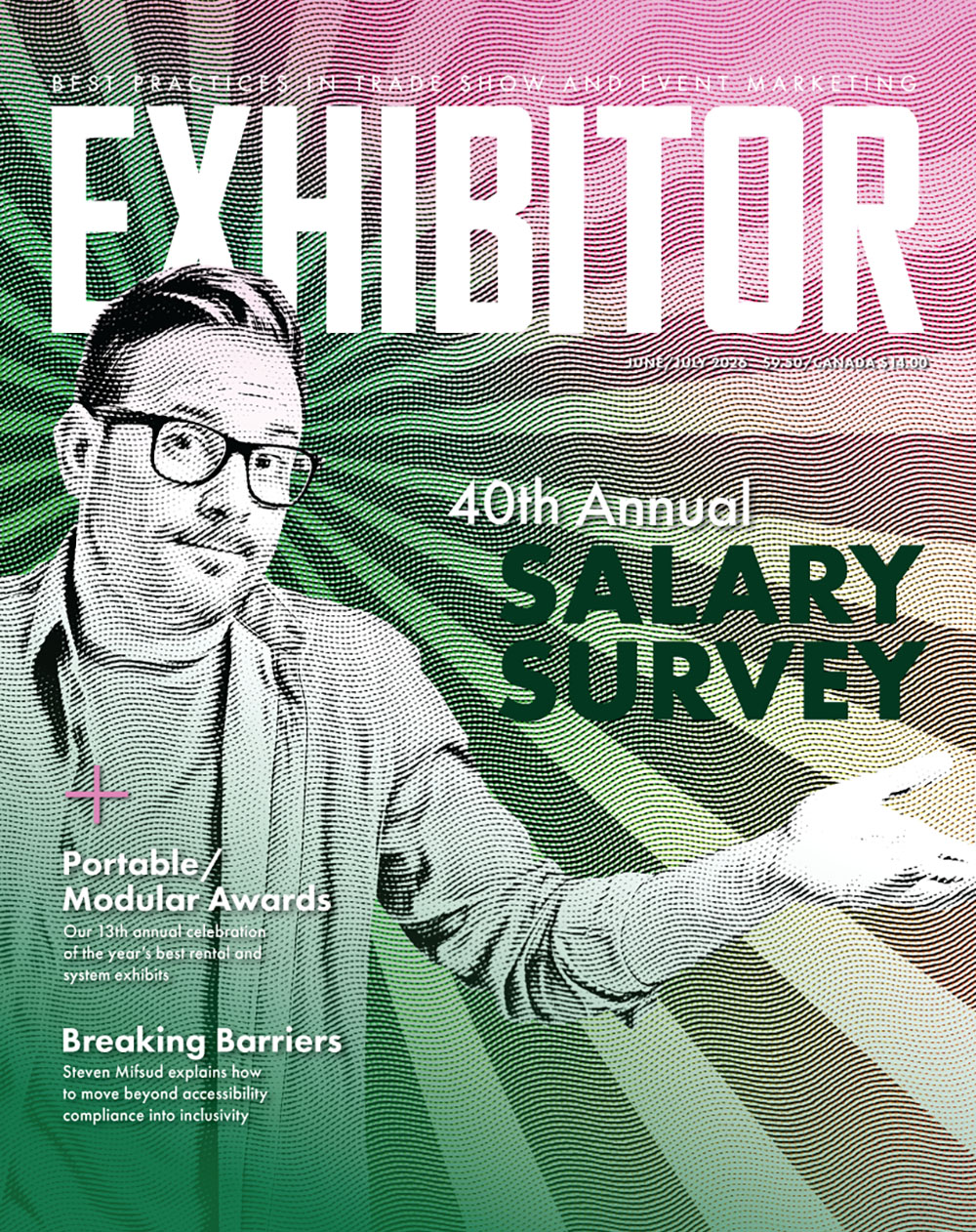
Breaking Barriers
Few issues have changed the business landscape like that of accessibility.
International
Exhibiting Internationally
Here are four things you need to know before taking your exhibit abroad.
Planning
Gen Z Thinks Your Conference Is Cringe
Here are four ways to adjust your event to meet the unique needs of Gen Z.
Portfolio
Counter Intelligence
In the competitive landscape of trade show exhibits, the reception desk stands as your first point of contact.
Awards
EXHIBITOR Magazine's 13th Annual Portable/Modular Awards
Read about the portable, modular, and system exhibits that took home top honors.
Interview
It's All About the People
Derse Inc. leaders discuss industry trends, cost-effective activations, and ensuring a meaningful trade show program.
Salary Survey
40th Annual Salary Survey
Forty years in and the numbers look good: annual raises, strong support for events, and six-figure salaries.
Salary Survey
40th Annual Salary Survey by Title
The full 2026 Salary Survey, including an in-depth analysis of the six most common jobs