exhibitor q&a
Help

Lead Qualifying
QAt a busy trade show, I often communicate with so many attendees that I don't know where to focus my attention. How can I evaluate an attendee in 30 seconds or less to determine if they're a qualified lead or just after the swag?
When someone walks into my booth, my number one goal is to connect with them. If I can't do that, qualifying them is a waste of time.
According to stats from a recent Salesforce Research consumer survey, 73 percent of respondents indicated that sales interactions feel transactional. That means most people walk into these encounters expecting a pitch, not a genuine exchange. Given that, before I think about qualifying a person, I want them to feel welcomed and at ease. If I can create a moment of calm, I've already set the tone for a meaningful interaction.
The first connection isn't about scanning badges. It's about being present. I'll often start with something light, such as a sincere greeting, a comment about where they're from, or an observation about the show. These gestures signal that I see them as a person, not a prospect. When people sense authenticity, their guard comes down.
In the chaotic environment of a trade show, visitors are often overstimulated and tired of aggressive sales tactics. By the second or third day of a show, you can feel this resistance. So I create a psychological safe-haven for them that's not just polite, but interrupts the standard buyer-seller dynamic. When you treat someone like a guest in your home rather than a data point on a spreadsheet, you bypass their natural skepticism. When you foist your company's solution too early, the attendee feels pitch-slapped. You must earn the right to pitch.
When approaching a booth visitor, think about how you'd act in your home with a guest. Do you offer them a drink, or maybe find them a place to sit down? When interacting with booth visitors, I've disposed of their garbage, surprised them with a coffee, and entertained them if they had to wait.
Now our rapport becomes a diagnostic tool. As we talk, I gauge their energy, their level of authority, and their pain points without making them feel interrogated. I pay attention to cues — what they're interested in, how engaged they seem, what kinds of questions they ask. I watch body language to see if they lean in, and whether their shoulders are square to mine or angled away. It's a balancing act between staying warm and approachable while being purposeful. Move too fast, and the exchange feels transactional. Move too slow, and you risk missing the moment. The magic lies in being human while staying focused on the possibilities.
When I sense that someone is a strong match, I take that as my cue to deepen the engagement. I might offer to introduce them to a subject matter expert, suggest a demo, or connect them with another team member.
By taking this human-first approach, even if a visitor doesn't turn into a lead that day, they will leave with a positive impression of the brand. Professional networks are tightly connected, and a person who isn't a fit today might instead become our biggest advocate tomorrow. I like to play the long game by valuing the human over the transaction.
Ultimately, effective lead qualification isn't about technique. It's about presence. Be a good human first and a good salesperson second. Because when people feel seen, respected, and connected, the real opportunities begin to take shape.
According to stats from a recent Salesforce Research consumer survey, 73 percent of respondents indicated that sales interactions feel transactional. That means most people walk into these encounters expecting a pitch, not a genuine exchange. Given that, before I think about qualifying a person, I want them to feel welcomed and at ease. If I can create a moment of calm, I've already set the tone for a meaningful interaction.
The first connection isn't about scanning badges. It's about being present. I'll often start with something light, such as a sincere greeting, a comment about where they're from, or an observation about the show. These gestures signal that I see them as a person, not a prospect. When people sense authenticity, their guard comes down.
In the chaotic environment of a trade show, visitors are often overstimulated and tired of aggressive sales tactics. By the second or third day of a show, you can feel this resistance. So I create a psychological safe-haven for them that's not just polite, but interrupts the standard buyer-seller dynamic. When you treat someone like a guest in your home rather than a data point on a spreadsheet, you bypass their natural skepticism. When you foist your company's solution too early, the attendee feels pitch-slapped. You must earn the right to pitch.
When approaching a booth visitor, think about how you'd act in your home with a guest. Do you offer them a drink, or maybe find them a place to sit down? When interacting with booth visitors, I've disposed of their garbage, surprised them with a coffee, and entertained them if they had to wait.
Now our rapport becomes a diagnostic tool. As we talk, I gauge their energy, their level of authority, and their pain points without making them feel interrogated. I pay attention to cues — what they're interested in, how engaged they seem, what kinds of questions they ask. I watch body language to see if they lean in, and whether their shoulders are square to mine or angled away. It's a balancing act between staying warm and approachable while being purposeful. Move too fast, and the exchange feels transactional. Move too slow, and you risk missing the moment. The magic lies in being human while staying focused on the possibilities.
When I sense that someone is a strong match, I take that as my cue to deepen the engagement. I might offer to introduce them to a subject matter expert, suggest a demo, or connect them with another team member.
By taking this human-first approach, even if a visitor doesn't turn into a lead that day, they will leave with a positive impression of the brand. Professional networks are tightly connected, and a person who isn't a fit today might instead become our biggest advocate tomorrow. I like to play the long game by valuing the human over the transaction.
Ultimately, effective lead qualification isn't about technique. It's about presence. Be a good human first and a good salesperson second. Because when people feel seen, respected, and connected, the real opportunities begin to take shape.

Anders Boulanger, CSP,
founder and CEO, Engagify,
Winnipeg, Manitoba, Canada
Lead Qualifying
QHow do you determine whether a booth visitor is a lead within the first 30 seconds of meeting?
When time is of the essence, you need to get to the point. Many experts recommend starting a conversation with an open-ended question, but I've found that one specific yes-or-no question does a much better job of kickstarting productive conversations. The goal of this opening question is to help the person you're talking to decide if they're in the right place.
For example, if you were working in EXHIBITOR's booth and your goal was to encourage visitors to subscribe, you might say, “Are you looking for new exhibiting ideas?” You're not asking about subscribing. You're not asking if they want to improve. You're simply trying to figure out in a neutral way if they need what you're offering.
Regardless of their answer, you must have a clear path forward. If it's a no, let them go. If it's a yes, summarize what you do using words that line up with your opening question and their preferred terminology. For example, if you open with, “Are you looking for [this]?” your response should help your visitor feel more confident they're in the right place. Then redirect the conversation back to them with, “Now, with [this] in mind, I'd love to learn more about [what you're looking for... or what else you've tried...].”
As you get acclimated to this process, test and retest each opening query to find what works best. Listen to responses strategically and note when a visitor takes the conversation in a direction you didn't expect or misinterprets what you say. Recognizing their confusion lets you make adjustments for future conversations.
When you ask an opening question that you've tested with your audience, you'll receive an answer you can trust. When someone says yes, you know you're spending time with someone you can help. If they say no, it means you can both move on to more relevant conversations. And, given your time constraints, saving even a few seconds can make a big difference in your day.
Once you're comfortable with this process, you may feel tempted to further streamline your interactions. But skip obvious visual cues like a visitor's printed name badge. If it's wrong, which happens more often than you might expect, your conversation will start with a correction, which could be awkward. Your visitor might also feel compelled to explain why their badge isn't accurate. After that back and forth, you won't have enough time to exchange the information you want and need to qualify them as a lead.
Above all, when you encounter an attendee who seems uninterested or distracted, don't take offense. Maybe you caught them at a bad time. Trade shows are hectic, and you don't know what their schedule entails or what their day has been like. Plus, a 30-second time limit can feel like a lot of pressure in any conversation. If you rush their answers, visitors might respond negatively to the pressure and pull away, so try to relax and enjoy each conversation while it lasts.
For example, if you were working in EXHIBITOR's booth and your goal was to encourage visitors to subscribe, you might say, “Are you looking for new exhibiting ideas?” You're not asking about subscribing. You're not asking if they want to improve. You're simply trying to figure out in a neutral way if they need what you're offering.
Regardless of their answer, you must have a clear path forward. If it's a no, let them go. If it's a yes, summarize what you do using words that line up with your opening question and their preferred terminology. For example, if you open with, “Are you looking for [this]?” your response should help your visitor feel more confident they're in the right place. Then redirect the conversation back to them with, “Now, with [this] in mind, I'd love to learn more about [what you're looking for... or what else you've tried...].”
As you get acclimated to this process, test and retest each opening query to find what works best. Listen to responses strategically and note when a visitor takes the conversation in a direction you didn't expect or misinterprets what you say. Recognizing their confusion lets you make adjustments for future conversations.
When you ask an opening question that you've tested with your audience, you'll receive an answer you can trust. When someone says yes, you know you're spending time with someone you can help. If they say no, it means you can both move on to more relevant conversations. And, given your time constraints, saving even a few seconds can make a big difference in your day.
Once you're comfortable with this process, you may feel tempted to further streamline your interactions. But skip obvious visual cues like a visitor's printed name badge. If it's wrong, which happens more often than you might expect, your conversation will start with a correction, which could be awkward. Your visitor might also feel compelled to explain why their badge isn't accurate. After that back and forth, you won't have enough time to exchange the information you want and need to qualify them as a lead.
Above all, when you encounter an attendee who seems uninterested or distracted, don't take offense. Maybe you caught them at a bad time. Trade shows are hectic, and you don't know what their schedule entails or what their day has been like. Plus, a 30-second time limit can feel like a lot of pressure in any conversation. If you rush their answers, visitors might respond negatively to the pressure and pull away, so try to relax and enjoy each conversation while it lasts.
Robyn Davis, CPTD, CEM,
trade show trainer/consultant
at Exhibitors WIN, Mount Pleasant, SC


Editorial
Measuring Meaning
CES revealed that what we value in theory doesn't always make it to the show floor.
Exhibitor Q & A
Lead Qualifying
How can I evaluate an attendee to determine if they're a qualified lead or just after the swag?
Ask Dan
Gen Z
The traditional annual review model seems like it doesn't work for Gen Z. How should I adapt it?
Advertorial
Modular Frames in 55 or 62?
That's Not the Question.
Exhibiting 101
Budgeting for Chaos
Costs swing, labor teams get behind, fees balloon. If you don't budget for surprises, your budget is already blown.
Fuel
Ideas That Work
Air Hockey, Fated Meetings, A Fish Tale, and More
Products
New Tools
Three Can't-Miss Product Launches
Conventional Wisdom
Fira Barcelona Gran Via
Gran Via is one of Europe's most capable large-scale exhibition venues
Fixing Snafus
Dog-gone It!
When a dog mistook a runway model for a fire hydrant, the team had to engineer a quick costume change
Archive
Reign Check
1924 -1925: A pair of queens stroll through streets at the British Empire Exhibition named by Rudyard Kipling.
Exhibit Design
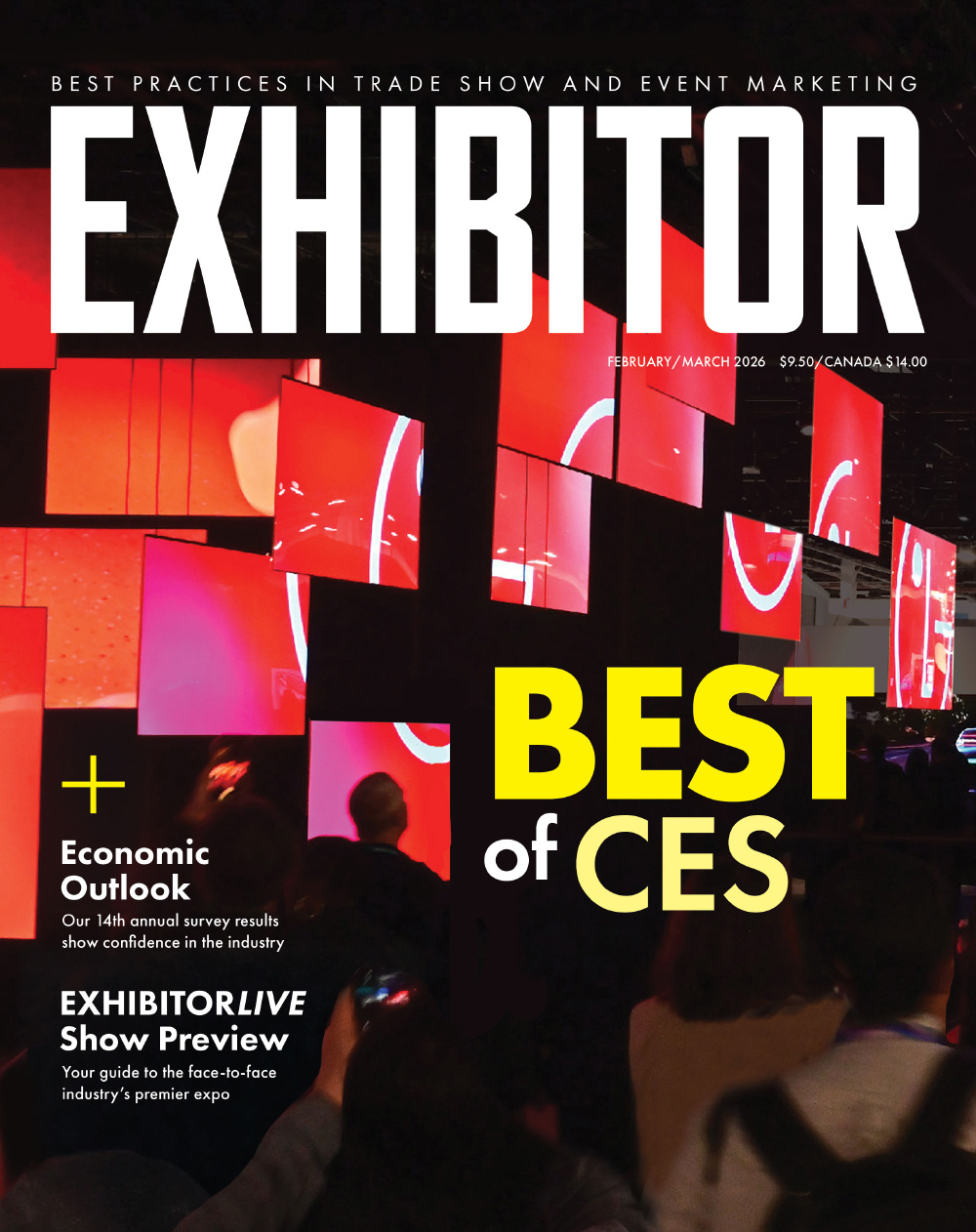
The Best of CES 2026
The exhibitors in our annual list stood apart from the crowd of more than 4,000 booths
Research
Economic Outlook
Our 2026 survey shows that the industry continues to hold the course as it steers through economic headwinds
Quiz
Measure Seekers
Do you know your CVL from your CTR, or do measurement acronyms deliver a TKO?
City Profile
Get Out! Barcelona, Spain
In Barcelona, history and modernity share space with a sensual energy that delivers inspiration around every corner.
Networking
Beyond the Bar
If the only thing keeping your networking event lively is an open bar, it's time to sober up.
Reflections
The Next Chapter
Mark Johnson reflects on IAEE's acquisition of Exhibitor Group.
Trends
Five Conference Trends from PCMA
Five trends conference producers need to understand.