exhibit design
The Best of CES
The 2026 Consumer Electronics Show (CES) marked the event's largest turnout of exhibitors and
attendees since 2020. EXHIBITOR's editorial team was among
the eager crowd jostling for
a peek at the latest tech, but
focused on something else entirely: how brands translate
technology into immersive environments. The exhibitors featured
in our annual Best of CES list
stood apart from the crowd of
more than 4,000 exhibitors not
because of what they showed
but because of how they showed
up. Their booths demonstrated
exceptional design thinking,
engaging storytelling, and an
understanding of how space can
impact experience. The projects
on the following pages span
footprints and budgets, but they
share a common thread: design
used not decoratively, but strategically. These are the environments worth studying. By Linda Armstrong, Sean Carlson, Jessica Levco, and Charles Pappas
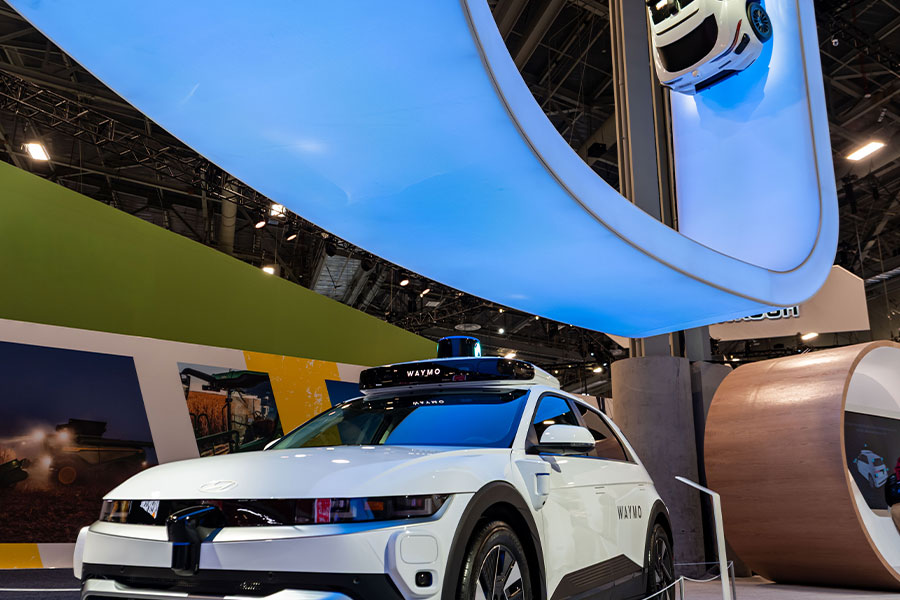 PHOTO: Waymo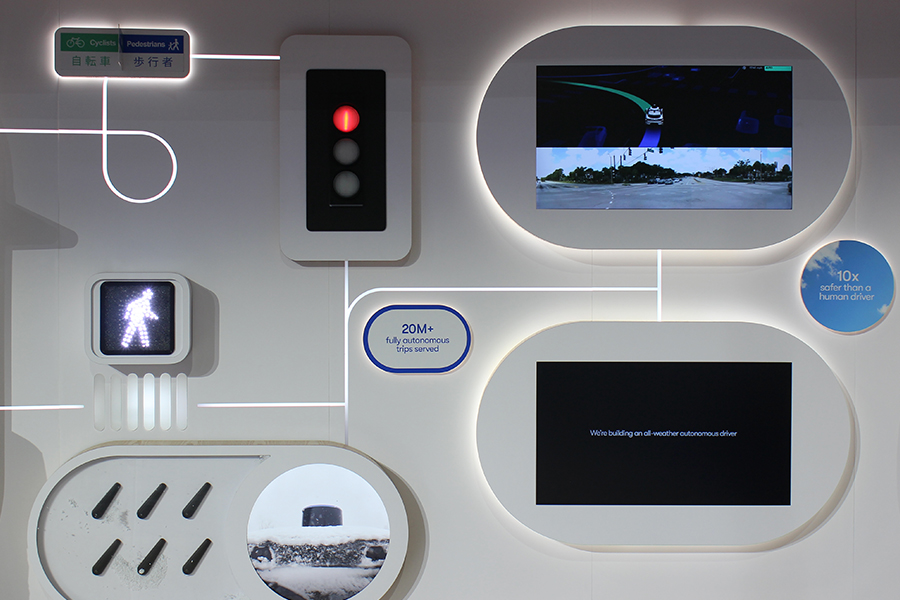
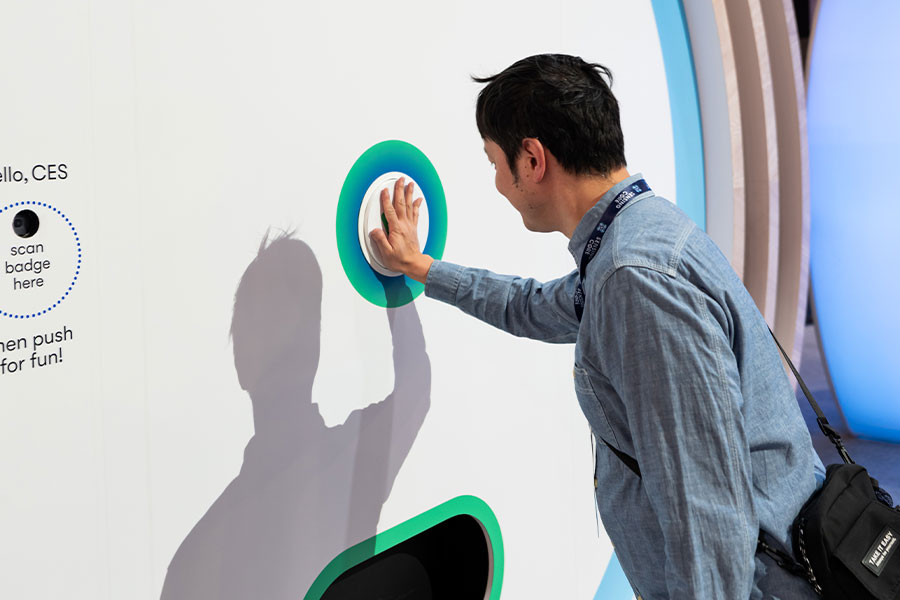 PHOTO: Waymo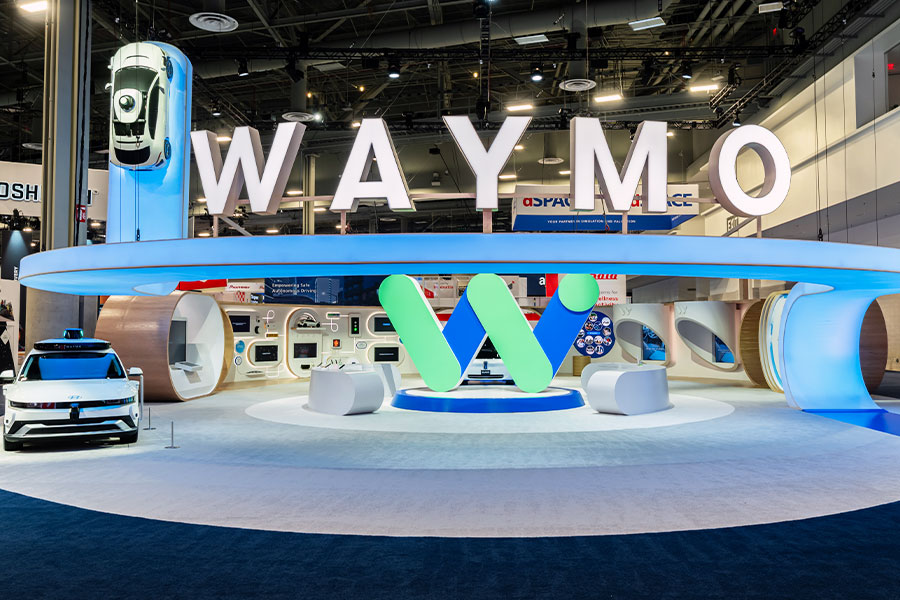
1. Waymo LLC
Design/Fabrication: NVE Experience Agency
Waymo LLC's stand not only felt instantly iconic; it also earned the top slot in our Best of CES list. Designed and fabricated by NVE Experience Agency, the exhibit featured a conceptual throughline: Waymo's “confident path” concept, i.e., the clear, reliable route its self-driving system identifies via lidar. As a symbolic roundabout, a slowly rotating Waymo “W” marked the exhibit's center. Overhead, a sweeping ribbon structure, inspired by the confident path, featured a two-thirds-scale Waymo model that captivated passersby. Below the ribbon, three vehicles populated the footprint, including one staged specifically for backseat interaction. Visitors slid inside, snapped selfies, and enjoyed the novelty of a driverless interior. Elsewhere, playful activations invited badge scans and button pushes to trigger the familiar Waymo ride-start “ding.” Adding a whimsical touch, immersive screens showcased joyful, often funny reactions from real riders, while a bubble- and fog-emitting wall delighted visitors. Ultimately, Waymo's design reframed autonomy not as a technical marvel, but as a deeply human experience that was playful, personal, and unwaveringly Waymo.
Design/Fabrication: NVE Experience Agency
Waymo LLC's stand not only felt instantly iconic; it also earned the top slot in our Best of CES list. Designed and fabricated by NVE Experience Agency, the exhibit featured a conceptual throughline: Waymo's “confident path” concept, i.e., the clear, reliable route its self-driving system identifies via lidar. As a symbolic roundabout, a slowly rotating Waymo “W” marked the exhibit's center. Overhead, a sweeping ribbon structure, inspired by the confident path, featured a two-thirds-scale Waymo model that captivated passersby. Below the ribbon, three vehicles populated the footprint, including one staged specifically for backseat interaction. Visitors slid inside, snapped selfies, and enjoyed the novelty of a driverless interior. Elsewhere, playful activations invited badge scans and button pushes to trigger the familiar Waymo ride-start “ding.” Adding a whimsical touch, immersive screens showcased joyful, often funny reactions from real riders, while a bubble- and fog-emitting wall delighted visitors. Ultimately, Waymo's design reframed autonomy not as a technical marvel, but as a deeply human experience that was playful, personal, and unwaveringly Waymo.
 Photos: MC², an MCH Group Company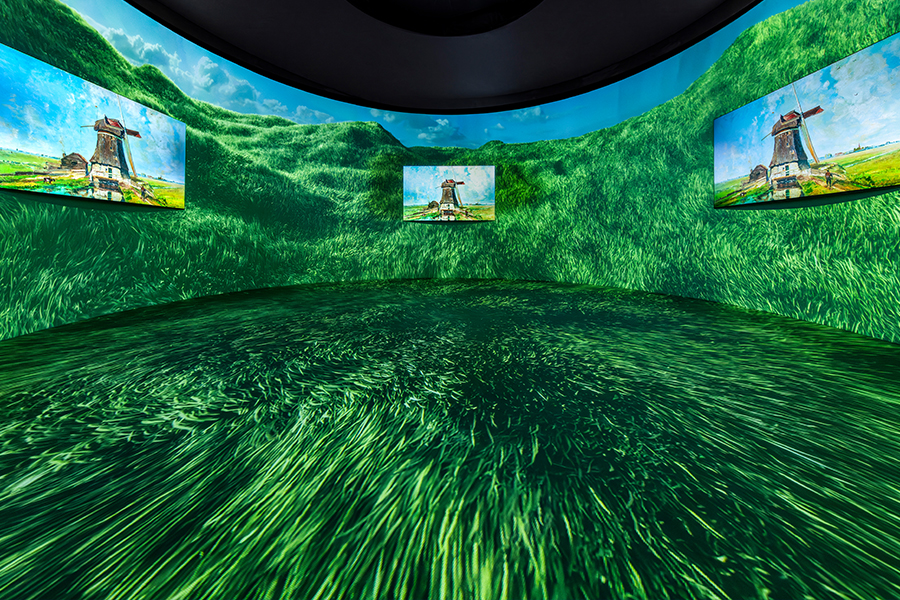
2. SAMSUNG ELECTRONICS CO. LTD.
Design/Fabrication: MC², an MCH Group Company
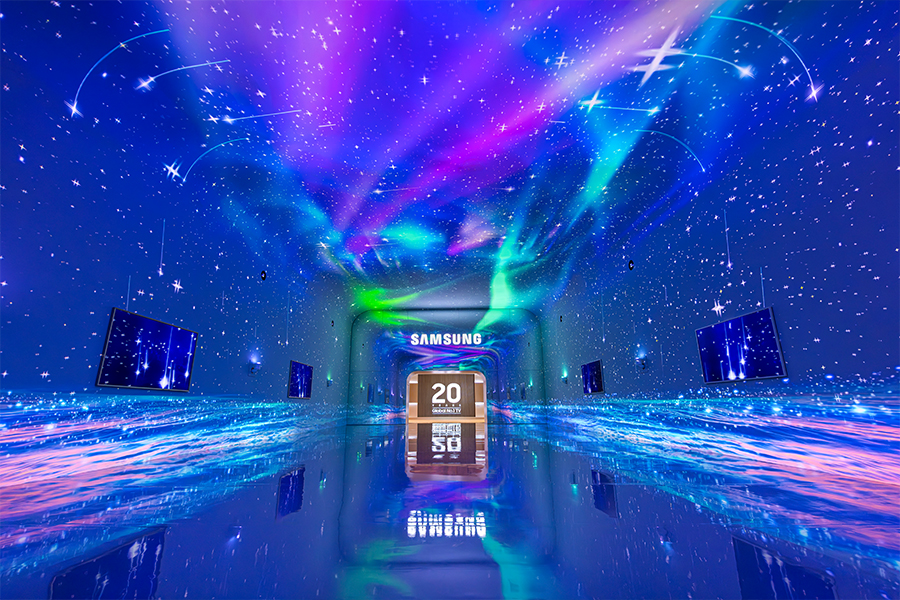
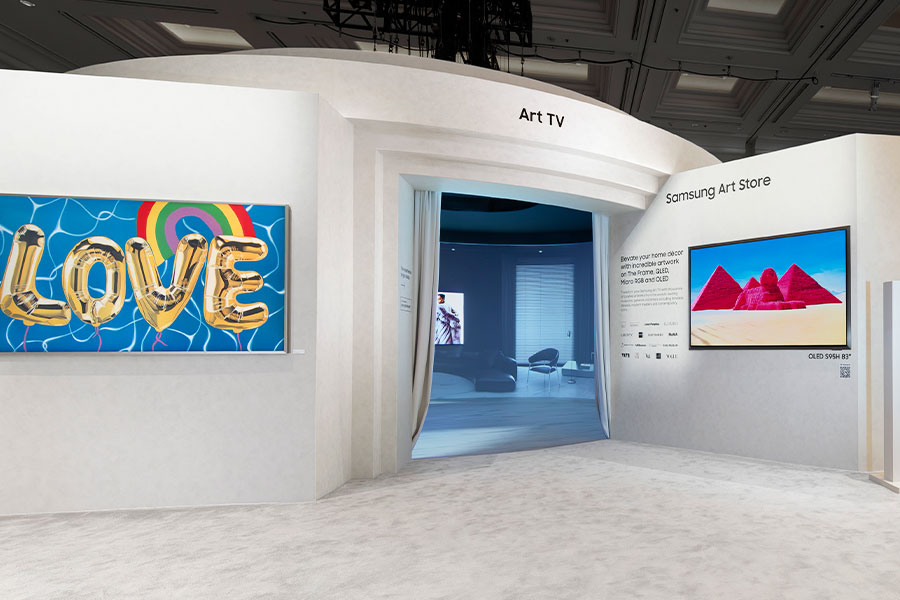
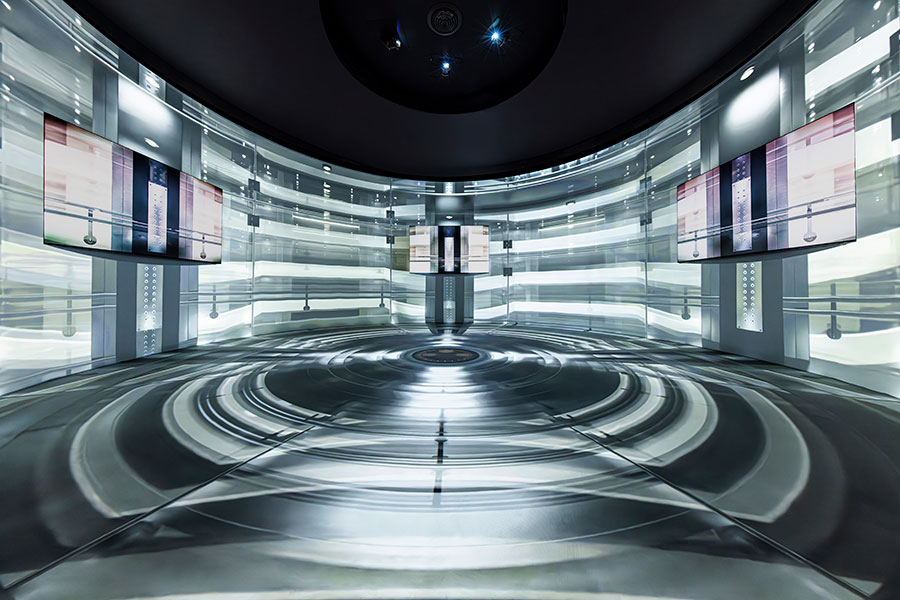
When Samsung Electronics Co. Ltd. situated its booth in the Wynn Las Vegas rather than the Las Vegas Convention Center, it did more than just change settings. With the help of MC², an MCH Group Company, Samsung transformed its standard high-voltage spectacle into polished sophistication. A system of pulsed entries accelerated the sense that the booth was a must-see destination. Visitors passed through an LED-lined hallway before entering an immersive chamber where a projection-mapped prelude covering the walls and ceiling showcased Samsung's fusion of technology and narratives. Inside the main exhibit space, light wood finishes, warm tones, and translucent LED screens broadcast an atmosphere of tranquil elegance. A digital docent accessible via QR code guided guests through a series of micro-stories that blended current Samsung innovations with a speculative vision of things to come. By swapping its customary location for a sedate yet stylish environment where the controlled entry created comfortable dwell times and clear sightlines for attendees, Samsung crafted the ultimate environs for brand storytelling.
Design/Fabrication: MC², an MCH Group Company
When Samsung Electronics Co. Ltd. situated its booth in the Wynn Las Vegas rather than the Las Vegas Convention Center, it did more than just change settings. With the help of MC², an MCH Group Company, Samsung transformed its standard high-voltage spectacle into polished sophistication. A system of pulsed entries accelerated the sense that the booth was a must-see destination. Visitors passed through an LED-lined hallway before entering an immersive chamber where a projection-mapped prelude covering the walls and ceiling showcased Samsung's fusion of technology and narratives. Inside the main exhibit space, light wood finishes, warm tones, and translucent LED screens broadcast an atmosphere of tranquil elegance. A digital docent accessible via QR code guided guests through a series of micro-stories that blended current Samsung innovations with a speculative vision of things to come. By swapping its customary location for a sedate yet stylish environment where the controlled entry created comfortable dwell times and clear sightlines for attendees, Samsung crafted the ultimate environs for brand storytelling.
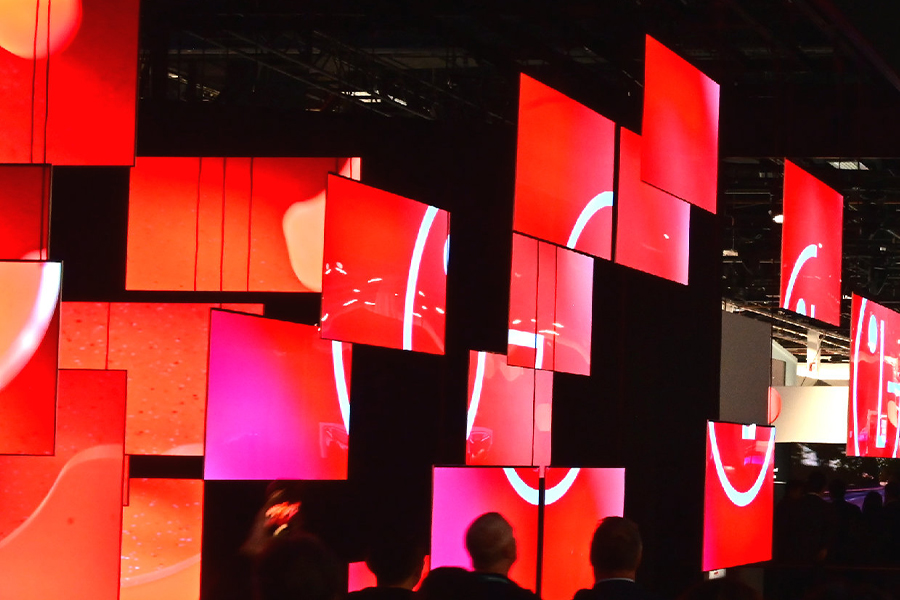 PHOTO: Czarnowski Collective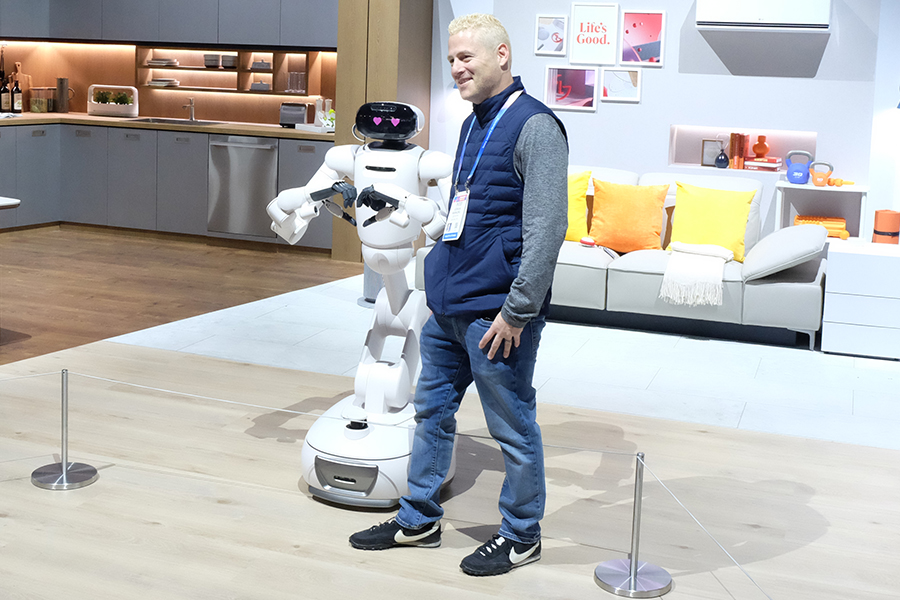
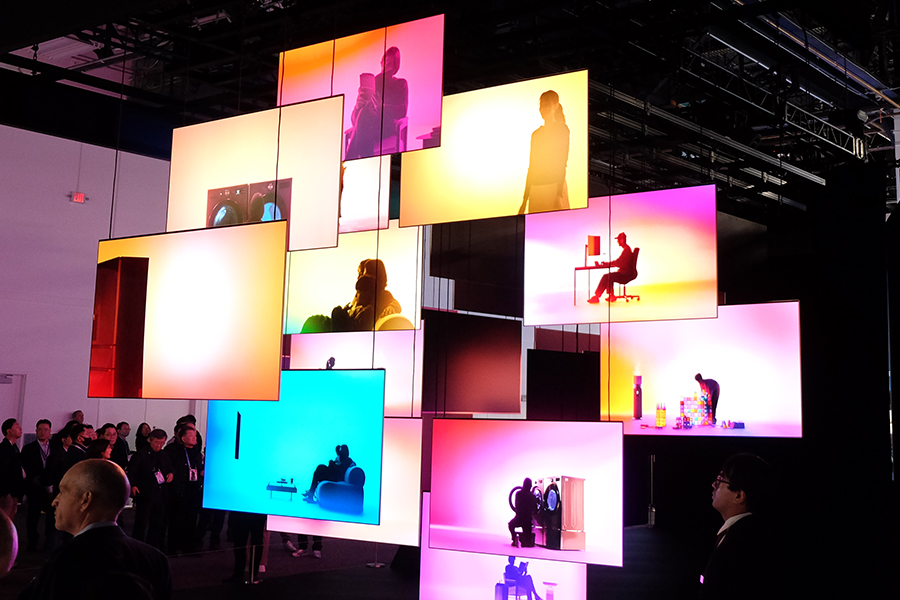
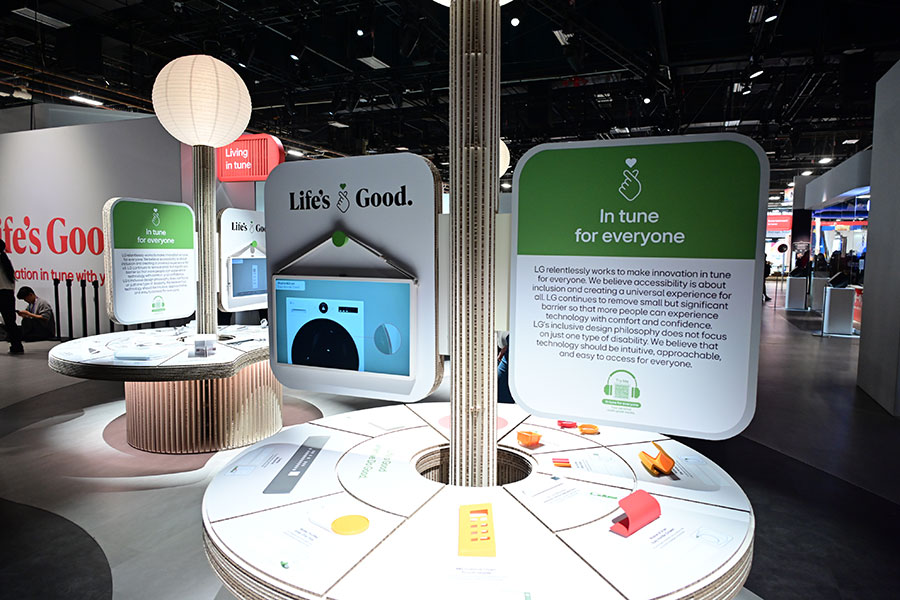 PHOTO: Czarnowski Collective
3. LG ELECTRONICS INC.
Design/Fabrication: Czarnowski Display Service Inc.
LG Electronics Inc. accomplished what many sprawling tech brands never truly master. It presented an enormous product ecosystem in a way that felt intuitive, cohesive, and utterly LG. With design and fabrication from Czarnowski Display Service Inc., LG's footprint of clearly defined zones functioned as standalone experiences while still reading as chapters of a larger narrative. The visitor's journey began with the Viewing zone, where OLED wallpaper TVs featured synchronized content that periodically fused into a single sweeping visual. Nearby, the LG Gallery adopted a museum-like tone, showcasing LG Gallery+ content and next-gen wallpaper TVs. Elsewhere, the Ride zone spotlighted LG's AI-powered in-vehicle solutions, while The Lab on-air studio promoted LG's Boom speaker and Will.i.am collaboration. Within the Entertainment zone, kinetic and digital wizardry collided to highlight LG's webOS and Micro LED displays. Here, a red rubber ball tracked through a series of kinetic displays, seeming to transform into a digital iteration in its progression. Featuring everything from a central display of LG's accessibility solutions to glass-encased robot actuators, LG's exhibit proved that thoughtful organization can turn complexity into clarity — and breadth into brilliance.
Design/Fabrication: Czarnowski Display Service Inc.
LG Electronics Inc. accomplished what many sprawling tech brands never truly master. It presented an enormous product ecosystem in a way that felt intuitive, cohesive, and utterly LG. With design and fabrication from Czarnowski Display Service Inc., LG's footprint of clearly defined zones functioned as standalone experiences while still reading as chapters of a larger narrative. The visitor's journey began with the Viewing zone, where OLED wallpaper TVs featured synchronized content that periodically fused into a single sweeping visual. Nearby, the LG Gallery adopted a museum-like tone, showcasing LG Gallery+ content and next-gen wallpaper TVs. Elsewhere, the Ride zone spotlighted LG's AI-powered in-vehicle solutions, while The Lab on-air studio promoted LG's Boom speaker and Will.i.am collaboration. Within the Entertainment zone, kinetic and digital wizardry collided to highlight LG's webOS and Micro LED displays. Here, a red rubber ball tracked through a series of kinetic displays, seeming to transform into a digital iteration in its progression. Featuring everything from a central display of LG's accessibility solutions to glass-encased robot actuators, LG's exhibit proved that thoughtful organization can turn complexity into clarity — and breadth into brilliance.
 PHOTO: MC², an MCH Group Company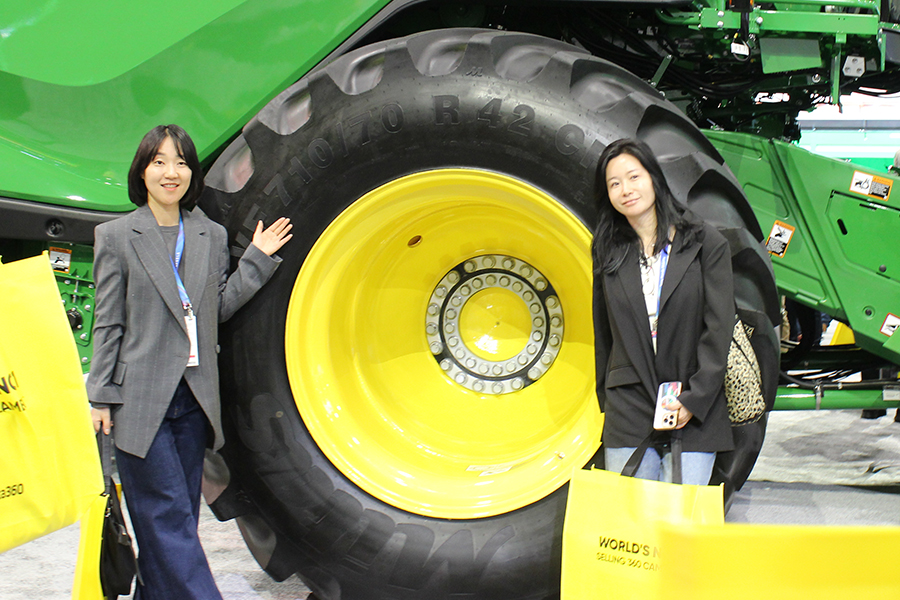
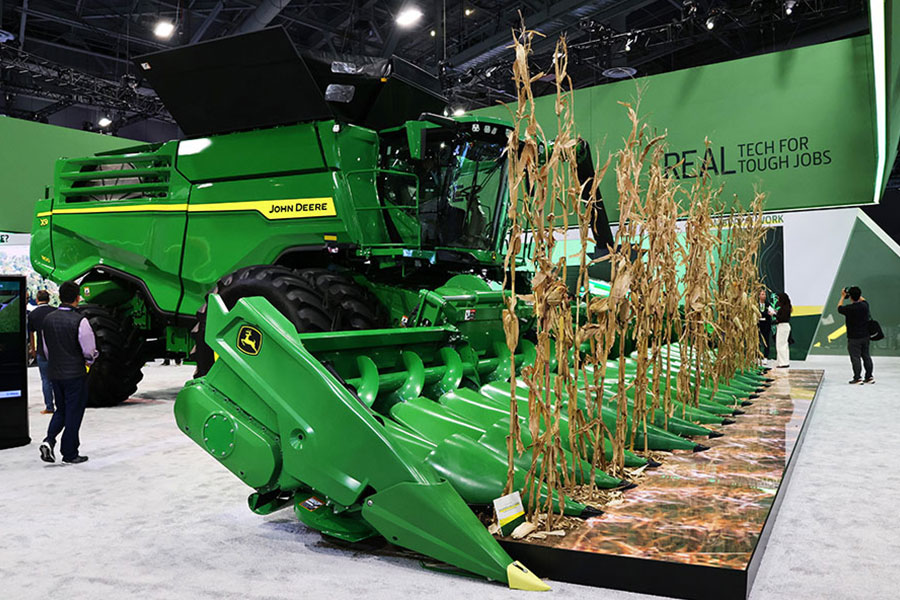 PHOTO: MC², an MCH Group Company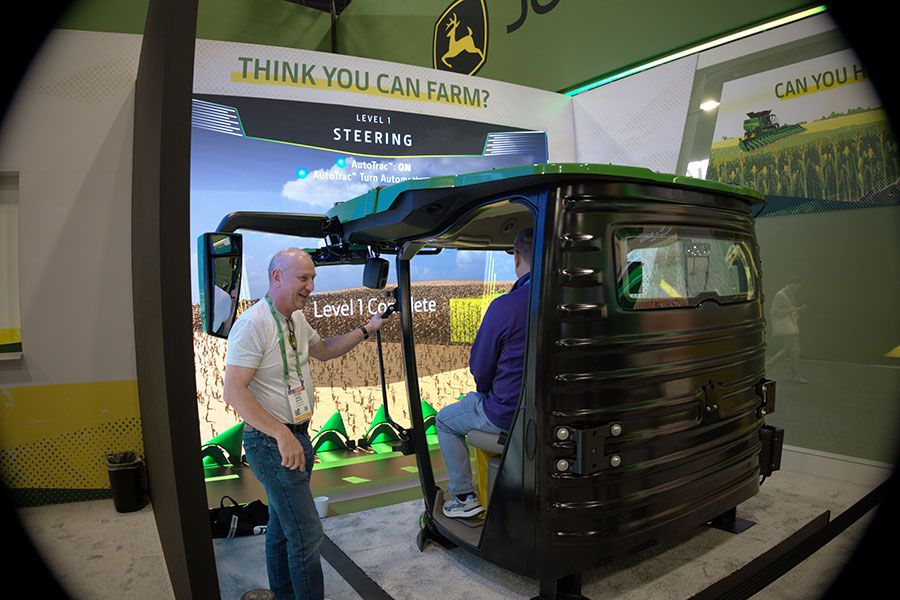
4. JOHN DEERE
Design/Fabrication: MC², an MCH Group Company
Designed and fabricated by MC², an MCH Group Company, the Deere & Co. exhibit literally put visitors in the driver's seat. Visitors climbed aboard a full-size combine harvester to look down on a row of real, 10-foot-tall corn stalks and a looping video of a moving corn field. Meanwhile, the harvester's unloading auger protruded out of the machine and synched up with a wall-based digital display that showed corn kernels seemingly gushing into a moving storage hopper. Aside from the harvester demo, various hands-on interactions translated complex automation into intuitive understanding. At one station, for example, visitors struggled to manually steer a machine, before activating its automation and experiencing an immediate sense of relief. Elsewhere, tables with tethered scale models further explained farming and road-building ecosystems through tactile play. Confident, calm, and clear, John Deere's exhibit reframed heavy machinery as a human-centered technology — one best understood through experience rather than explanation.
Design/Fabrication: MC², an MCH Group Company
Designed and fabricated by MC², an MCH Group Company, the Deere & Co. exhibit literally put visitors in the driver's seat. Visitors climbed aboard a full-size combine harvester to look down on a row of real, 10-foot-tall corn stalks and a looping video of a moving corn field. Meanwhile, the harvester's unloading auger protruded out of the machine and synched up with a wall-based digital display that showed corn kernels seemingly gushing into a moving storage hopper. Aside from the harvester demo, various hands-on interactions translated complex automation into intuitive understanding. At one station, for example, visitors struggled to manually steer a machine, before activating its automation and experiencing an immediate sense of relief. Elsewhere, tables with tethered scale models further explained farming and road-building ecosystems through tactile play. Confident, calm, and clear, John Deere's exhibit reframed heavy machinery as a human-centered technology — one best understood through experience rather than explanation.
 PHOTOS: Factory 360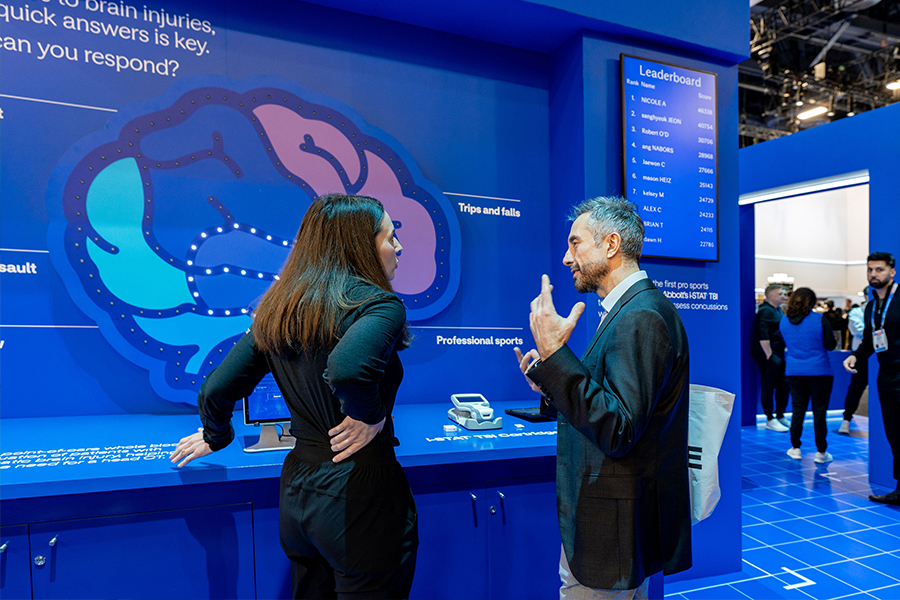
5. ABBOTT LABORATORIES
Design/Fabrication: Factory 360, Catalyst Exhibits
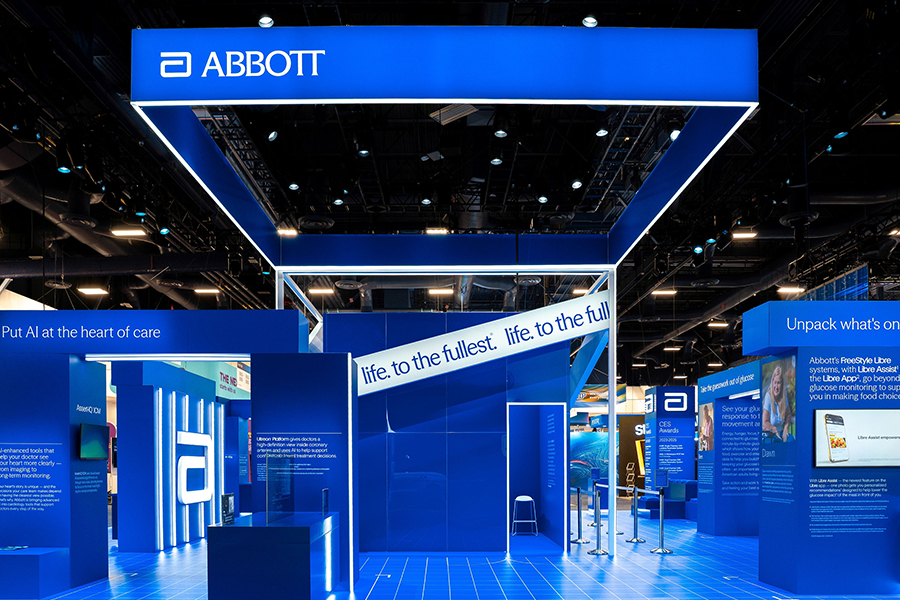
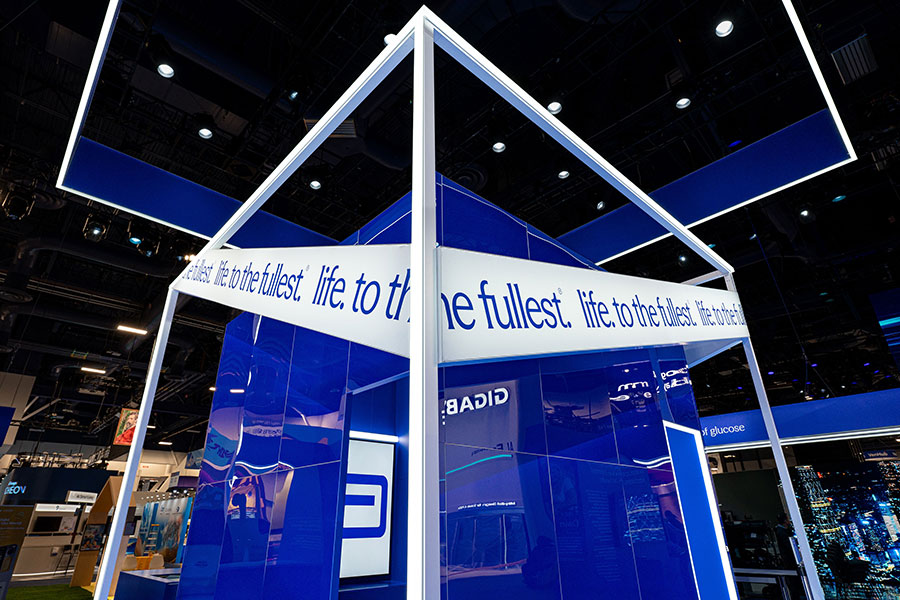
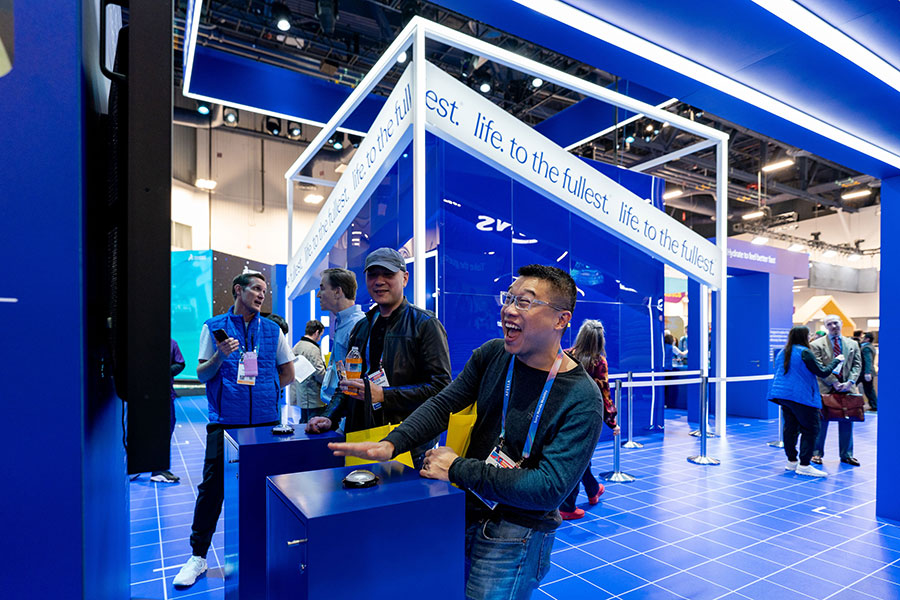
Abbott Laboratories' booth struck a beautiful balance of being deeply on brand and genuinely attendee-centric. Designed and fabricated by Factory 360 and Catalyst Exhibits, the exhibit revolved around a central experience within an enclosed room. Here, medical professionals conducted free blood-type tests that revealed results in mere minutes. By delivering a highly personal insight, Abbott transformed a simple test into a meaningful moment. Positioned around the blood-typing room, interactive stations pulled in attendees from the aisles. Visitors could explore Abbott's Lingo and FreeStyle Libre continuous glucose monitoring systems, test their grip strength, engage with point-of-care concussion-assessment tools, and more. Designers paired each product station with clear, actionable messaging such as “take the guesswork out of glucose” and “act fast, treat fast” for concussion care. Thus, rather than overwhelming visitors with specs, each experience delivered a simple and highly personal insight, reminding visitors that better health isn't abstract. It's built daily through data-informed actions.
Design/Fabrication: Factory 360, Catalyst Exhibits
Abbott Laboratories' booth struck a beautiful balance of being deeply on brand and genuinely attendee-centric. Designed and fabricated by Factory 360 and Catalyst Exhibits, the exhibit revolved around a central experience within an enclosed room. Here, medical professionals conducted free blood-type tests that revealed results in mere minutes. By delivering a highly personal insight, Abbott transformed a simple test into a meaningful moment. Positioned around the blood-typing room, interactive stations pulled in attendees from the aisles. Visitors could explore Abbott's Lingo and FreeStyle Libre continuous glucose monitoring systems, test their grip strength, engage with point-of-care concussion-assessment tools, and more. Designers paired each product station with clear, actionable messaging such as “take the guesswork out of glucose” and “act fast, treat fast” for concussion care. Thus, rather than overwhelming visitors with specs, each experience delivered a simple and highly personal insight, reminding visitors that better health isn't abstract. It's built daily through data-informed actions.
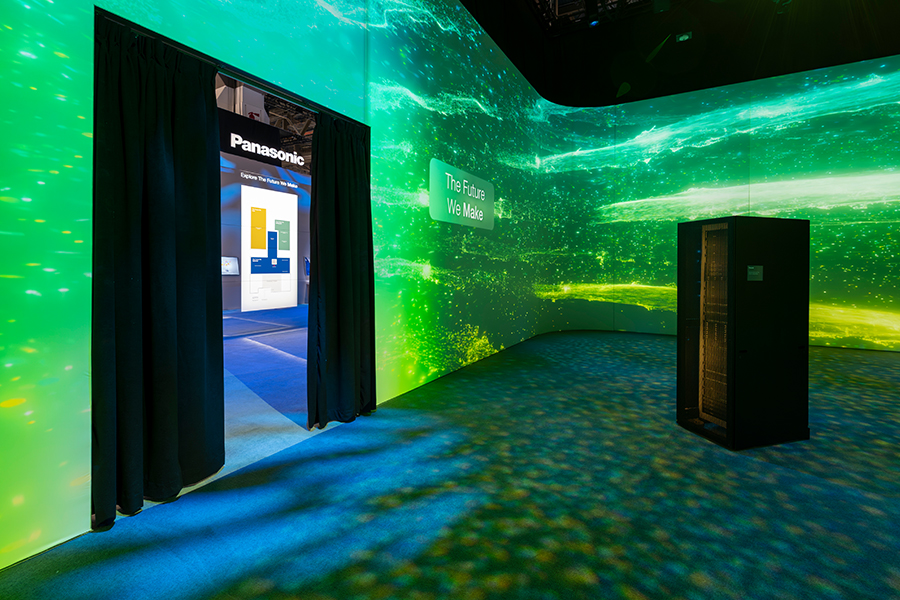 PHOTO: Hyundai Motor Group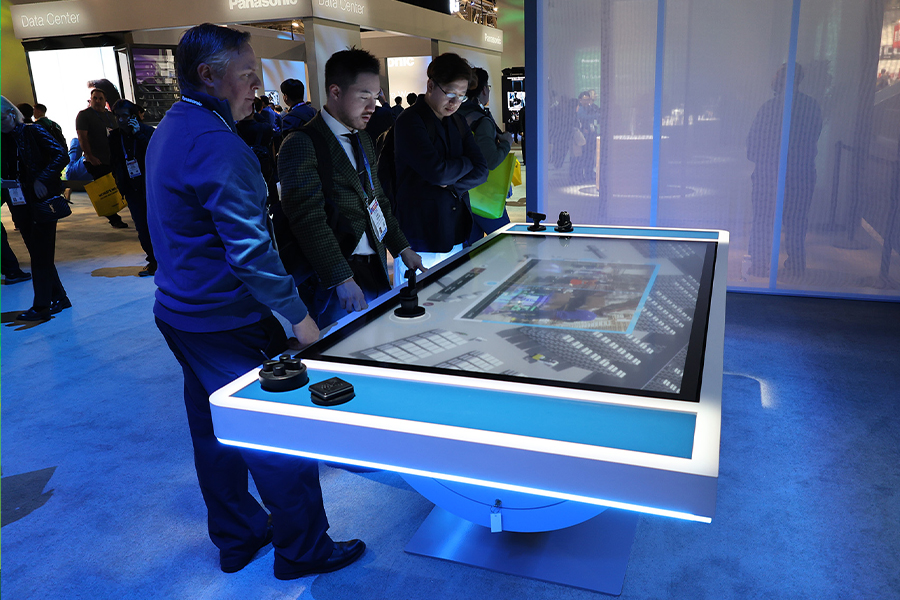
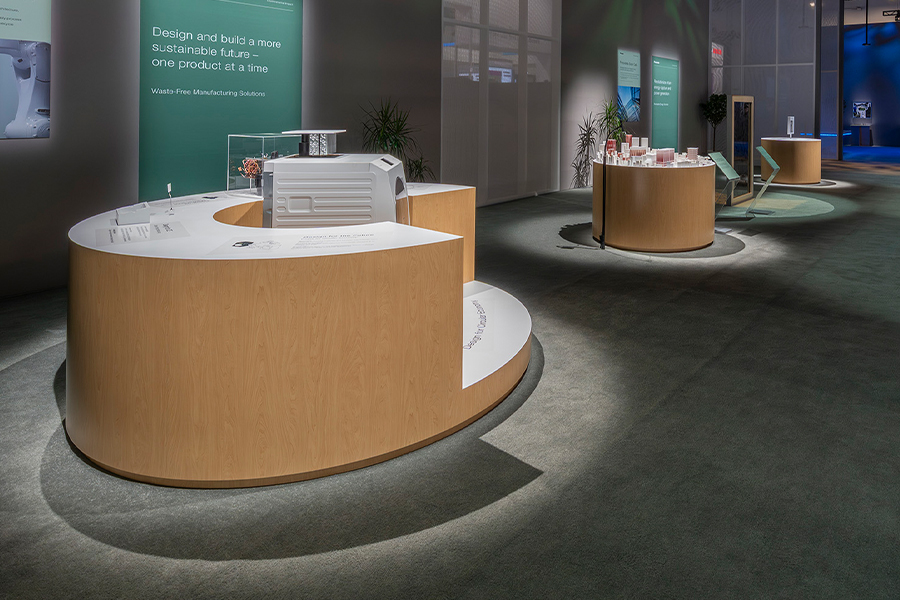 PHOTO: Hyundai Motor Group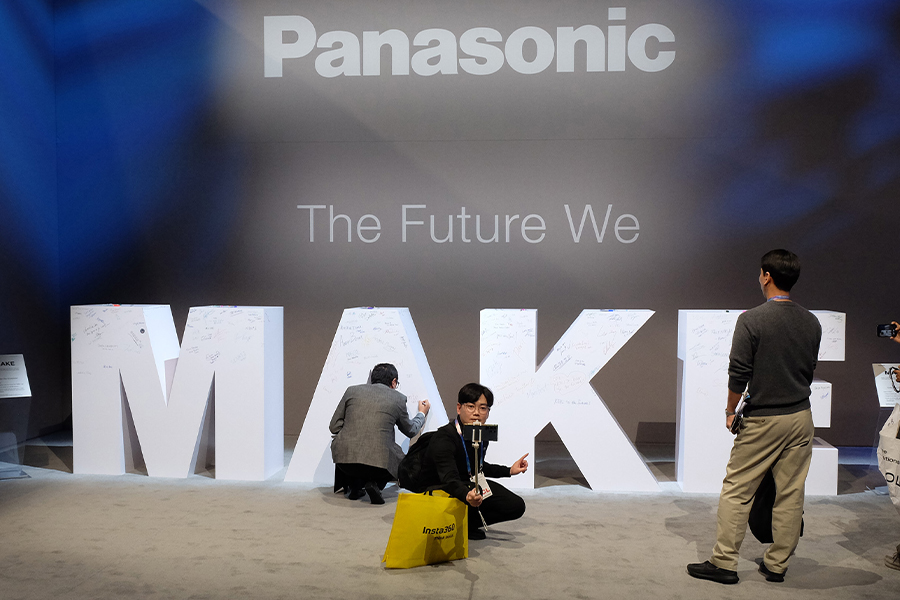
6. PANASONIC CORP. OF NORTH AMERICA
Design/Fabrication: Panasonic Corp. of North America, Czarnowski Display Service Inc.
At a show synonymous with sensory overload, Panasonic Corp. of North America made a compelling case for restraint. Its visitor journey began with a crowd-control tactic, as staff ushered one small group at a time into an enclosed theatre. Here, messaging introduced the booth's three main offerings and introduced its human-centered theme: The Future We Make. Afterward, each group dispersed into three color-coded zones that balanced digital storytelling with tangible, low-tech moments. The Business Process Optimization area showcased tools designed to streamline business environments, while the Environmental Impact zone featured ultra-thin, printable perovskite solar panels and highlighted Panasonic's commitment to the circular economy. In the Personal Wellbeing zone, interactives featuring caregiver support tools and a facial-expression-based Brain Health Quotient demo proved the brand's belief in preventative, accessible care. Creatives at Panasonic and Czarnowski Display Service Inc. opted for soothing soundscapes, purposeful lighting, and generous white space to reinforce a calm, intentional atmosphere. In doing so, they created a rare pocket of serenity, inviting visitors to slow down and absorb Panasonic's human-centric approach to AI.
Design/Fabrication: Panasonic Corp. of North America, Czarnowski Display Service Inc.
At a show synonymous with sensory overload, Panasonic Corp. of North America made a compelling case for restraint. Its visitor journey began with a crowd-control tactic, as staff ushered one small group at a time into an enclosed theatre. Here, messaging introduced the booth's three main offerings and introduced its human-centered theme: The Future We Make. Afterward, each group dispersed into three color-coded zones that balanced digital storytelling with tangible, low-tech moments. The Business Process Optimization area showcased tools designed to streamline business environments, while the Environmental Impact zone featured ultra-thin, printable perovskite solar panels and highlighted Panasonic's commitment to the circular economy. In the Personal Wellbeing zone, interactives featuring caregiver support tools and a facial-expression-based Brain Health Quotient demo proved the brand's belief in preventative, accessible care. Creatives at Panasonic and Czarnowski Display Service Inc. opted for soothing soundscapes, purposeful lighting, and generous white space to reinforce a calm, intentional atmosphere. In doing so, they created a rare pocket of serenity, inviting visitors to slow down and absorb Panasonic's human-centric approach to AI.
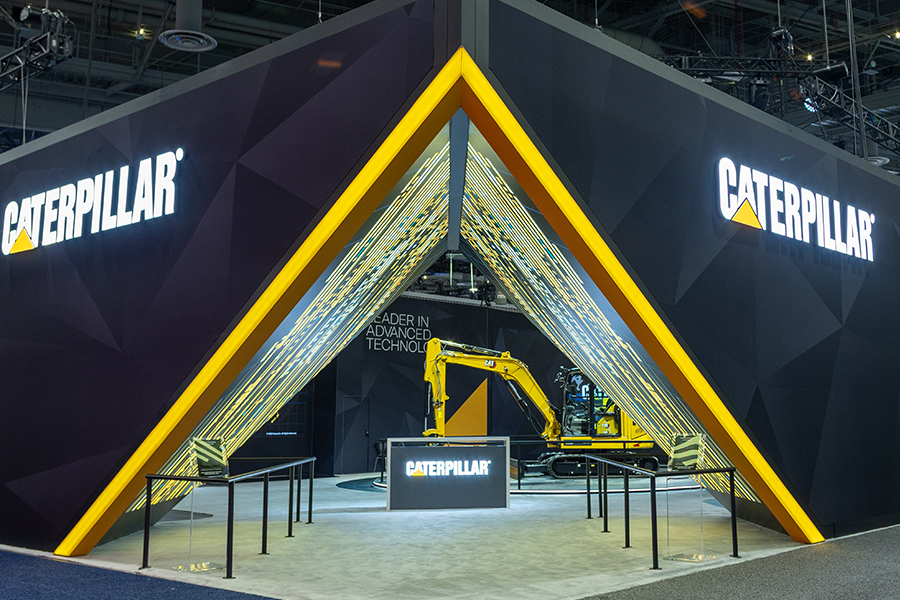 PHOTO: Outerkind LLC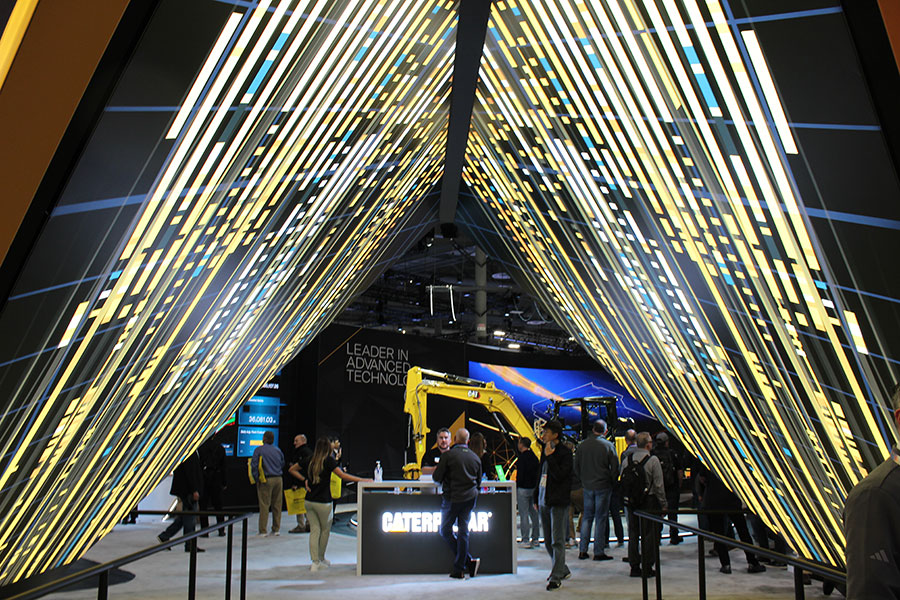
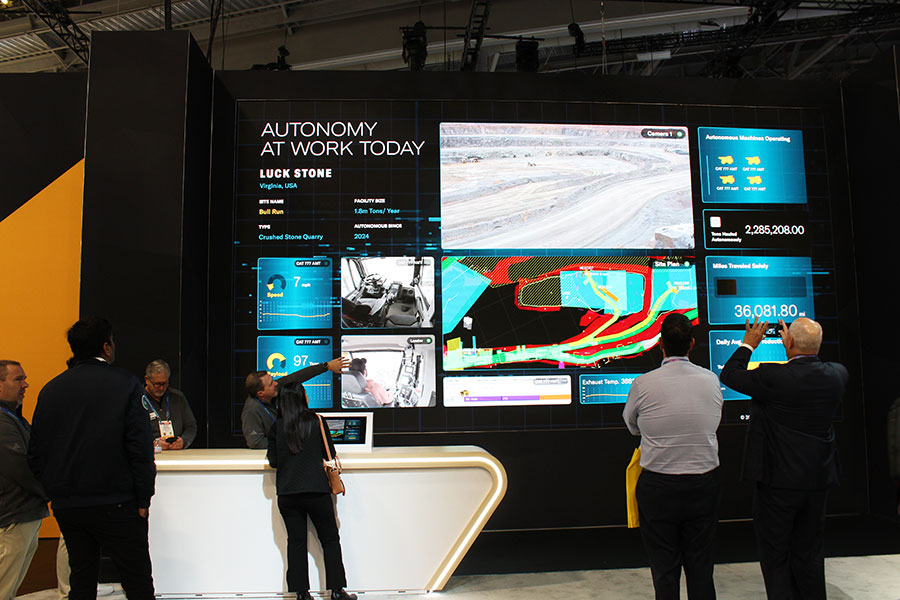
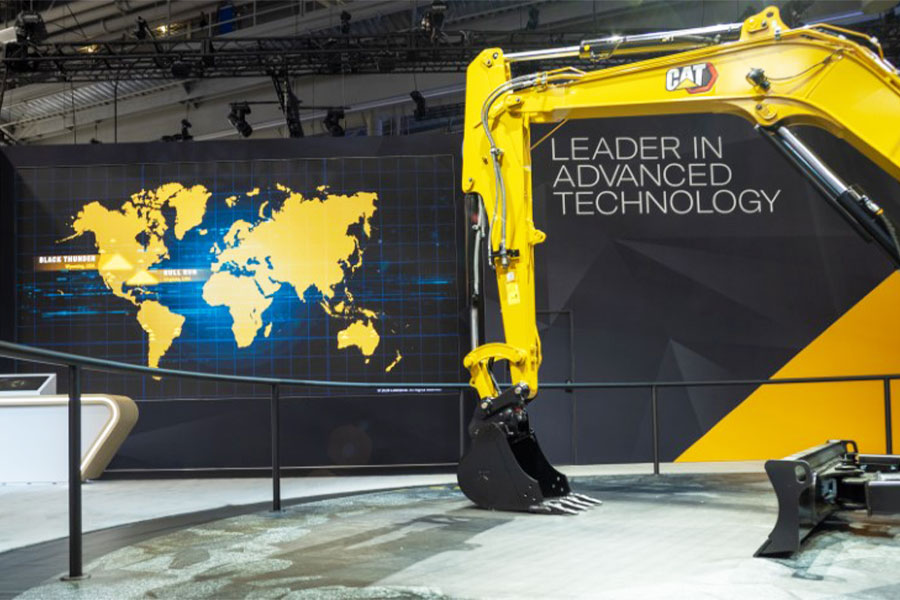 PHOTO: Outerkind LLC
7. CATERPILLAR INC.
In a break from its traditional footprints, Caterpillar Inc. introduced a defined entrance and exit, both framed by triangular portals. Within the structure, architecture translated Caterpillar's evolution from heavy-equipment manufacturer to technology-driven innovator. Visitors first encountered a dramatic exterior featuring black-on-black geometric surfaces, whose resulting optical illusion gave flat planes depth and movement. Inside, the experience unfolded chronologically. A timeline grounded visitors in Caterpillar's decades-long journey toward autonomy, leading to a large LED display highlighting current autonomous technologies. Additionally, dedicated zones explored autonomous applications and introduced the Cat AI Assistant through voice interaction, while a glass-walled social studio hosted dozens of conversations. The attendee progression culminated at the booth's centerpiece: a massive machine demoed several times per day to illustrate how AI integrates directly into operator cabins. With controlled lighting, sound cues, and circulation validated by visitor tracking, Caterpillar affirmed its shift from a heavy-equipment manufacturer to a technological powerhouse.
In a break from its traditional footprints, Caterpillar Inc. introduced a defined entrance and exit, both framed by triangular portals. Within the structure, architecture translated Caterpillar's evolution from heavy-equipment manufacturer to technology-driven innovator. Visitors first encountered a dramatic exterior featuring black-on-black geometric surfaces, whose resulting optical illusion gave flat planes depth and movement. Inside, the experience unfolded chronologically. A timeline grounded visitors in Caterpillar's decades-long journey toward autonomy, leading to a large LED display highlighting current autonomous technologies. Additionally, dedicated zones explored autonomous applications and introduced the Cat AI Assistant through voice interaction, while a glass-walled social studio hosted dozens of conversations. The attendee progression culminated at the booth's centerpiece: a massive machine demoed several times per day to illustrate how AI integrates directly into operator cabins. With controlled lighting, sound cues, and circulation validated by visitor tracking, Caterpillar affirmed its shift from a heavy-equipment manufacturer to a technological powerhouse.
 PHOTOS: SPARKS MARKETING LLC, A FREEMAN COMPANY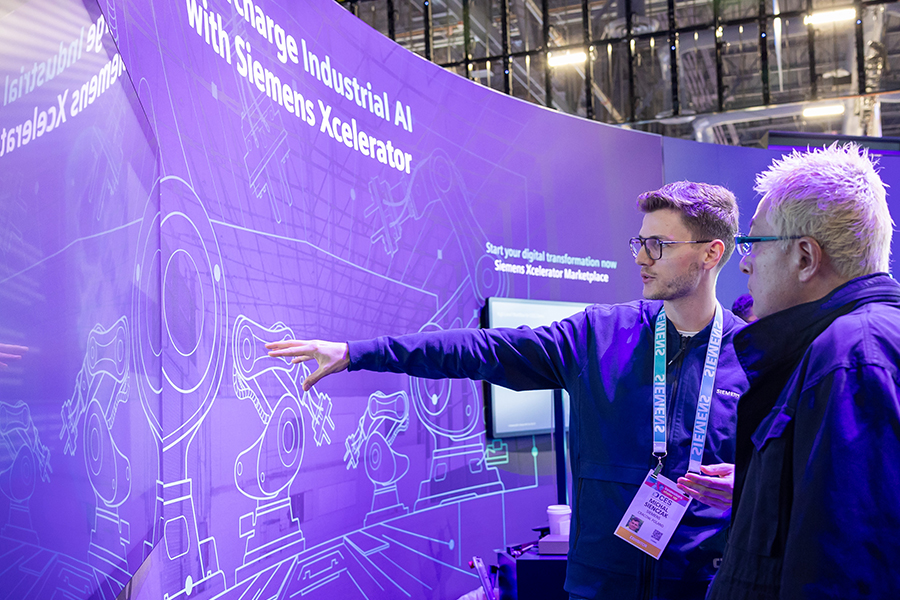
8. SIEMENS AG
Design/Fabrication: The Freeman Co. LLC, Sparks Marketing LLC, a Freeman Company
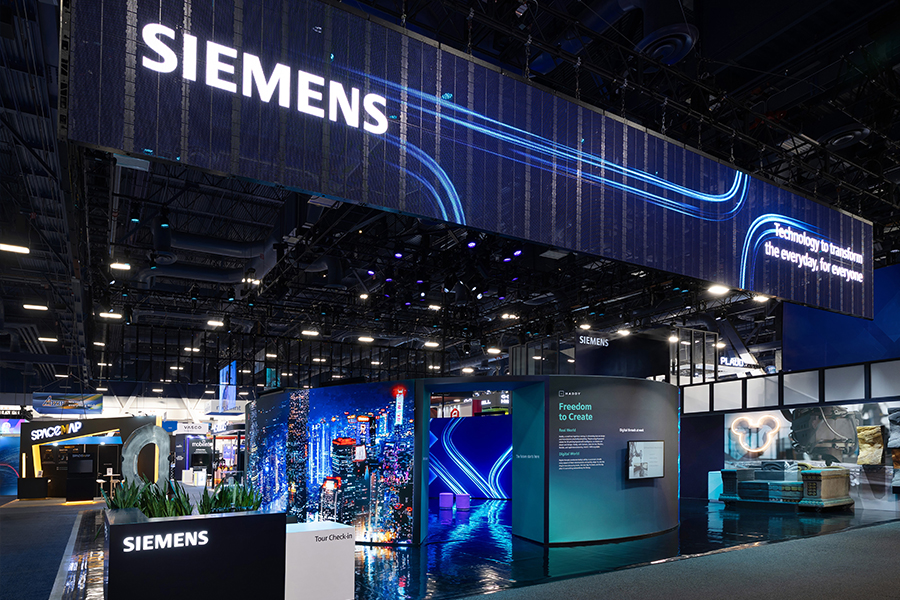
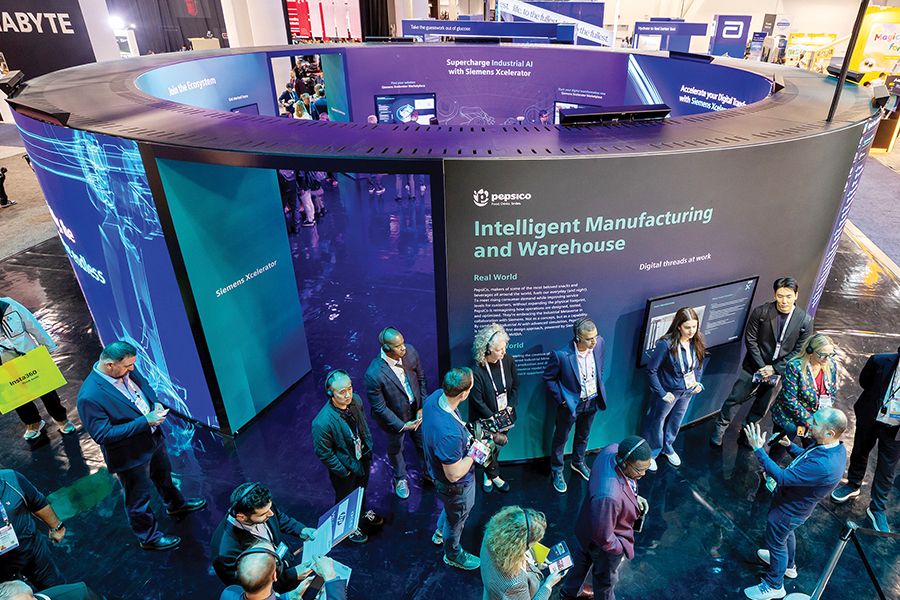
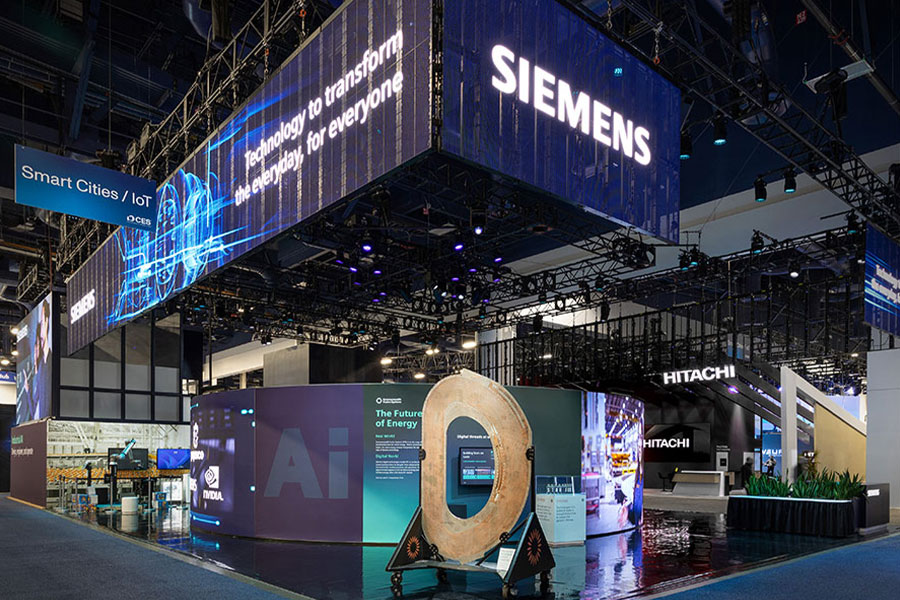
Siemens AG delivered something rare at CES 2026: utter clarity. Rather than scattering messages across a sprawling footprint, it organized its booth around a deliberate inward-out journey that grounded visitors in Siemens' story before setting them loose in its applications. Most attendees beelined to a circular immersive core dedicated to the Siemens Xcelerator, an AI ecosystem. Curved walls and video content created an orientation chamber that felt welcoming rather than overwhelming. Next, visitors explored any of three customer story zones, each illustrating how the same industrial AI ecosystem plays out across real-world scenarios. At each zone, physical artifacts and digital simulations allowed attendees to self-select their depth of engagement. Along with the public portion of the space, creatives at The Freeman Co. LLC and Sparks Marketing LLC, a Freeman Company, crafted an invite-only double-story structure that housed VIP and meeting spaces. Throughout public and private environs, human-scale architecture — walls limited to roughly 10 feet, softened corners, and custom-built forms — kept the experience intimate and approachable. The experience stripped away noise and left visitors with a clear understanding of what Siemens does, why it matters, and how it all fits together.
Design/Fabrication: The Freeman Co. LLC, Sparks Marketing LLC, a Freeman Company
Siemens AG delivered something rare at CES 2026: utter clarity. Rather than scattering messages across a sprawling footprint, it organized its booth around a deliberate inward-out journey that grounded visitors in Siemens' story before setting them loose in its applications. Most attendees beelined to a circular immersive core dedicated to the Siemens Xcelerator, an AI ecosystem. Curved walls and video content created an orientation chamber that felt welcoming rather than overwhelming. Next, visitors explored any of three customer story zones, each illustrating how the same industrial AI ecosystem plays out across real-world scenarios. At each zone, physical artifacts and digital simulations allowed attendees to self-select their depth of engagement. Along with the public portion of the space, creatives at The Freeman Co. LLC and Sparks Marketing LLC, a Freeman Company, crafted an invite-only double-story structure that housed VIP and meeting spaces. Throughout public and private environs, human-scale architecture — walls limited to roughly 10 feet, softened corners, and custom-built forms — kept the experience intimate and approachable. The experience stripped away noise and left visitors with a clear understanding of what Siemens does, why it matters, and how it all fits together.
 PHOTOS: Hyundai Motor Group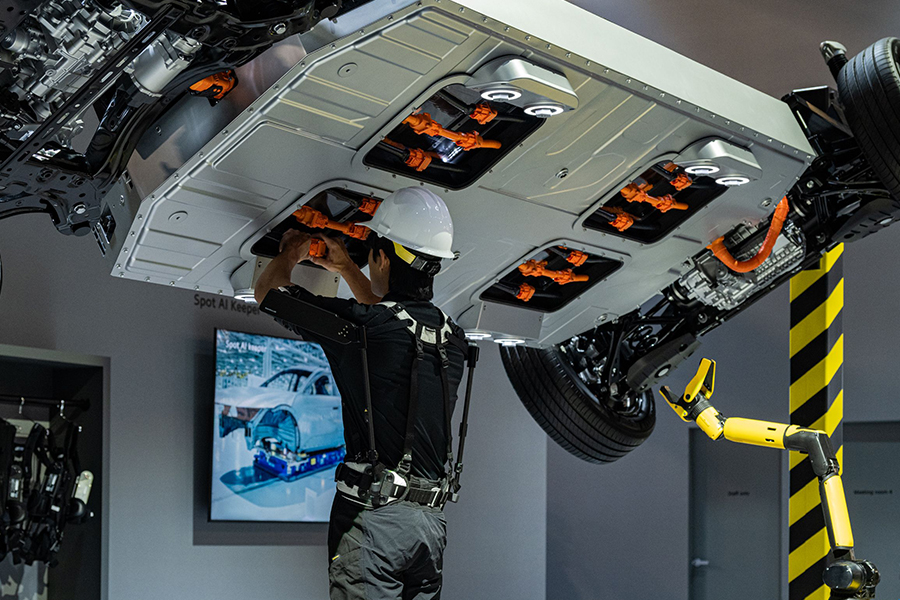
9. HYUNDAI MOTOR CO.
Design/Fabrication: Brand Marketing Division, Hyundai Motor Company; Innocean Worldwide Inc
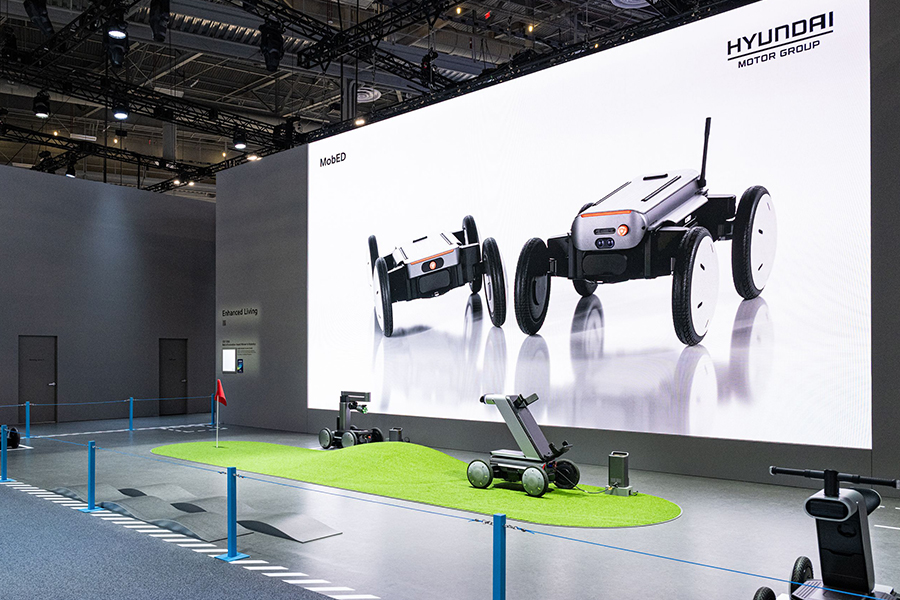
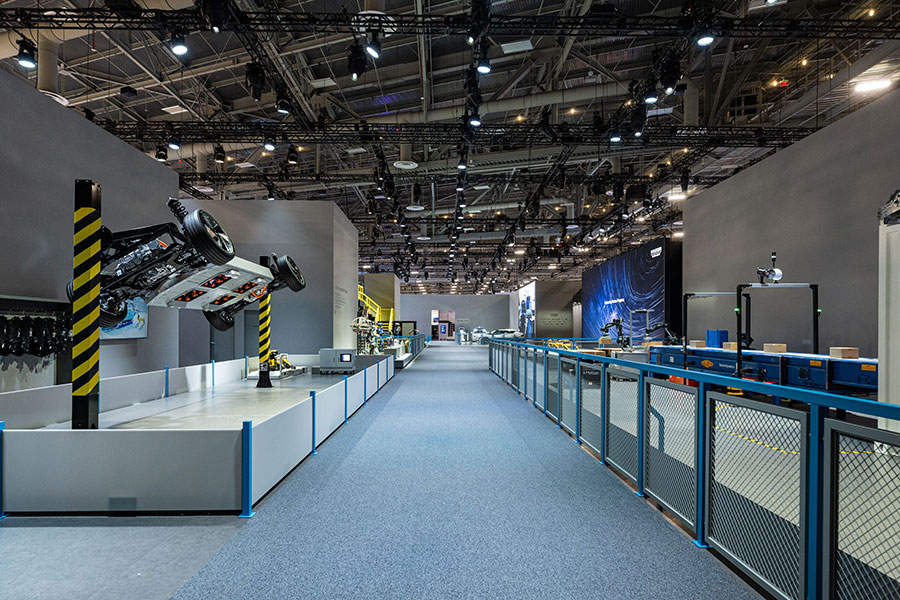
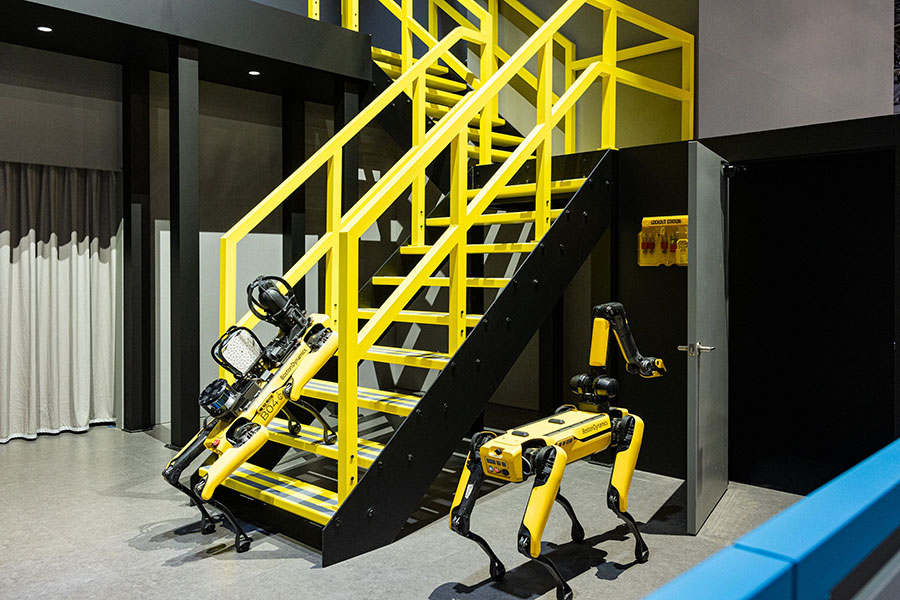
Entering Hyundai Motor Co.'s exhibit was like stepping into one of its luxury automobiles. While an exterior enveloped by shimmering white fabric lent an air of mystery, the interior offered a sedate refuge from the cacophonous world outside. Along with the visually calm black and gray color scheme, the inside was hushed by the absence of an ambient soundscape. After a timed entry, visitors followed the booth's T-shaped path through a sequence of clearly defined zones replete with gallery-like vignettes displaying technological evolution. At one point, though, the minimalist look braked hard for a gleaming canary-colored staircase railing where a golden robot dog navigated the stairs, one of several advanced automation demos. Guests, for example, could channel their inner Iron Man by slipping on the X-ble Shoulder industrial exoskeleton and performing vehicle assembly tasks, or they could watch a parking robot lift and maneuver an IONIQ 5 SUV. By eschewing harsh colors and jarring soundscapes, the Hyundai booth was as unhurried and contemplative as a Sunday drive.
Design/Fabrication: Brand Marketing Division, Hyundai Motor Company; Innocean Worldwide Inc
Entering Hyundai Motor Co.'s exhibit was like stepping into one of its luxury automobiles. While an exterior enveloped by shimmering white fabric lent an air of mystery, the interior offered a sedate refuge from the cacophonous world outside. Along with the visually calm black and gray color scheme, the inside was hushed by the absence of an ambient soundscape. After a timed entry, visitors followed the booth's T-shaped path through a sequence of clearly defined zones replete with gallery-like vignettes displaying technological evolution. At one point, though, the minimalist look braked hard for a gleaming canary-colored staircase railing where a golden robot dog navigated the stairs, one of several advanced automation demos. Guests, for example, could channel their inner Iron Man by slipping on the X-ble Shoulder industrial exoskeleton and performing vehicle assembly tasks, or they could watch a parking robot lift and maneuver an IONIQ 5 SUV. By eschewing harsh colors and jarring soundscapes, the Hyundai booth was as unhurried and contemplative as a Sunday drive.
10. 3M CO.
Design/Fabrication: STAR
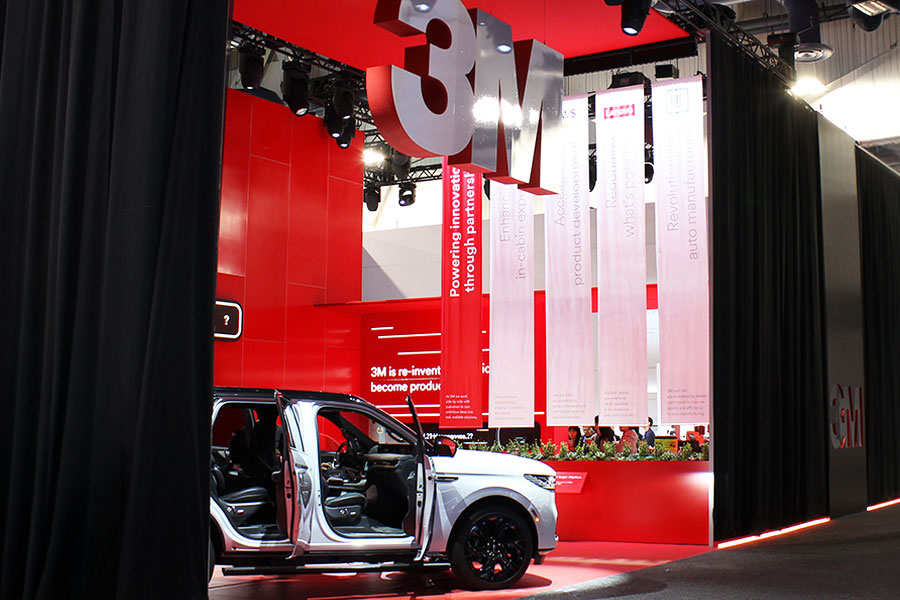
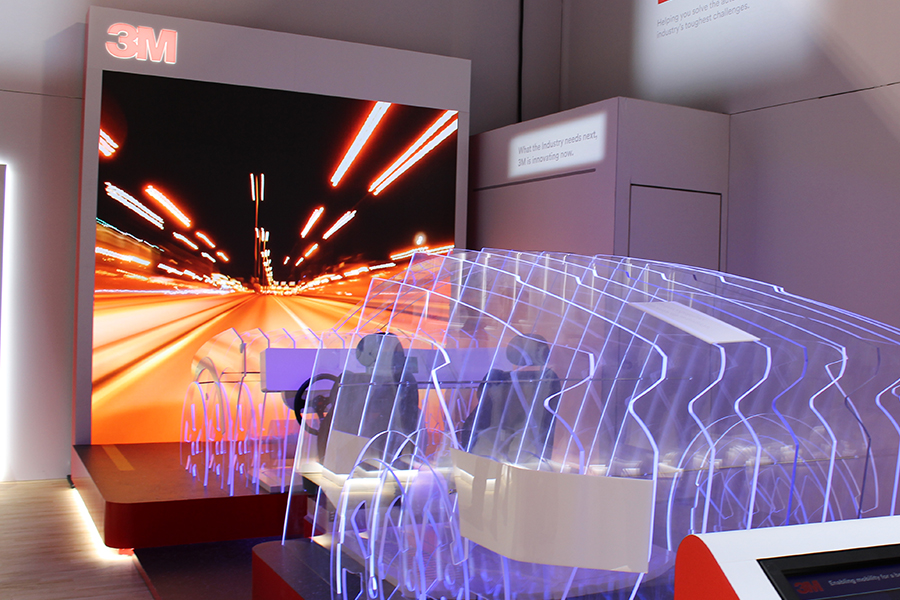
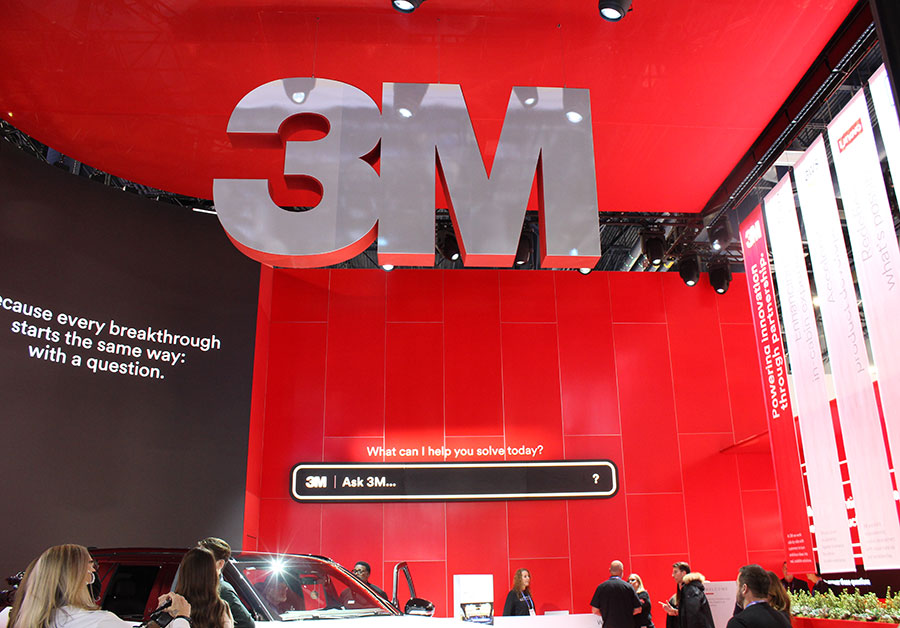
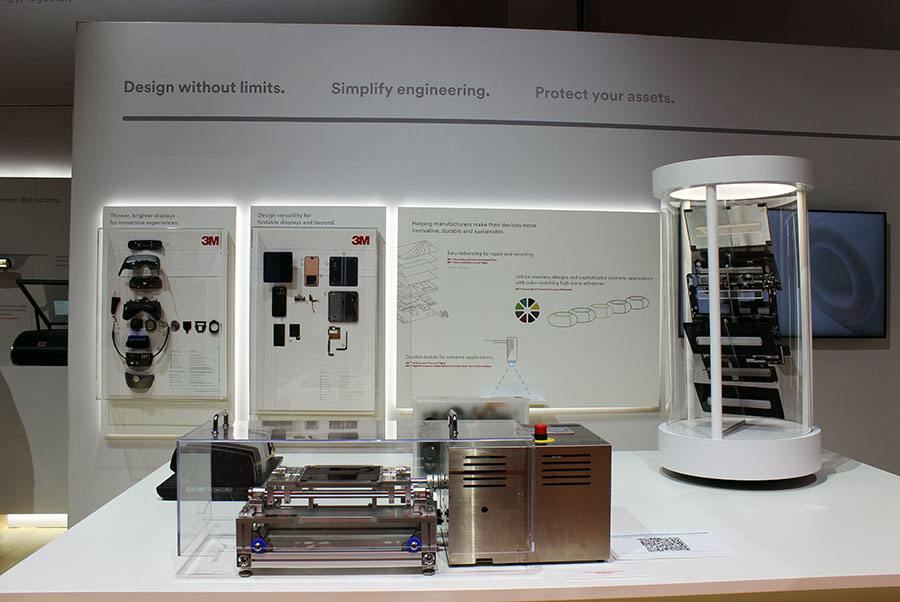
Famed for Post-It Notes and invisible tape, 3M Co. is also known as an ingredient brand, one whose products are often unseen and unappreciated. To turn that perception inside out, 3M, working with its exhibit partner STAR, steered its CES booth away from previous stands heavy with text toward one rich with eye candy. Draped in dramatic black fabric, the booth demanded attention with knockout design touches, including a 3-D logo cutout made of the company's privacy film. Viewed from an angle, it appeared opaque, but when seen head-on from the booth's exterior, it morphed into a transparent portal, beckoning attendees with a “peek inside” effect. Here, ingenious architectural elements filled the space, such as a supersized roll of the film suspended above the logo and a stylized car comprising slices of Plexiglass. The vehicle anchored the public zone, serving as both an audience draw and a narrative shorthand for 3M's presence in automotive products and innovation. A triumph at making its hidden ingredients tangible through architectural and experiential elements, 3M's booth, unlike its iconic tape, was anything but invisible.
Design/Fabrication: STAR
Famed for Post-It Notes and invisible tape, 3M Co. is also known as an ingredient brand, one whose products are often unseen and unappreciated. To turn that perception inside out, 3M, working with its exhibit partner STAR, steered its CES booth away from previous stands heavy with text toward one rich with eye candy. Draped in dramatic black fabric, the booth demanded attention with knockout design touches, including a 3-D logo cutout made of the company's privacy film. Viewed from an angle, it appeared opaque, but when seen head-on from the booth's exterior, it morphed into a transparent portal, beckoning attendees with a “peek inside” effect. Here, ingenious architectural elements filled the space, such as a supersized roll of the film suspended above the logo and a stylized car comprising slices of Plexiglass. The vehicle anchored the public zone, serving as both an audience draw and a narrative shorthand for 3M's presence in automotive products and innovation. A triumph at making its hidden ingredients tangible through architectural and experiential elements, 3M's booth, unlike its iconic tape, was anything but invisible.
11. LIFESMART INC.
Design/Fabrication: LifeSmart Inc.
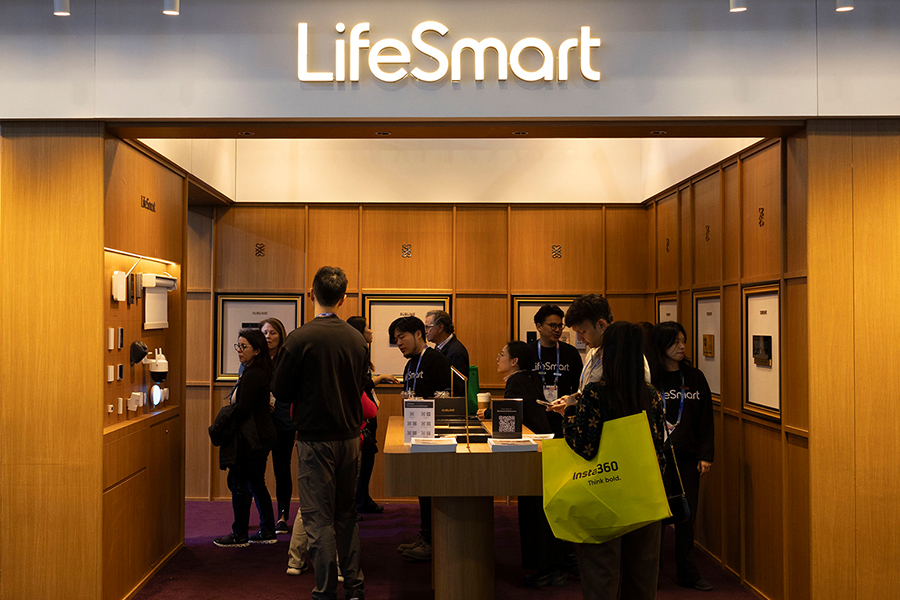
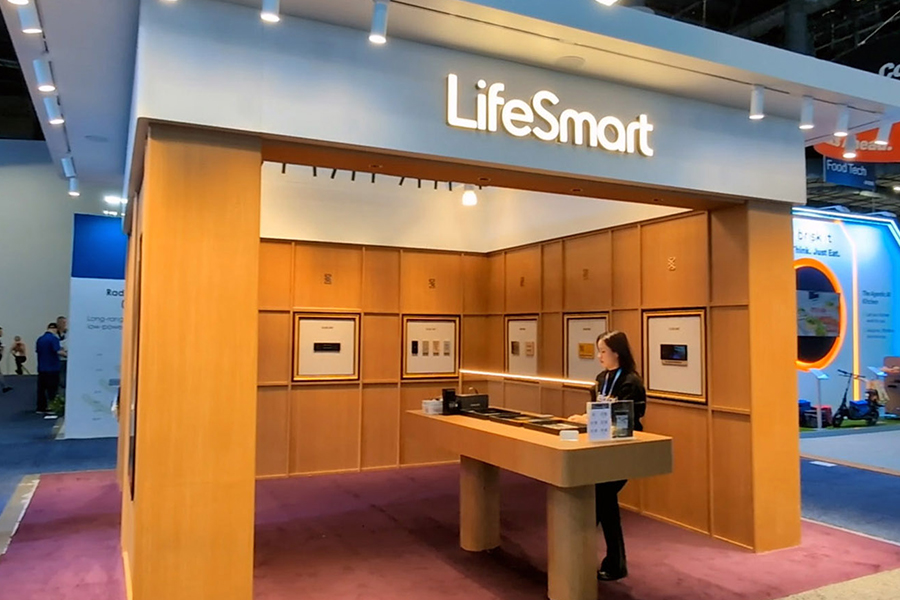
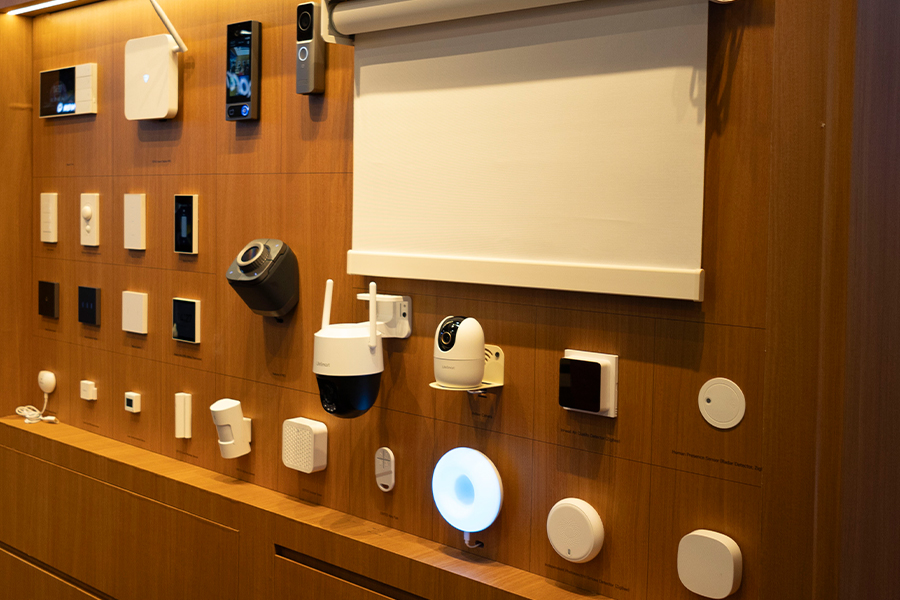
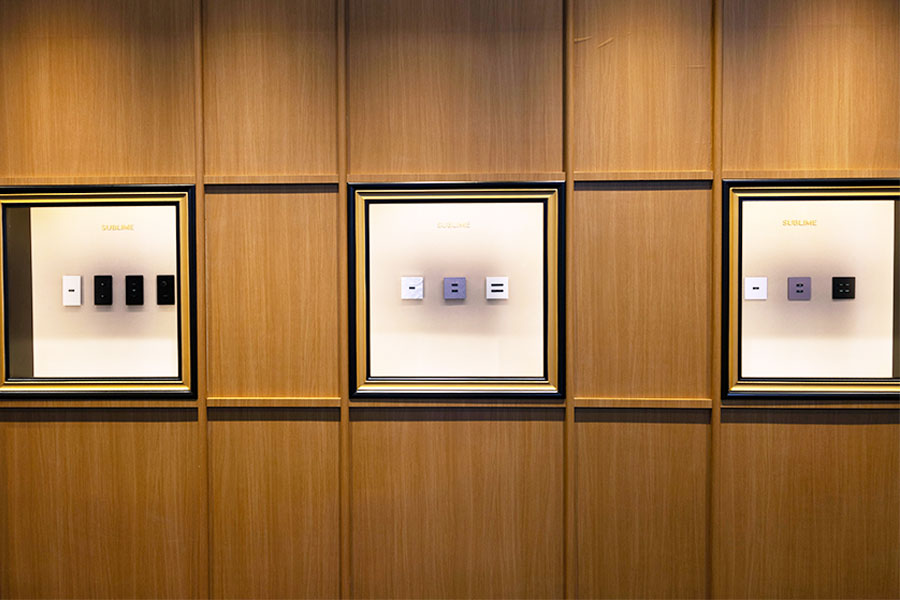
At first glance, LifeSmart Inc.'s booth seemed diminutive, particularly when compared to CES standards. For a company whose value proposition has historically asserted robust underlying technologies — from intelligent thermostats to environmental sensors — LifeSmart's 20-by-20-foot exhibit was understated. That's because instead of competing on size, the brand embraced an unexpected quietude, treating restraint as a differentiator. Featuring warm wood finishes, the museum-like booth distinguished itself by reinforcing the ideas of craftsmanship, materiality, and clarity of design. With it, home controls, sensors, and automation systems to manage lighting, climate, security, and other connected devices appeared within framed exhibit wall cases. From a marketing perspective, LifeSmart pivoted away from merely explaining its technology to focus on how its smart-home products look and feel. The positioning shift acknowledged a market reality: Many customers still don't fully understand smart technologies, but they continue to care about aesthetics and interior harmony. By exhibiting everyday components as objets d'art, LifeSmart reframed smart-home technology as something beautiful to integrate into the home, not dominate it.
Design/Fabrication: LifeSmart Inc.
At first glance, LifeSmart Inc.'s booth seemed diminutive, particularly when compared to CES standards. For a company whose value proposition has historically asserted robust underlying technologies — from intelligent thermostats to environmental sensors — LifeSmart's 20-by-20-foot exhibit was understated. That's because instead of competing on size, the brand embraced an unexpected quietude, treating restraint as a differentiator. Featuring warm wood finishes, the museum-like booth distinguished itself by reinforcing the ideas of craftsmanship, materiality, and clarity of design. With it, home controls, sensors, and automation systems to manage lighting, climate, security, and other connected devices appeared within framed exhibit wall cases. From a marketing perspective, LifeSmart pivoted away from merely explaining its technology to focus on how its smart-home products look and feel. The positioning shift acknowledged a market reality: Many customers still don't fully understand smart technologies, but they continue to care about aesthetics and interior harmony. By exhibiting everyday components as objets d'art, LifeSmart reframed smart-home technology as something beautiful to integrate into the home, not dominate it.
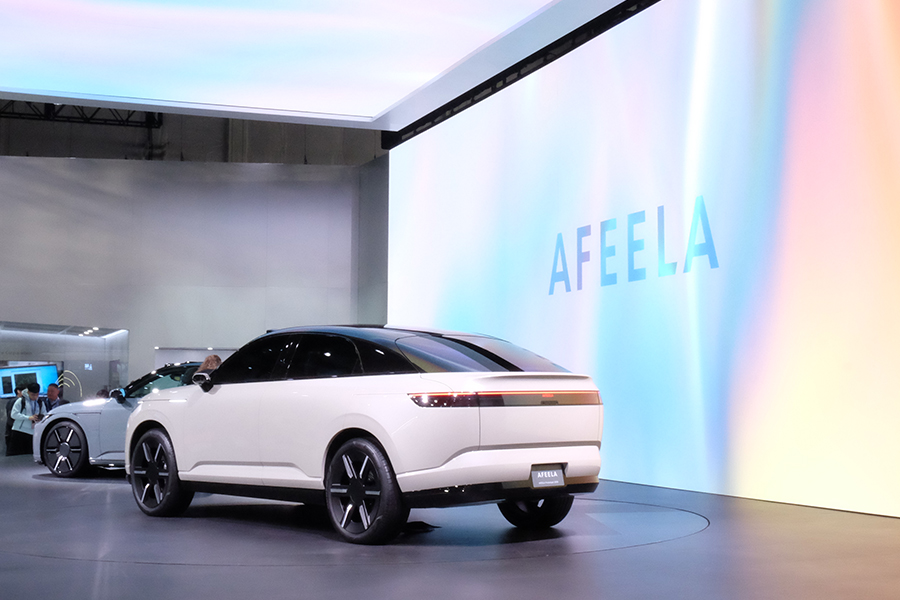
 PHOTO: Sony Honda Mobility Inc.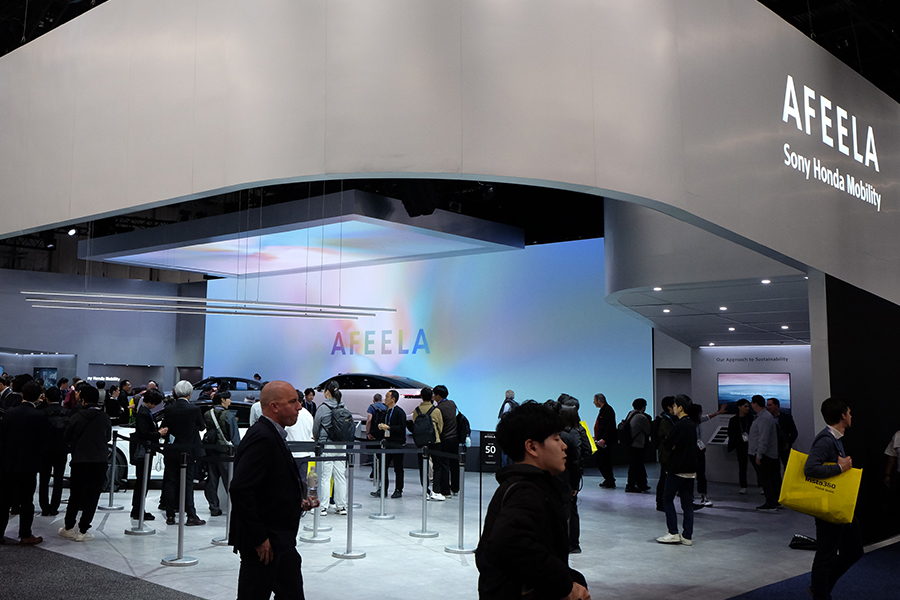
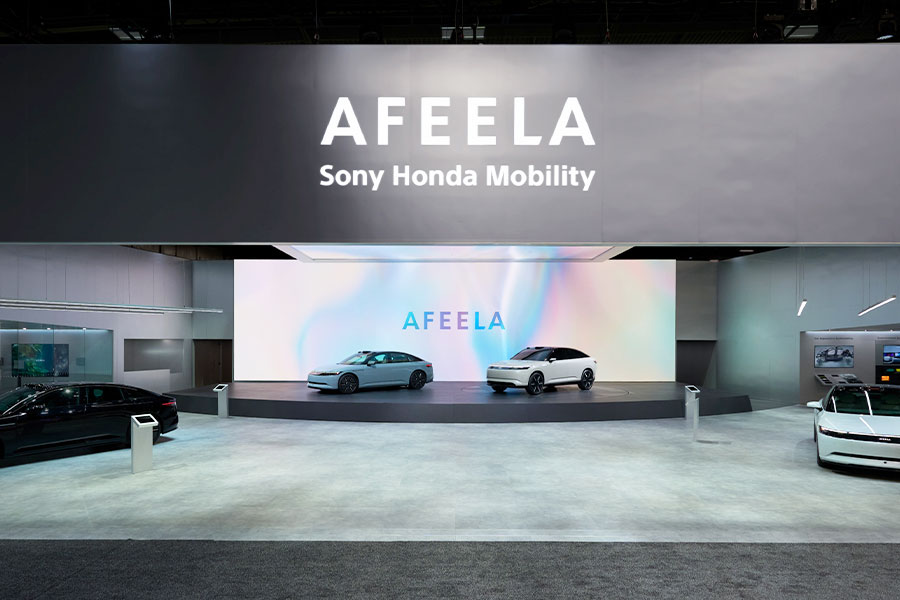 PHOTO: Sony Honda Mobility Inc.
12. SONY HONDA MOBILITY INC.
Design/Fabrication: Sony Honda Mobility Inc., Pinnacle Exhibits Inc.
Few CES exhibits felt as composed as the AFEELA booth from Sony Honda Mobility Inc. Internal brand designers and Pinnacle Exhibits Inc. creatives delivered a serene environment that positioned AFEELA as a fresh electric-vehicle brand shaped by entertainment and human-centered design. The exhibit's focal points comprised four cars: three AFEELA 1 pre-production models, alongside the newly revealed AFEELA Prototype. Two sat atop a raised stage for optimal viewing, while another duo rested at floor level, encouraging inspection. Overhead, a couldn't miss gray header wrapped the space, and massive backwall and overhead screens featured Sony-brand content. Flanking the vehicles, the booth offered distinct zones. On the left, the Entertainment Suite invited deeper engagement, including with a next-generation navigation concept for the autonomous driving era. Nearby, visitors experienced AFEELA Immersive Audio through a sound demo room. The right side of the exhibit showcased collaborators such as TikTok, AWS, and Dolby, alongside samples of recycled and plant-based car-interior materials. By pairing restraint with immersion, AFEELA offered a moment of quiet clarity, suggesting that the future of mobility may feel less like a machine and more like a companion.
Design/Fabrication: Sony Honda Mobility Inc., Pinnacle Exhibits Inc.
Few CES exhibits felt as composed as the AFEELA booth from Sony Honda Mobility Inc. Internal brand designers and Pinnacle Exhibits Inc. creatives delivered a serene environment that positioned AFEELA as a fresh electric-vehicle brand shaped by entertainment and human-centered design. The exhibit's focal points comprised four cars: three AFEELA 1 pre-production models, alongside the newly revealed AFEELA Prototype. Two sat atop a raised stage for optimal viewing, while another duo rested at floor level, encouraging inspection. Overhead, a couldn't miss gray header wrapped the space, and massive backwall and overhead screens featured Sony-brand content. Flanking the vehicles, the booth offered distinct zones. On the left, the Entertainment Suite invited deeper engagement, including with a next-generation navigation concept for the autonomous driving era. Nearby, visitors experienced AFEELA Immersive Audio through a sound demo room. The right side of the exhibit showcased collaborators such as TikTok, AWS, and Dolby, alongside samples of recycled and plant-based car-interior materials. By pairing restraint with immersion, AFEELA offered a moment of quiet clarity, suggesting that the future of mobility may feel less like a machine and more like a companion.
13. SUMITOMO RUBBER INDUSTRIES
Design/Fabrication: Hakuhodo Inc., Trade Design
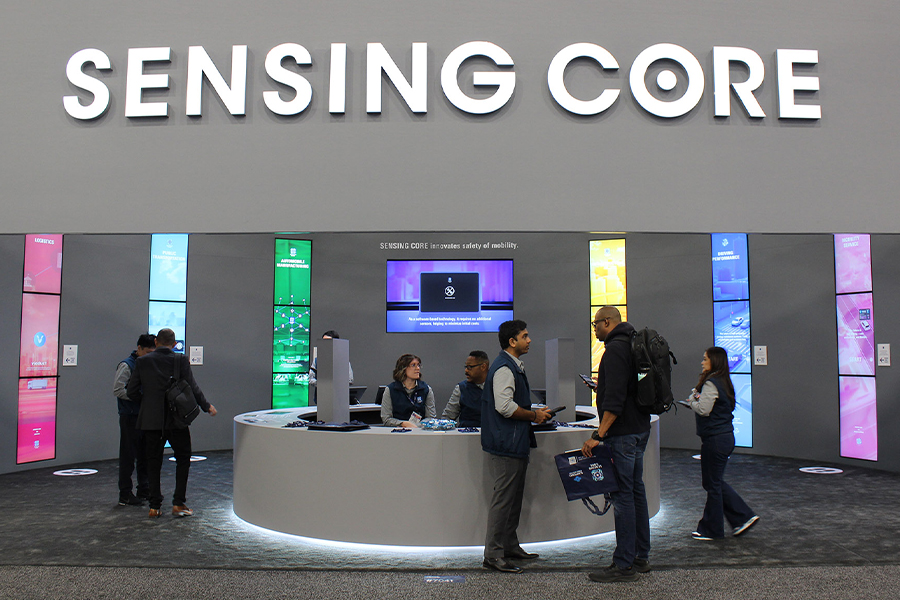
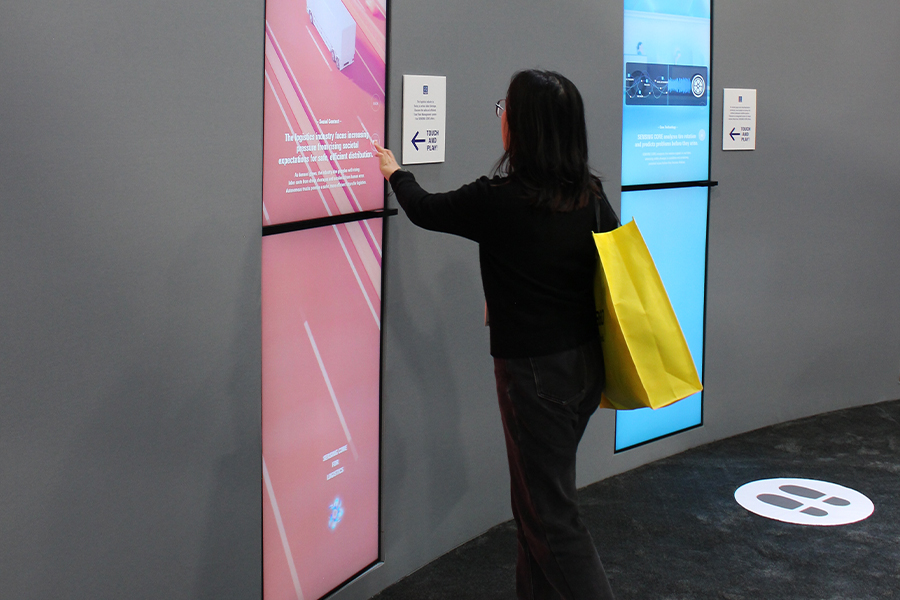
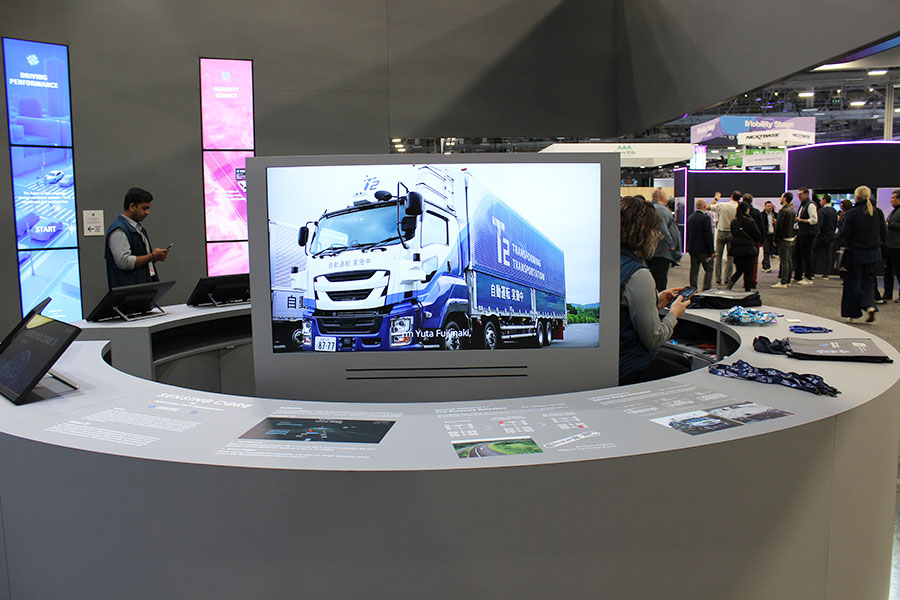
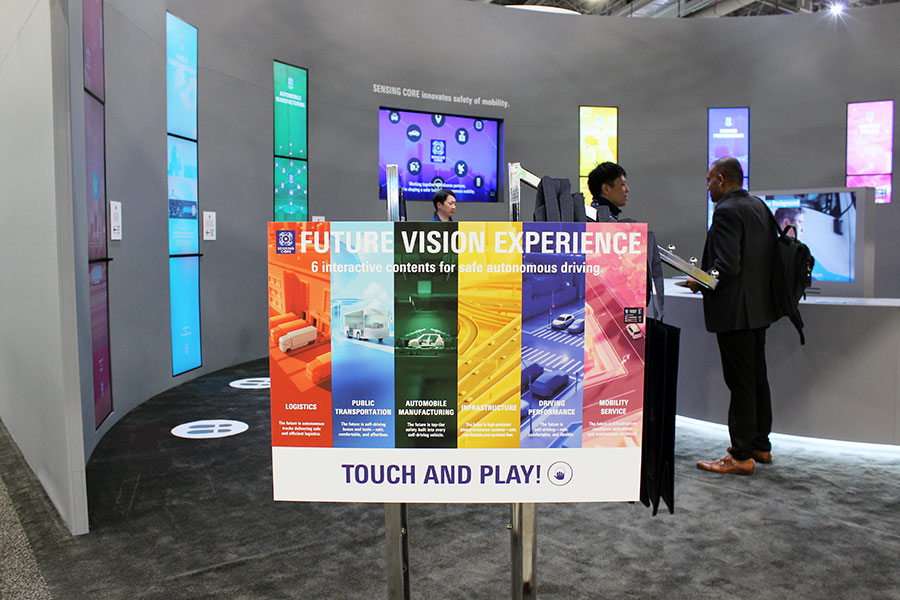
To highlight its Sensing Core smart tire technology, Sumitomo Rubber Industries Ltd. took a restrained approach. It translated complex mobility and infrastructure technologies into a calm environment that was an intentional contrast to the sensory intensity that often defines CES. Designed and fabricated by Hakuhodo Inc. in collaboration with Trade Design, the stand featured a large circular welcome desk to immediately orient visitors. Behind the desk, a central screen delivered steady motion and context. Meanwhile, the back wall introduced the exhibit's primary storytelling device: six tall, evenly spaced vertical screens, each color-coded to represent a future mobility scenario: logistics, public transportation, automobile manufacturing, infrastructure, driving performance, and mobility services. The displays operated via motion-sensor technology, enabling contactless interaction and reinforcing the brand's emphasis on sensing and safety. Throughout, material choices were deliberately subdued, from the neutral gray carpet to matte finishes and evenly applied lighting. Ultimately, Sensing Core's largely self-guided experience supported efficient visits while allowing deeper exploration — demonstrating that the most effective way to convey advanced technology is to make it easy to understand.
Design/Fabrication: Hakuhodo Inc., Trade Design
To highlight its Sensing Core smart tire technology, Sumitomo Rubber Industries Ltd. took a restrained approach. It translated complex mobility and infrastructure technologies into a calm environment that was an intentional contrast to the sensory intensity that often defines CES. Designed and fabricated by Hakuhodo Inc. in collaboration with Trade Design, the stand featured a large circular welcome desk to immediately orient visitors. Behind the desk, a central screen delivered steady motion and context. Meanwhile, the back wall introduced the exhibit's primary storytelling device: six tall, evenly spaced vertical screens, each color-coded to represent a future mobility scenario: logistics, public transportation, automobile manufacturing, infrastructure, driving performance, and mobility services. The displays operated via motion-sensor technology, enabling contactless interaction and reinforcing the brand's emphasis on sensing and safety. Throughout, material choices were deliberately subdued, from the neutral gray carpet to matte finishes and evenly applied lighting. Ultimately, Sensing Core's largely self-guided experience supported efficient visits while allowing deeper exploration — demonstrating that the most effective way to convey advanced technology is to make it easy to understand.
14. SHENZHEN INTELLIROCKS
TECHNOLOGY CO. LTD.
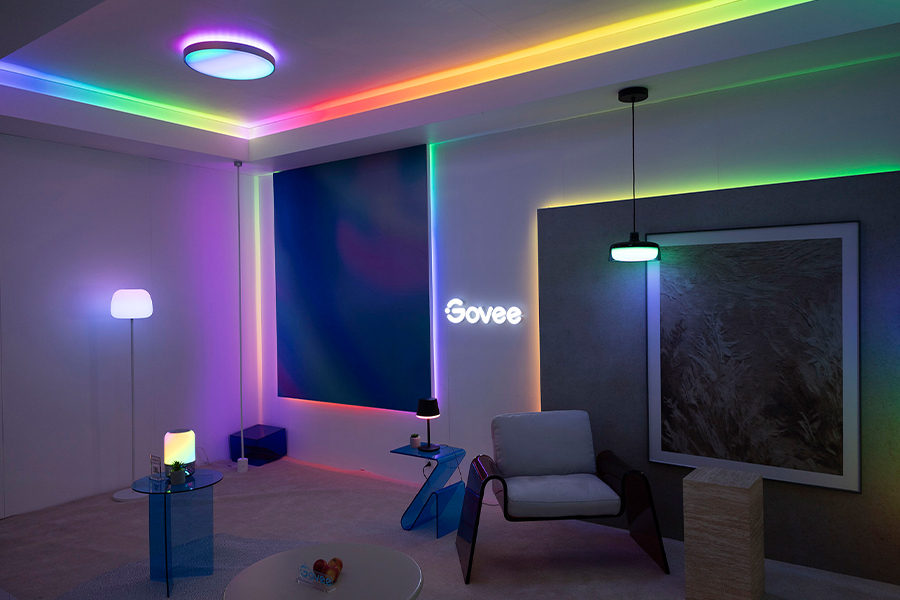
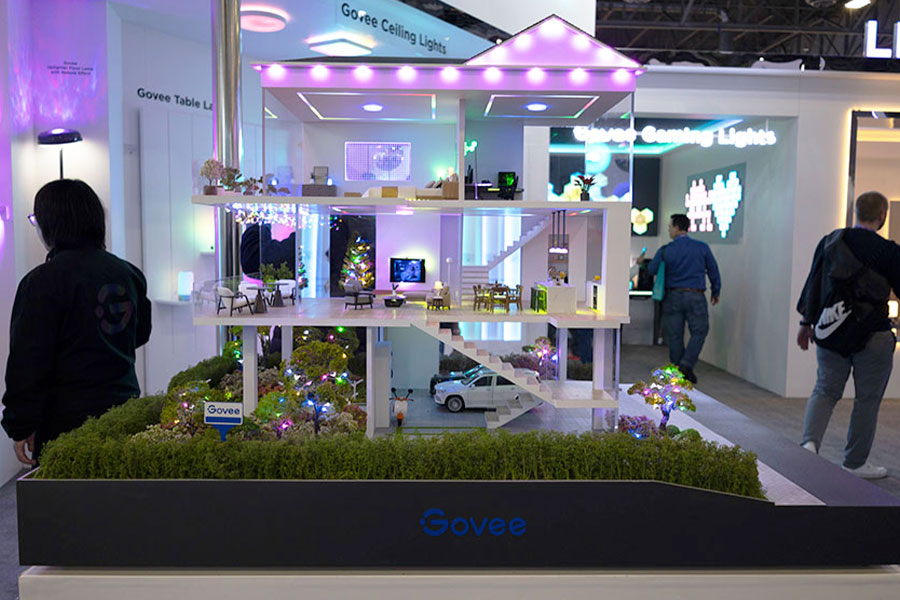
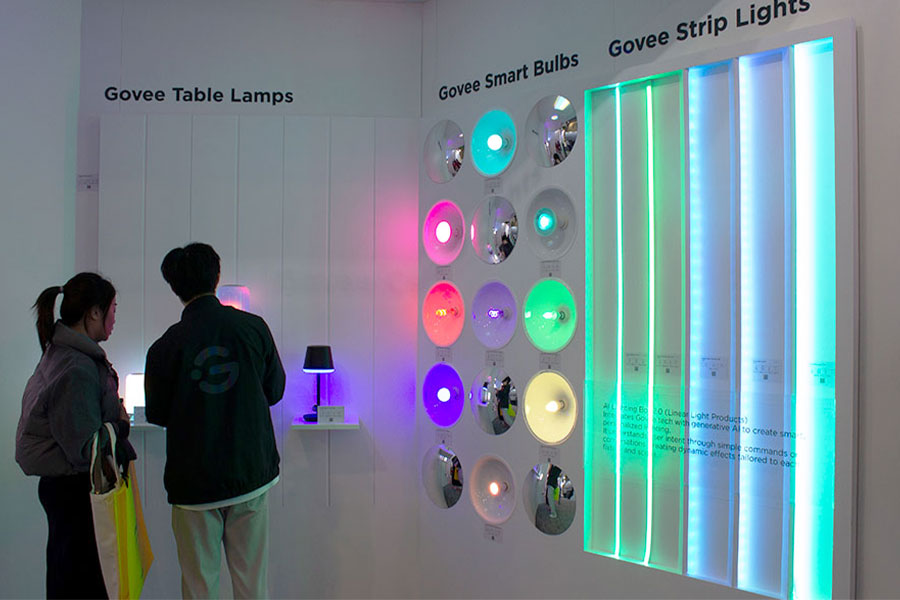
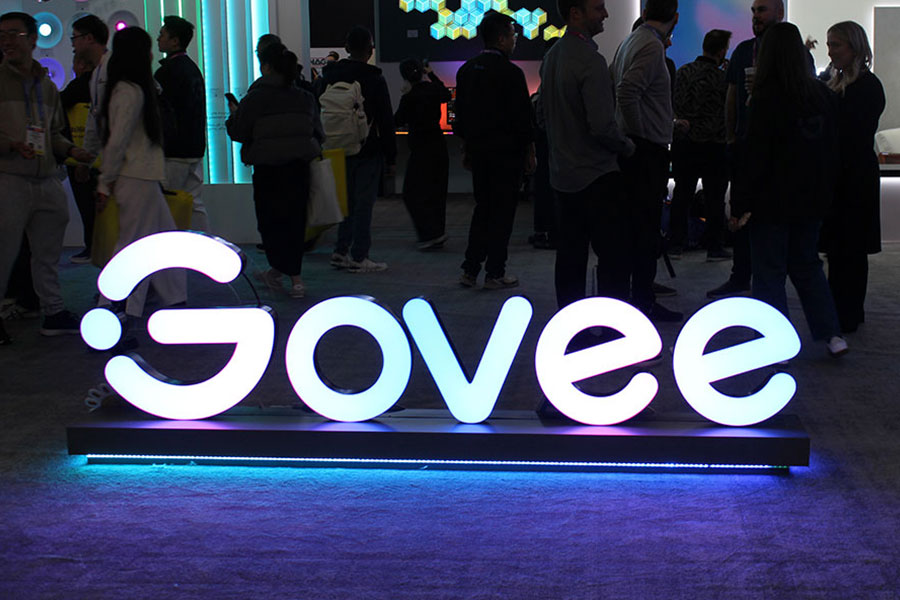
Under the glow of an illuminated sign committed to “Lighting the Future,” Shenzhen Intellirocks Technology Co. Ltd. — which owns the Govee brand — delivered one of the show's most playful and colorful experiences. Showcasing a smart lighting ecosystem in an approachable environment, Govee's exhibit established distinct home-inspired vignettes to exhibit its technology in real-life circumstances. Overhead, a roof-like element further signaled Govee's offerings as full-home solutions rather than standalone products. Throughout, the immersive layout helped attendees visualize Govee's lighting in everyday environments. From standing lamps to desk lamps and light strips to programmable LEDs, Govee's displays demonstrated both indoor and outdoor uses. Employing top-tier LEDs, AI algorithms, and other innovations in light displaying technology, Govee aims to make “everyday moments brighter and more enjoyable.” Its bright, dynamic, and whimsical booth delivered on this goal on the CES show floor. And in doing so, Govee positioned smart lighting not as a background utility, but as an expressive design language that shapes mood, identity, and the modern home.
Under the glow of an illuminated sign committed to “Lighting the Future,” Shenzhen Intellirocks Technology Co. Ltd. — which owns the Govee brand — delivered one of the show's most playful and colorful experiences. Showcasing a smart lighting ecosystem in an approachable environment, Govee's exhibit established distinct home-inspired vignettes to exhibit its technology in real-life circumstances. Overhead, a roof-like element further signaled Govee's offerings as full-home solutions rather than standalone products. Throughout, the immersive layout helped attendees visualize Govee's lighting in everyday environments. From standing lamps to desk lamps and light strips to programmable LEDs, Govee's displays demonstrated both indoor and outdoor uses. Employing top-tier LEDs, AI algorithms, and other innovations in light displaying technology, Govee aims to make “everyday moments brighter and more enjoyable.” Its bright, dynamic, and whimsical booth delivered on this goal on the CES show floor. And in doing so, Govee positioned smart lighting not as a background utility, but as an expressive design language that shapes mood, identity, and the modern home.
15. CERAGEM
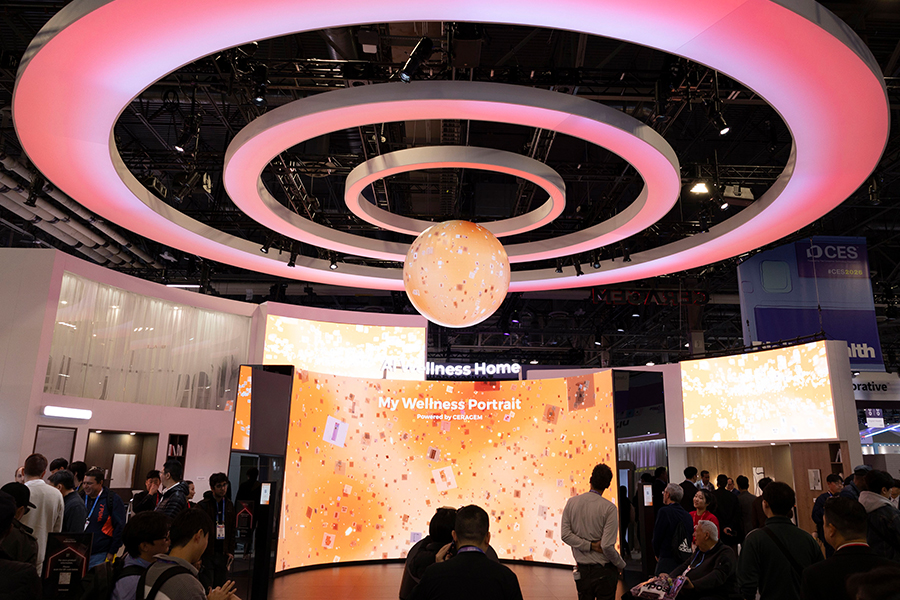
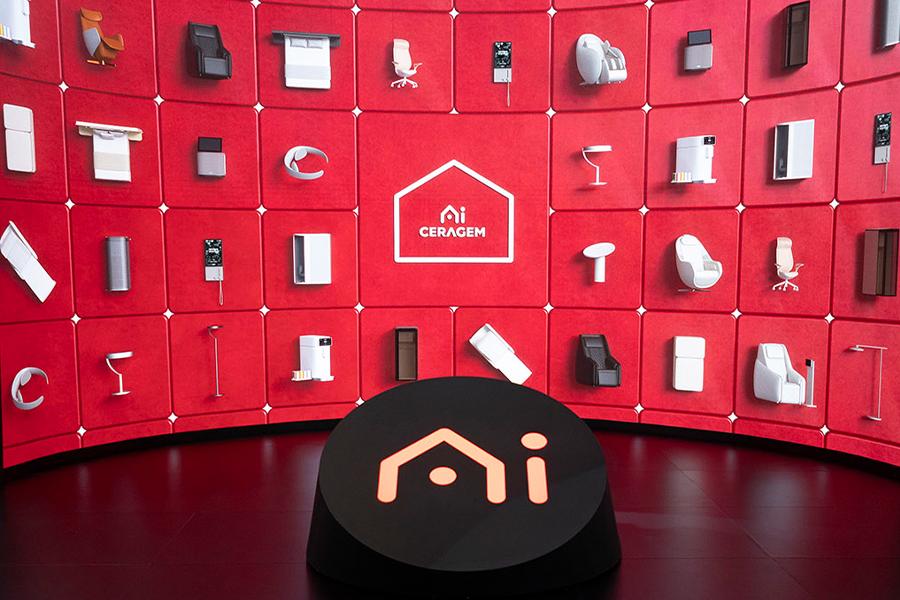
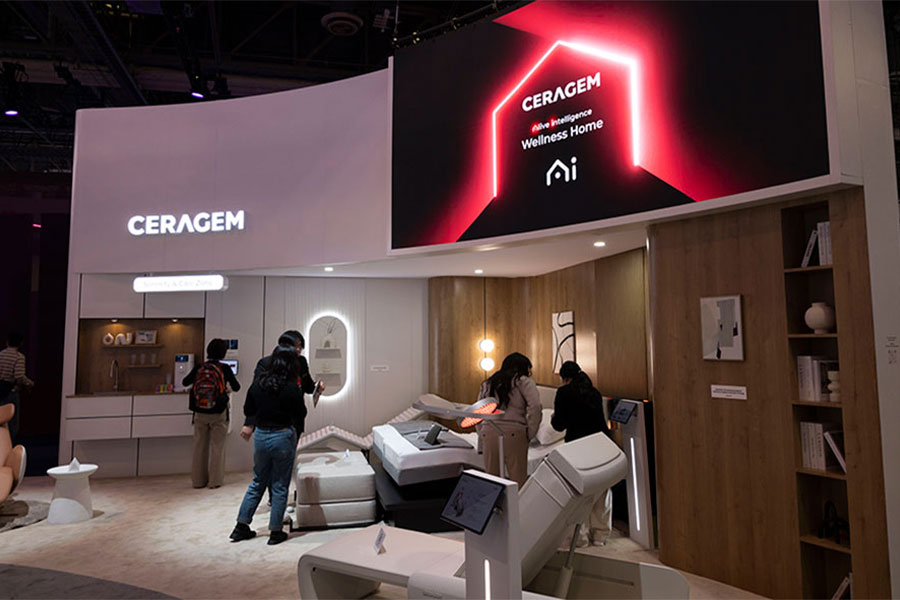
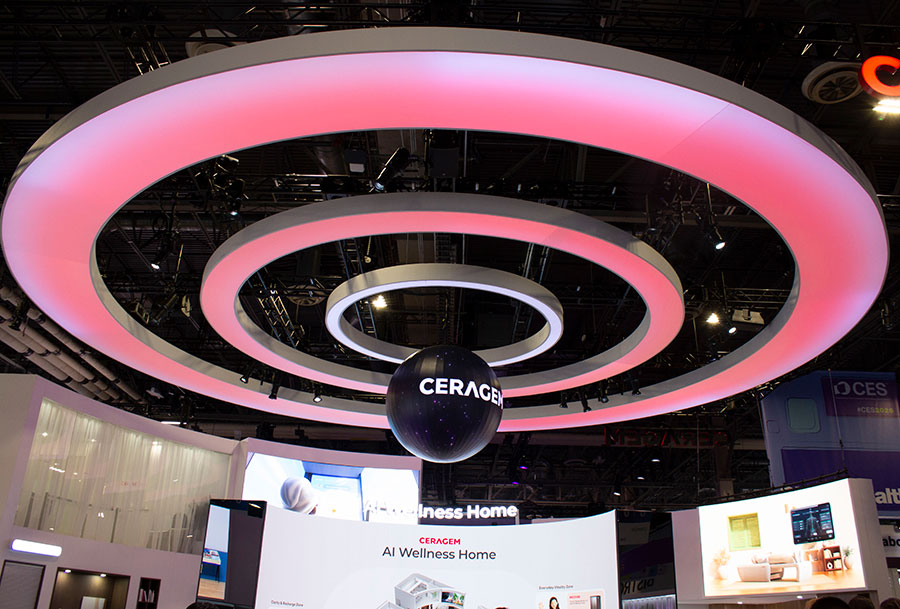
Rather than showcasing products in isolation, Ceragem Co. Ltd. presented a holistic vision of the home as a personalized health environment, one that evolves alongside its occupants from childhood through older age. The journey began in the Clarity and Recharge Zone, which focused on children and students. Here, insights on sleep quality, calm environments, and healthy routines laid the foundation for early-life well-being. From there, guests flowed into the Everyday Vitality Zone, aimed at middle-aged adults. It featured massage chairs, muscle-recovery solutions, and skincare that blended therapeutic benefits with lifestyle-oriented self-care. The final area, the Serenity and Care Zone, centered on older adults and showcased beds and chairs designed to support circulation, mobility, comfort, and independence. Finally, attendees encountered CeraCheck, an interactive health platform that allowed them to measure stress and other wellness indicators, linking physical products with personalized data insights. By framing wellness as a lifelong journey rather than a collection of devices, Ceragem delivered one of the show's most cohesive and human-centered narratives.
Rather than showcasing products in isolation, Ceragem Co. Ltd. presented a holistic vision of the home as a personalized health environment, one that evolves alongside its occupants from childhood through older age. The journey began in the Clarity and Recharge Zone, which focused on children and students. Here, insights on sleep quality, calm environments, and healthy routines laid the foundation for early-life well-being. From there, guests flowed into the Everyday Vitality Zone, aimed at middle-aged adults. It featured massage chairs, muscle-recovery solutions, and skincare that blended therapeutic benefits with lifestyle-oriented self-care. The final area, the Serenity and Care Zone, centered on older adults and showcased beds and chairs designed to support circulation, mobility, comfort, and independence. Finally, attendees encountered CeraCheck, an interactive health platform that allowed them to measure stress and other wellness indicators, linking physical products with personalized data insights. By framing wellness as a lifelong journey rather than a collection of devices, Ceragem delivered one of the show's most cohesive and human-centered narratives.
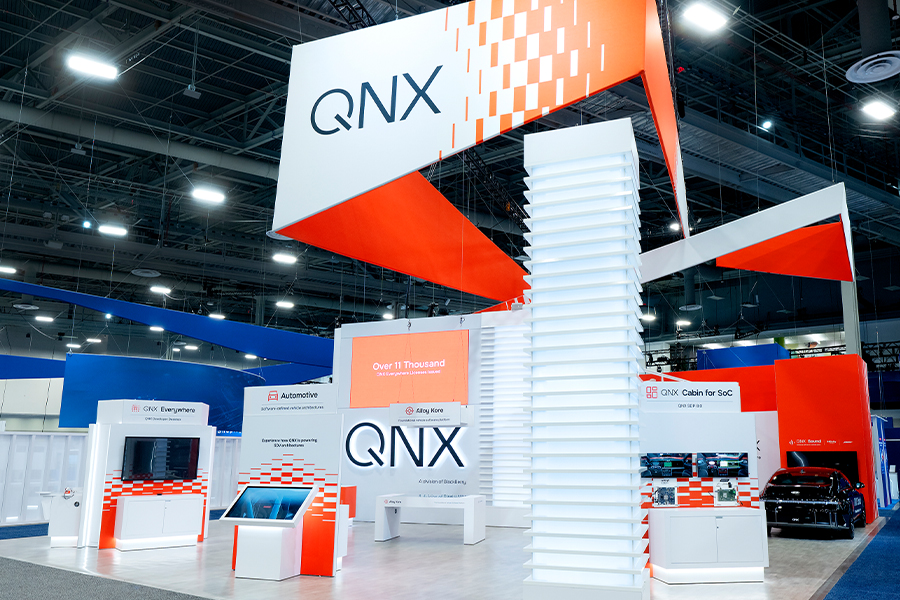 PHOTO: Proto Images
 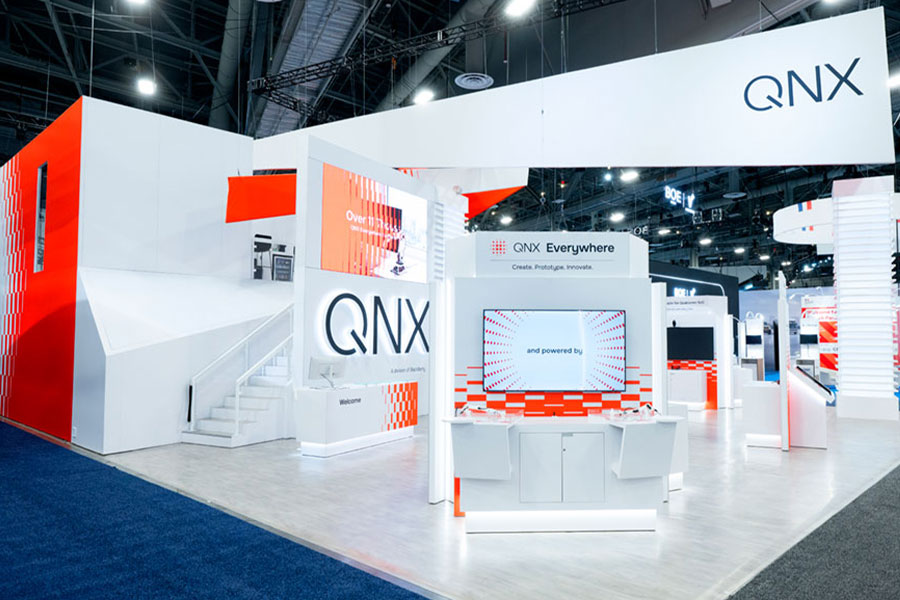 PHOTO: Proto Images
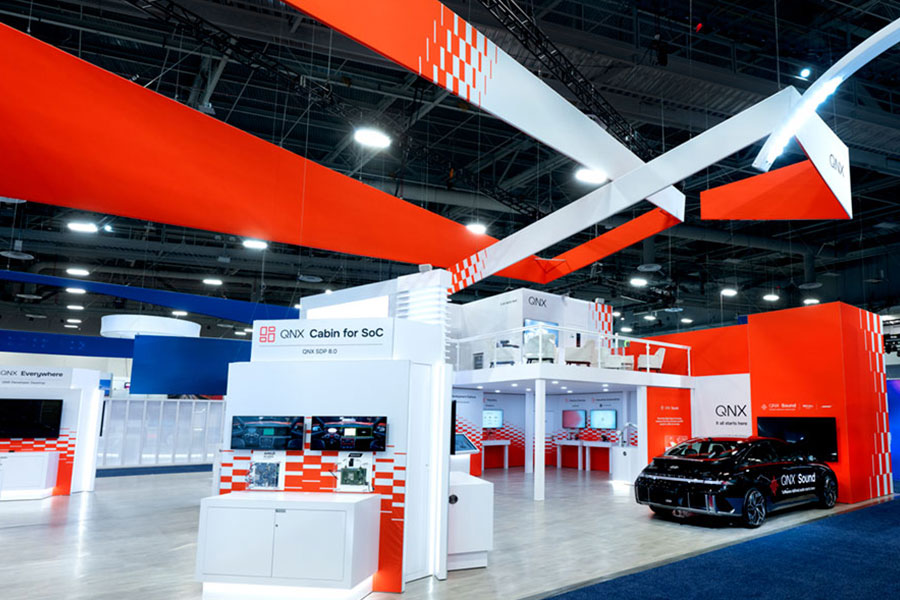 PHOTO: Proto Images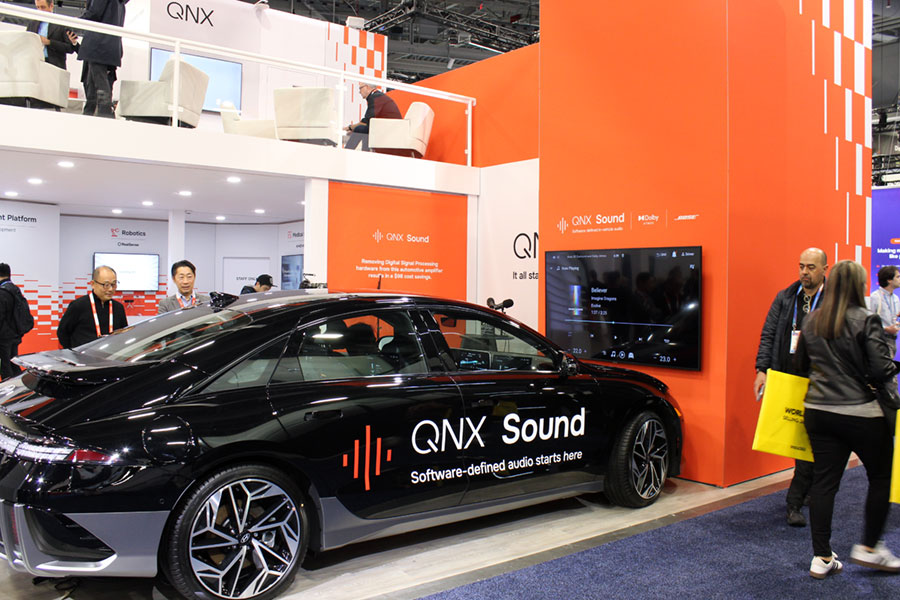
16. QNX
Design/Fabrication: K2 Exhibits
Anchored by textured towers and a bold orange palette, the QNX booth brought its software — which runs in the background — to the foreground by turning complex systems into intuitive, hands-on experiences. Owned by BlackBerry Ltd., QNX's real-time operating system powers medical devices, vehicles, and industrial automation worldwide. Within the stand, distinct yet cohesive experiential zones demonstrated QNX's offerings. Among them, attendees discovered vehicular applications, a digital-twin experience that playfully represented the system both in simulation and physical form, and an interactive table that invited engagement and extended dwell time. Meanwhile, partner showcases demonstrated the technology's versatility and breadth, and a car in the right corner of the booth offered further context, incorporating immersive moments and sensory elements that centered around conversation rather than spectacle. Prioritizing function alongside form, a second level overlooking the floor hosted meetings, events, and livestreams, with an additional area for podcasting and media recordings. By pairing experiential clarity with disciplined design from K2 Exhibits, QNX elevated its presence without expanding its footprint. The result? An invisible system was not only visible at CES 2026, but also understandable.
Design/Fabrication: K2 Exhibits
Anchored by textured towers and a bold orange palette, the QNX booth brought its software — which runs in the background — to the foreground by turning complex systems into intuitive, hands-on experiences. Owned by BlackBerry Ltd., QNX's real-time operating system powers medical devices, vehicles, and industrial automation worldwide. Within the stand, distinct yet cohesive experiential zones demonstrated QNX's offerings. Among them, attendees discovered vehicular applications, a digital-twin experience that playfully represented the system both in simulation and physical form, and an interactive table that invited engagement and extended dwell time. Meanwhile, partner showcases demonstrated the technology's versatility and breadth, and a car in the right corner of the booth offered further context, incorporating immersive moments and sensory elements that centered around conversation rather than spectacle. Prioritizing function alongside form, a second level overlooking the floor hosted meetings, events, and livestreams, with an additional area for podcasting and media recordings. By pairing experiential clarity with disciplined design from K2 Exhibits, QNX elevated its presence without expanding its footprint. The result? An invisible system was not only visible at CES 2026, but also understandable.
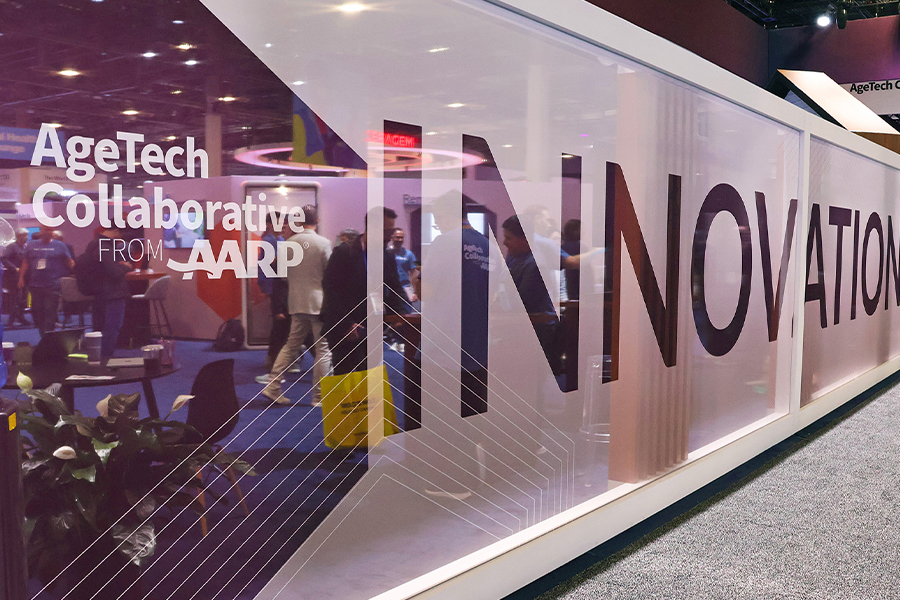 PHOTO: MC², an MCH Group Company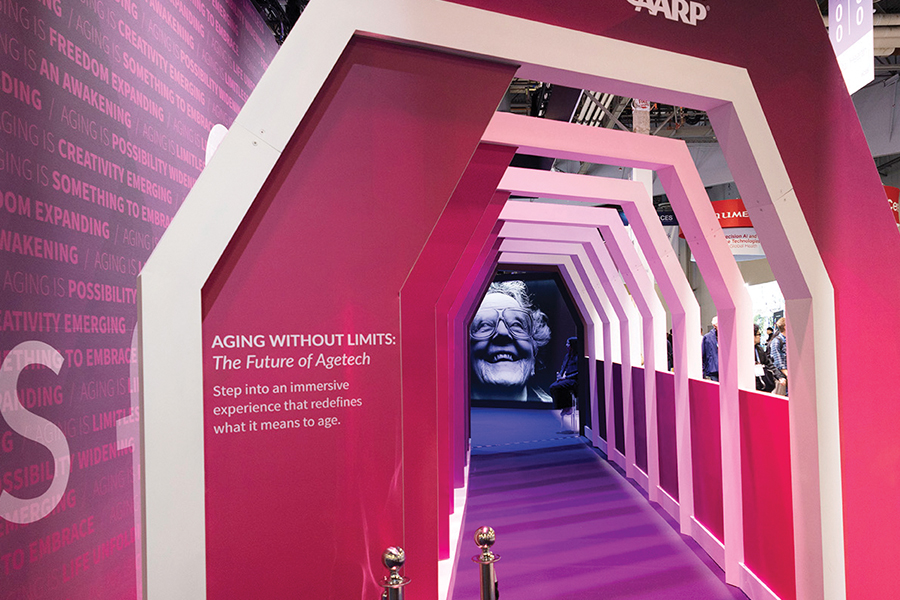
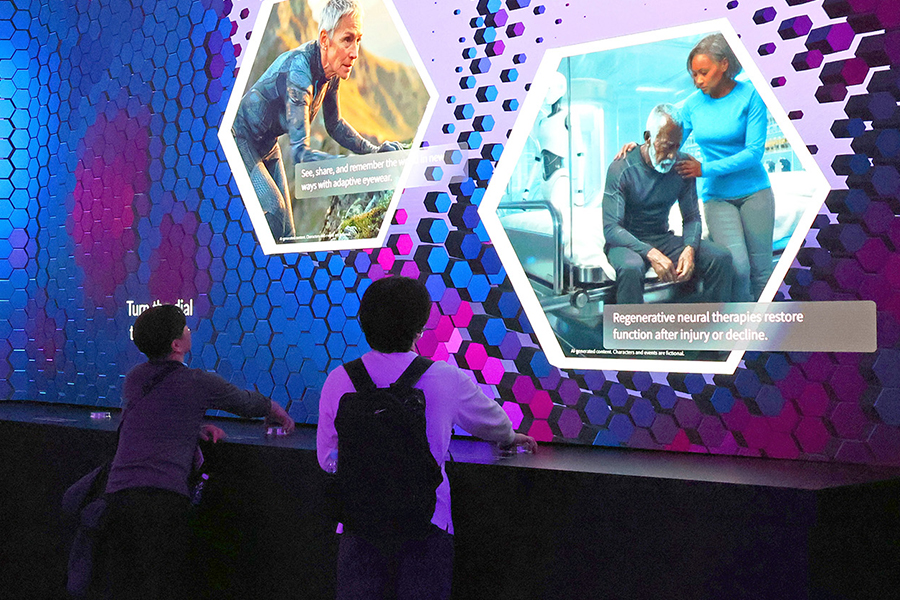 PHOTO: MC², an MCH Group Company
 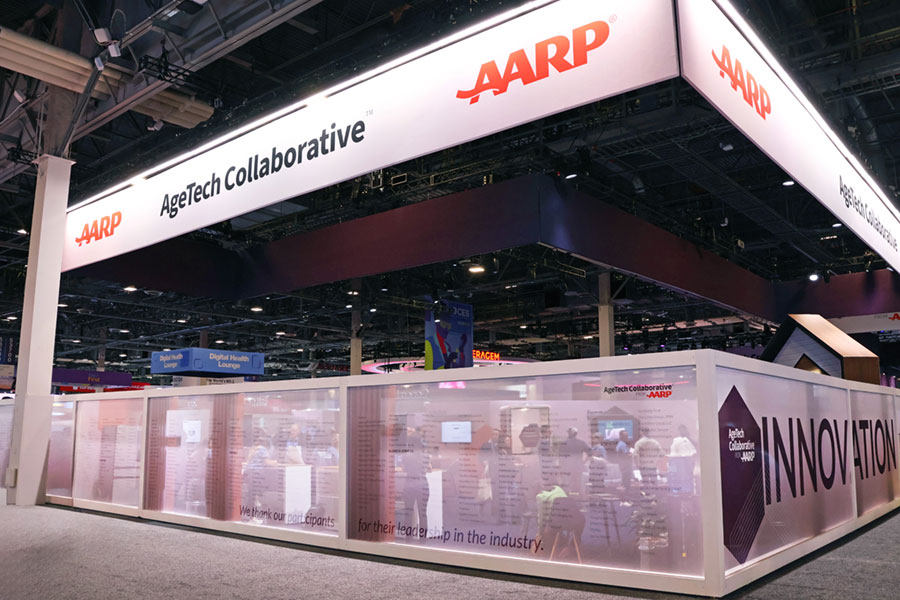 PHOTO: MC², an MCH Group Company
17. THE AMERICAN ASSOCIATION
OF RETIRED PERSONS (AARP)
Design/Fabrication: MC², an MCH Group Company
The American Association of Retired Persons (AARP) delivered one of the show's most emotionally resonant exhibits by reframing aging as possibility. The stand spanned two adjacent 80-by-80-foot spaces. While one positioned the organization as an innovator by featuring more than 220 startups focused on AgeTech solutions, the other explored what aging could become when technology removes limitations. Designed and fabricated by MC², an MCH Group Company, the immersive experience unfolded as a guided narrative. Visitors entered through a tunnel that opened into a dark room wrapped in a near-360-degree LED wall. At its center, a tactile counter invited guests to turn physical dials to reveal scenes of older adults hiking, practicing yoga, and engaging in activities often constrained by aging. The journey concluded in a participatory space where attendees responded to prompts about how technology could support their aging. Answers appeared on a nearby LED wall, blending individual voices into a shared vision of the future. In a hall often dominated by high-tech product demos, AARP offered something rare: hope, choice, and a compelling vision of life well-lived at every age.
Design/Fabrication: MC², an MCH Group Company
The American Association of Retired Persons (AARP) delivered one of the show's most emotionally resonant exhibits by reframing aging as possibility. The stand spanned two adjacent 80-by-80-foot spaces. While one positioned the organization as an innovator by featuring more than 220 startups focused on AgeTech solutions, the other explored what aging could become when technology removes limitations. Designed and fabricated by MC², an MCH Group Company, the immersive experience unfolded as a guided narrative. Visitors entered through a tunnel that opened into a dark room wrapped in a near-360-degree LED wall. At its center, a tactile counter invited guests to turn physical dials to reveal scenes of older adults hiking, practicing yoga, and engaging in activities often constrained by aging. The journey concluded in a participatory space where attendees responded to prompts about how technology could support their aging. Answers appeared on a nearby LED wall, blending individual voices into a shared vision of the future. In a hall often dominated by high-tech product demos, AARP offered something rare: hope, choice, and a compelling vision of life well-lived at every age.
18. AMAZON .COM INC.
Design/Fabrication: Amazon Devices & Services Events Team, Impact XM
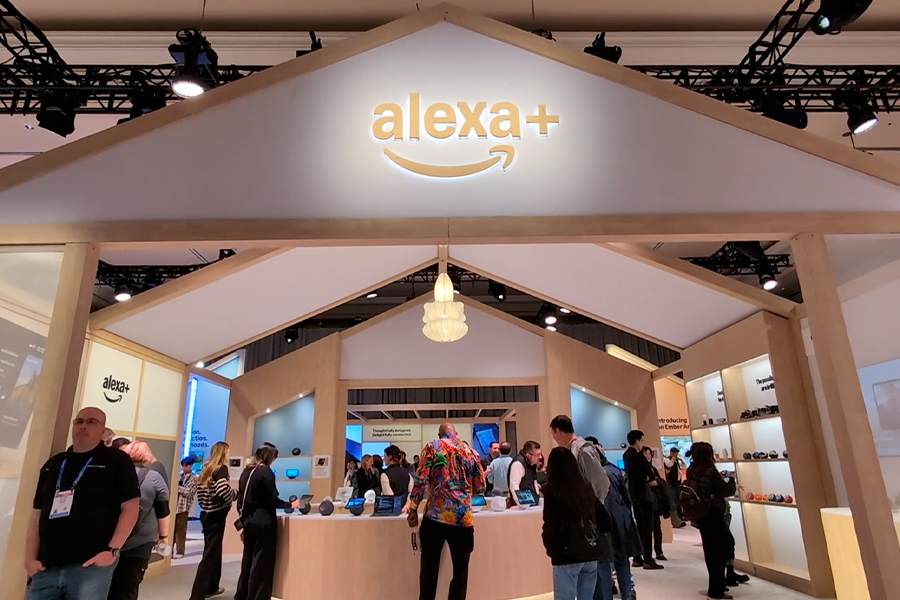
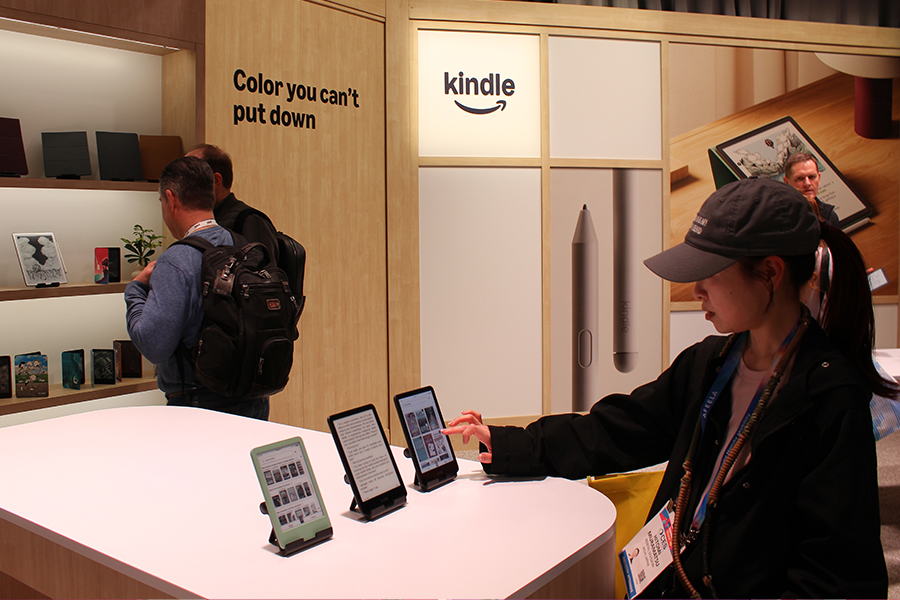
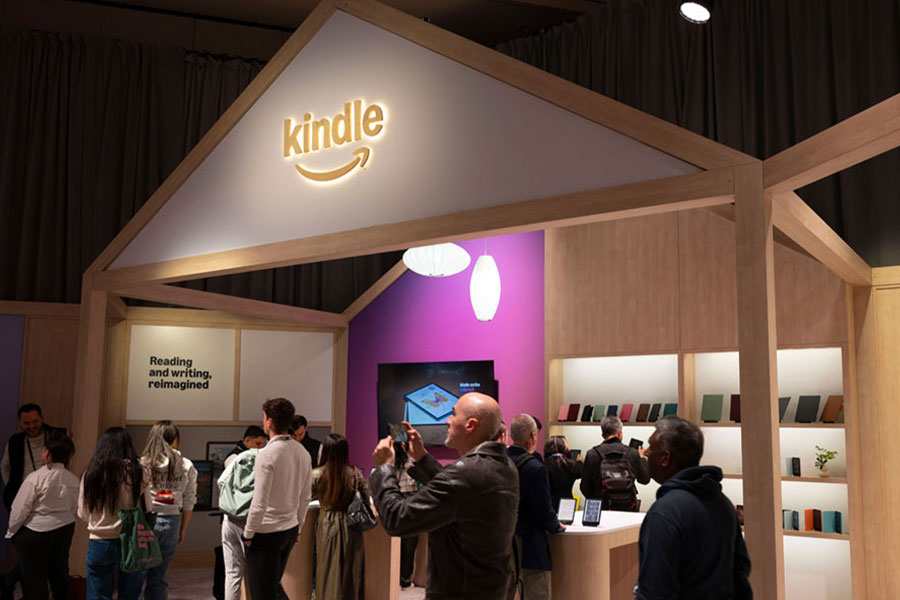
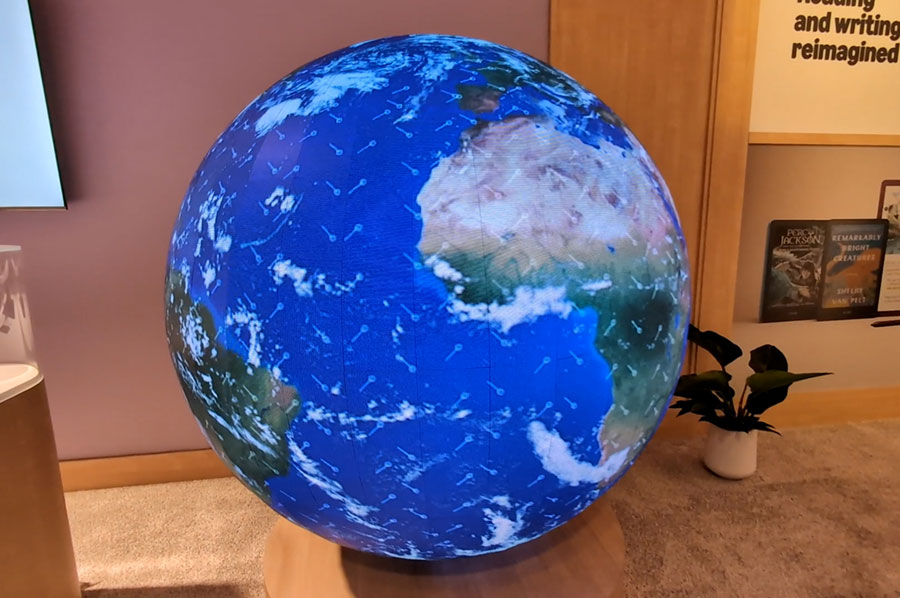
Rather than compete for attention amid the chaotic exhibit halls, Amazon.com Inc. created a beautiful moment of calm inside a ballroom at The Venetian Expo. This controlled, immersive destination crafted by Impact XM and the Amazon Devices & Services Events Team earned Amazon a place among the show's most compelling exhibits. After registering online and presenting their QR codes, attendees entered the utterly Amazon atmosphere, which felt like a thoughtfully designed home rather than an exhibit. Wood beams and architectural framing defined the space, subtly dividing the ballroom into distinct zones. Featuring soft lighting and controlled sound, each vignette featured a different facet of Amazon's ecosystem — Fire TV and entertainment, Kindle and reading, Echo and voice interaction, Ring and home security, and connectivity that extended into cars and mobility. Rather than presenting products in isolation, the exhibit demonstrated how these technologies work together. Personalization, such as Echo devices customized with sports team logos, added emotional resonance and underscored technology as an expression of identity. The messaging was clear and approachable and the aesthetic reinforced trust and ease of use. In stepping away from the noise, Amazon delivered one of CES' most human-centered experiences — and proof that the most powerful technology often fades into the background.
Design/Fabrication: Amazon Devices & Services Events Team, Impact XM
Rather than compete for attention amid the chaotic exhibit halls, Amazon.com Inc. created a beautiful moment of calm inside a ballroom at The Venetian Expo. This controlled, immersive destination crafted by Impact XM and the Amazon Devices & Services Events Team earned Amazon a place among the show's most compelling exhibits. After registering online and presenting their QR codes, attendees entered the utterly Amazon atmosphere, which felt like a thoughtfully designed home rather than an exhibit. Wood beams and architectural framing defined the space, subtly dividing the ballroom into distinct zones. Featuring soft lighting and controlled sound, each vignette featured a different facet of Amazon's ecosystem — Fire TV and entertainment, Kindle and reading, Echo and voice interaction, Ring and home security, and connectivity that extended into cars and mobility. Rather than presenting products in isolation, the exhibit demonstrated how these technologies work together. Personalization, such as Echo devices customized with sports team logos, added emotional resonance and underscored technology as an expression of identity. The messaging was clear and approachable and the aesthetic reinforced trust and ease of use. In stepping away from the noise, Amazon delivered one of CES' most human-centered experiences — and proof that the most powerful technology often fades into the background.
19. SPACEWALKER TECHNOLOGY
HONG KONG CO. LTD.
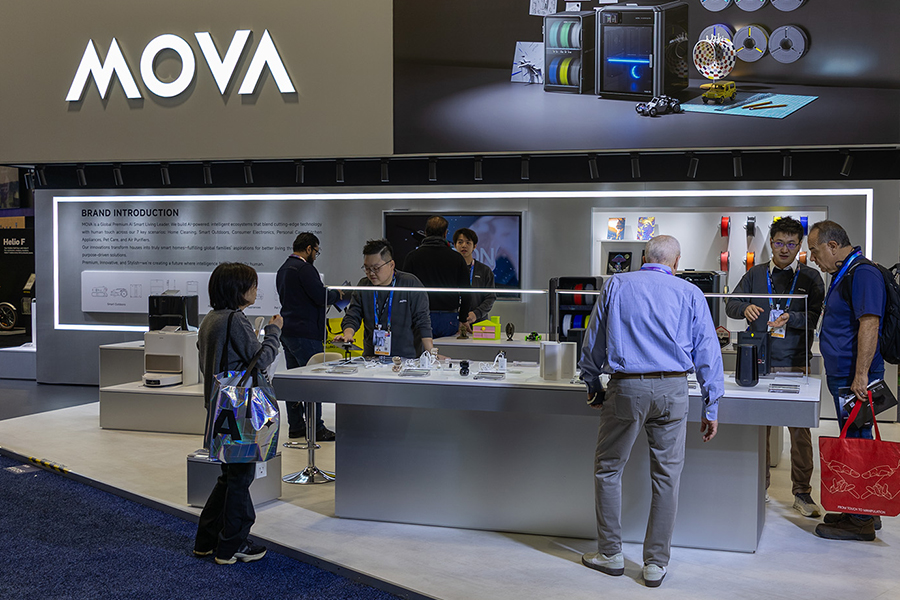
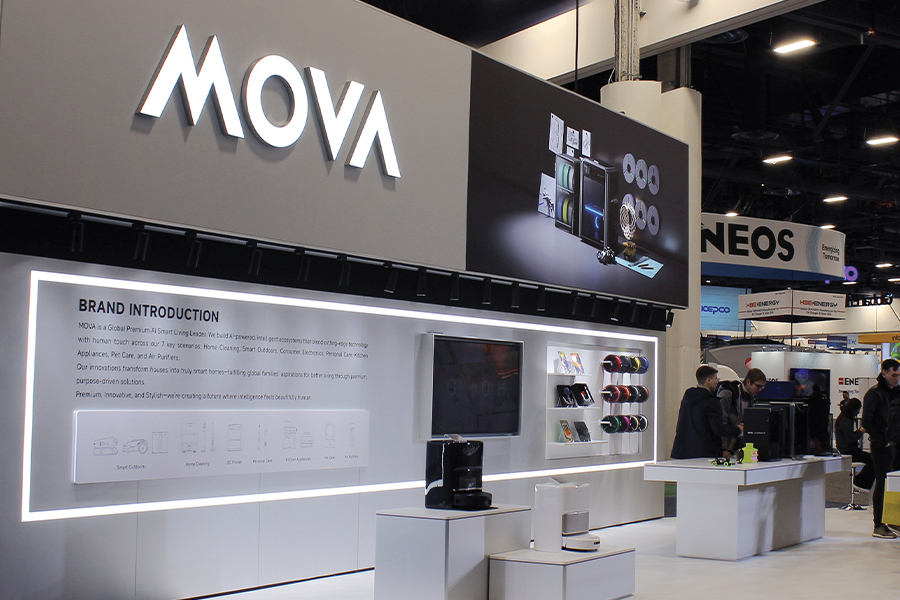
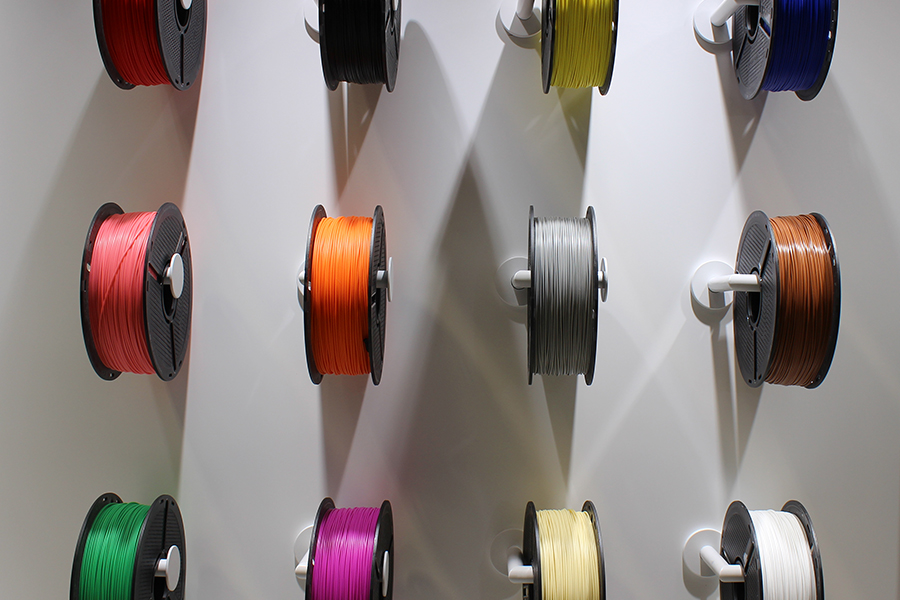
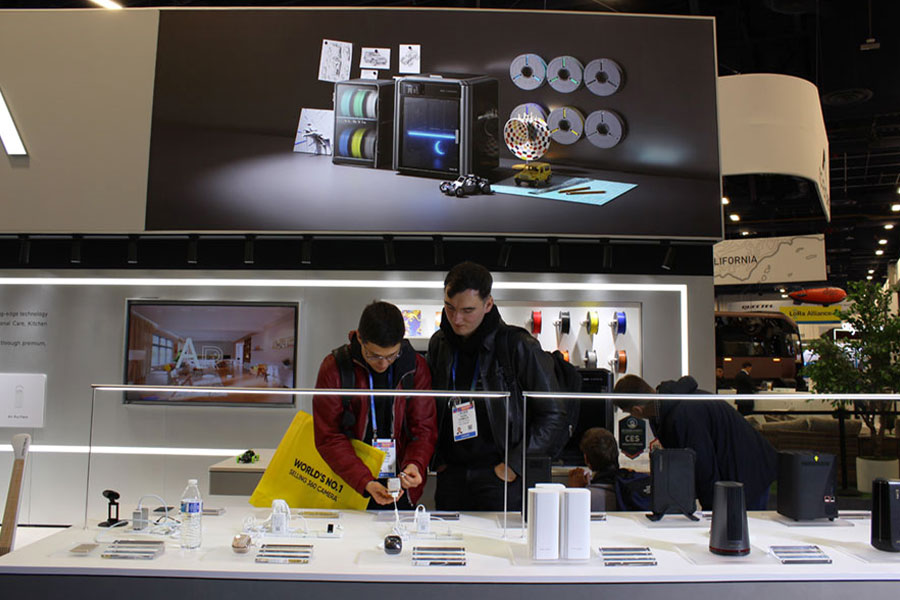
In a hall packed with blinking gadgets and attention-grabbing theatrics, the Mova brand opted for a far more disciplined route. Mova, a global AI smart-living brand from Spacewalker Technology Hong Kong Co. Ltd., presented not a collection of products, but a coherent ecosystem. Framed by its “Move Up, Move Beyond” theme, the three-sided open-layout exhibit welcomed visitors with a restrained palette of grays and whites and a deliberate diagonal layout that immediately clarified how to move through the space. A central angled rectangular structure acted as a spatial anchor, subtly guiding traffic while dividing the booth into intuitive zones. To the left, attendees encountered Mova's air conditioning systems, cleanly displayed and precisely lit by tall, sculptural vertical lighting poles that doubled as wayfinding elements. Meanwhile, freestanding displays across the main floor encouraged browsing without congestion, reinforcing the brand's emphasis on everyday usability. Along the back wall, a color break revealed 3-D-printing elements, including filament spools and playful printed objects that hinted at Mova's engineering mindset without overwhelming the narrative. Above, a backlit white logo paired with a video screen told the broader ecosystem story, tying individual products to a vision of connected living.
In a hall packed with blinking gadgets and attention-grabbing theatrics, the Mova brand opted for a far more disciplined route. Mova, a global AI smart-living brand from Spacewalker Technology Hong Kong Co. Ltd., presented not a collection of products, but a coherent ecosystem. Framed by its “Move Up, Move Beyond” theme, the three-sided open-layout exhibit welcomed visitors with a restrained palette of grays and whites and a deliberate diagonal layout that immediately clarified how to move through the space. A central angled rectangular structure acted as a spatial anchor, subtly guiding traffic while dividing the booth into intuitive zones. To the left, attendees encountered Mova's air conditioning systems, cleanly displayed and precisely lit by tall, sculptural vertical lighting poles that doubled as wayfinding elements. Meanwhile, freestanding displays across the main floor encouraged browsing without congestion, reinforcing the brand's emphasis on everyday usability. Along the back wall, a color break revealed 3-D-printing elements, including filament spools and playful printed objects that hinted at Mova's engineering mindset without overwhelming the narrative. Above, a backlit white logo paired with a video screen told the broader ecosystem story, tying individual products to a vision of connected living.
20. NATIONAL WASTE &
RECYCLING FOUNDATION
Design/Fabrication: Clyde, ET Global GmbH
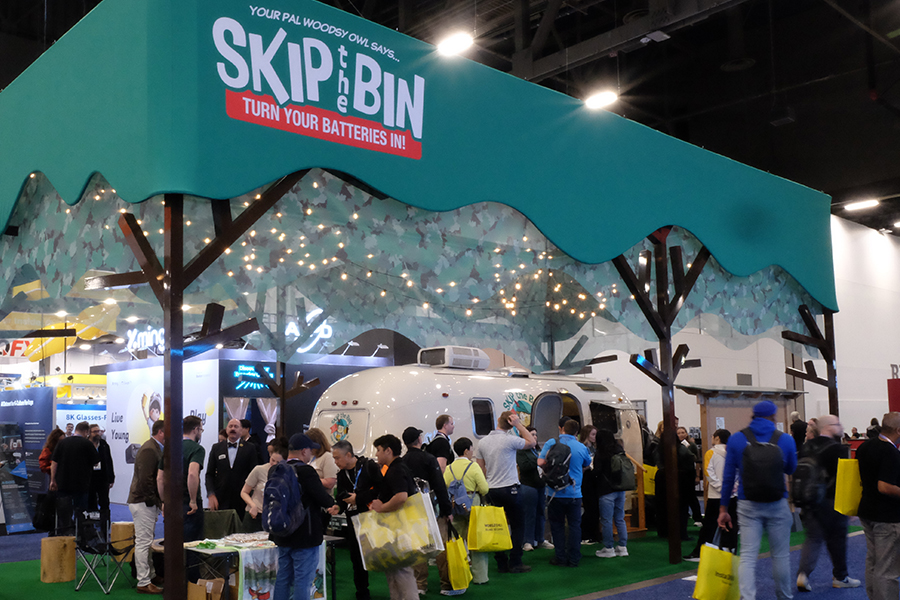
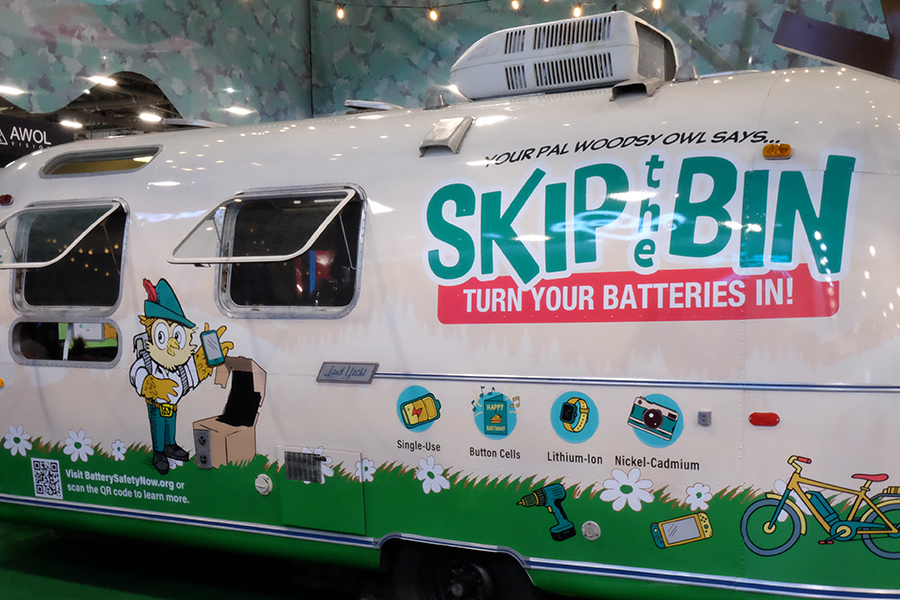
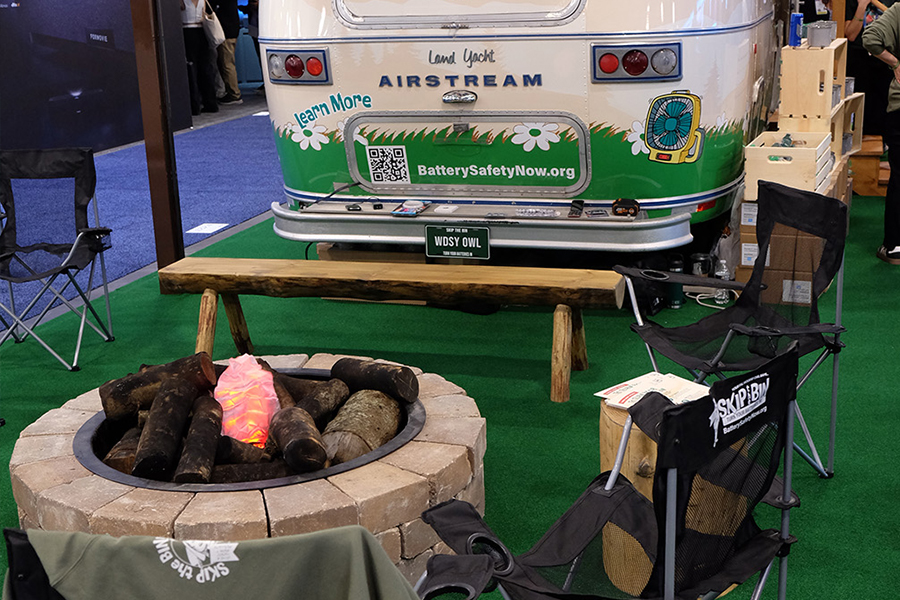
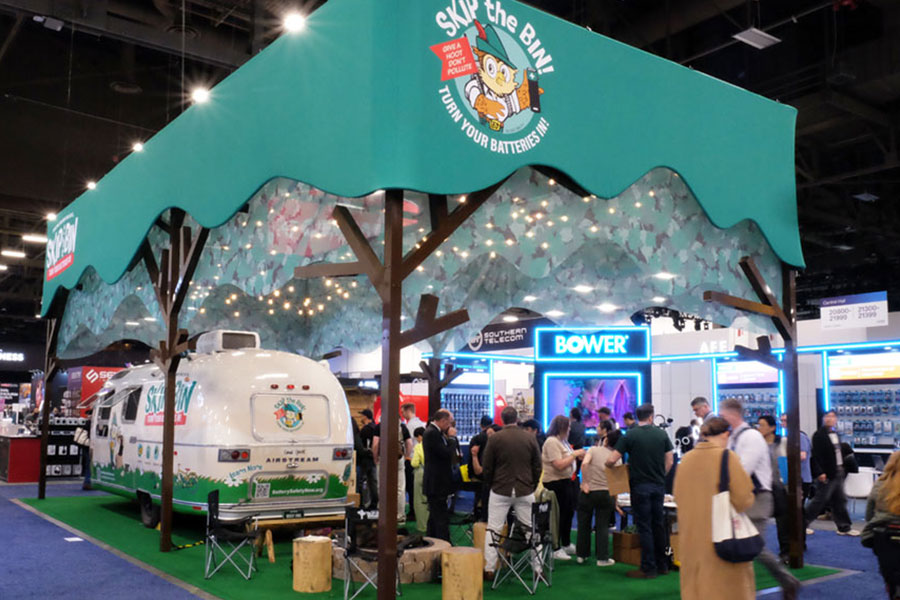
Amid a sea of screens and sensors, the National Waste & Recycling Foundation (NWRF) zigged where most exhibits zagged. It employed a low-tech yet high-impact experience to launch its national campaign: “Skip the Bin! Turn Your Batteries In!” With fabrication and design by ET Global and Clyde, the exhibit comprised a conceptual campsite, complete with a forest-like canopy, faux campfire ring, and Airstream trailer. The goal? Communicate that thousands of fires are sparked each year by improperly discarded batteries — and then offer a simple step-by-step process to turn in batteries safely. The stand's centerpiece was a restored 1971 Airstream trailer, an economical, reusable, and highly memorable alternative to a traditional booth build. Inside, staff challenged visitors to identify just how many battery-powered items surrounded them. After exiting the trailer, a short quiz reinforced the lesson, rewarding those who answered correctly with a branded mug. Throughout the space, clear calls to action directed attendees to BatterySafetyNow.org, where they could enter a ZIP code and battery type to find proper recycling locations. Featuring nostalgic, woodsy elements, NWRF's low-tech approach made its message accessible and memorable.
Design/Fabrication: Clyde, ET Global GmbH
Amid a sea of screens and sensors, the National Waste & Recycling Foundation (NWRF) zigged where most exhibits zagged. It employed a low-tech yet high-impact experience to launch its national campaign: “Skip the Bin! Turn Your Batteries In!” With fabrication and design by ET Global and Clyde, the exhibit comprised a conceptual campsite, complete with a forest-like canopy, faux campfire ring, and Airstream trailer. The goal? Communicate that thousands of fires are sparked each year by improperly discarded batteries — and then offer a simple step-by-step process to turn in batteries safely. The stand's centerpiece was a restored 1971 Airstream trailer, an economical, reusable, and highly memorable alternative to a traditional booth build. Inside, staff challenged visitors to identify just how many battery-powered items surrounded them. After exiting the trailer, a short quiz reinforced the lesson, rewarding those who answered correctly with a branded mug. Throughout the space, clear calls to action directed attendees to BatterySafetyNow.org, where they could enter a ZIP code and battery type to find proper recycling locations. Featuring nostalgic, woodsy elements, NWRF's low-tech approach made its message accessible and memorable.


Editorial
Measuring Meaning
CES revealed that what we value in theory doesn't always make it to the show floor.
Exhibitor Q & A
Lead Qualifying
How can I evaluate an attendee to determine if they're a qualified lead or just after the swag?
Ask Dan
Gen Z
The traditional annual review model seems like it doesn't work for Gen Z. How should I adapt it?
Advertorial
Modular Frames in 55 or 62?
That's Not the Question.
Exhibiting 101
Budgeting for Chaos
Costs swing, labor teams get behind, fees balloon. If you don't budget for surprises, your budget is already blown.
Fuel
Ideas That Work
Air Hockey, Fated Meetings, A Fish Tale, and More
Products
New Tools
Three Can't-Miss Product Launches
Conventional Wisdom
Fira Barcelona Gran Via
Gran Via is one of Europe's most capable large-scale exhibition venues
Fixing Snafus
Dog-gone It!
When a dog mistook a runway model for a fire hydrant, the team had to engineer a quick costume change
Archive
Reign Check
1924 -1925: A pair of queens stroll through streets at the British Empire Exhibition named by Rudyard Kipling.
Exhibit Design
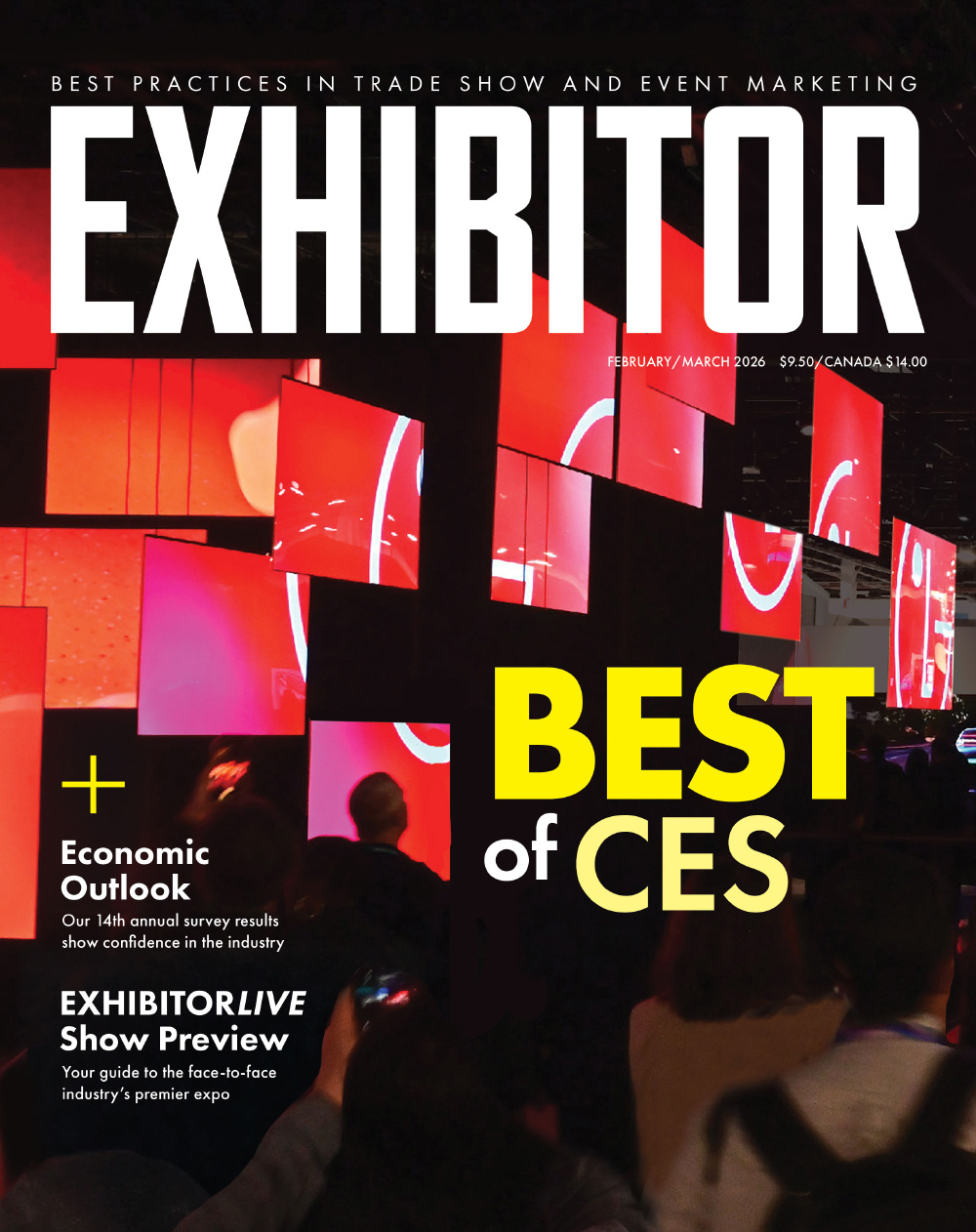
The Best of CES 2026
The exhibitors in our annual list stood apart from the crowd of more than 4,000 booths
Research
Economic Outlook
Our 2026 survey shows that the industry continues to hold the course as it steers through economic headwinds
Quiz
Measure Seekers
Do you know your CVL from your CTR, or do measurement acronyms deliver a TKO?
City Profile
Get Out! Barcelona, Spain
In Barcelona, history and modernity share space with a sensual energy that delivers inspiration around every corner.
Networking
Beyond the Bar
If the only thing keeping your networking event lively is an open bar, it's time to sober up.
Reflections
The Next Chapter
Mark Johnson reflects on IAEE's acquisition of Exhibitor Group.
Trends
Five Conference Trends from PCMA
Five trends conference producers need to understand.