exhibiting 101
Budgeting for Chaos
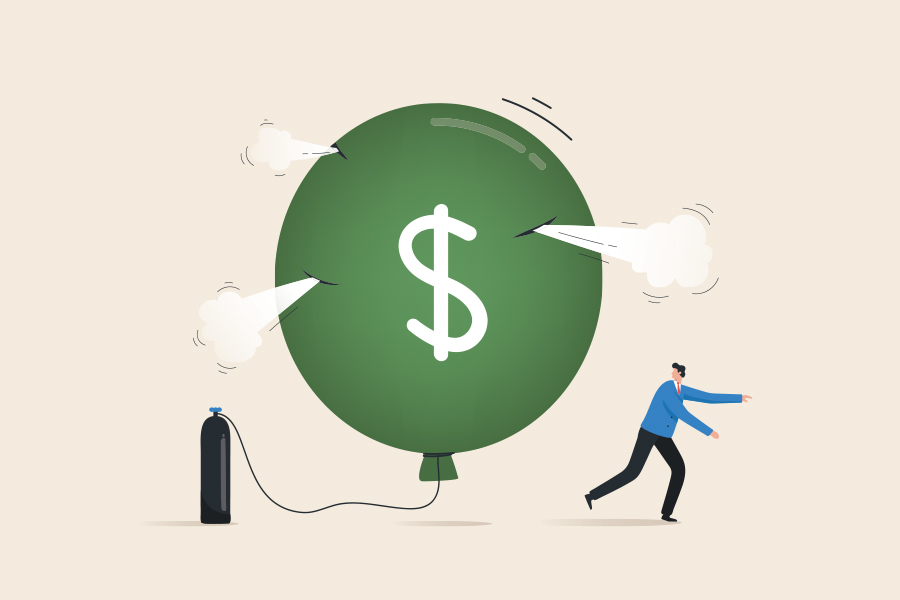
Costs swing, labor teams get behind, fees balloon. If you don't budget for surprises, your budget is already blown. By Betsy Earle
Trade show and event managers tend to be control freaks. Who can blame us? We have a lot to keep together. But unfortunately, it's often the unanticipated parts of the trade show program that can turn budgets upside down.
Managing what's outside your control is impossible, but most surprise costs fall into a handful of categories. If you know what they are, it's easier to prepare for your best- (and worst-) case scenarios. My pro-tip is that you create a contingency budget of 10 to 15 percent of your total show budget to cover these unsurprising surprises.
Freight and Shipping
Exhibit managers often think of freight as a fixed cost, but if things go wrong, this category of surprise can burn through your contingency budget fast.
Your material handling fees went over because of an off-target arrival.
Your truck was scheduled to arrive at 3 p.m., but your driver got stuck in L.A. traffic and didn't make it before the advance warehouse closed at 4:30 p.m. If your carrier checks in late, you could end up paying an off-target fee, which can be 20 percent higher than the regular rate. For example, at the 2026 Winter FancyFaire, Freeman on-target advance rates are $1.33 per pound and off-target rates are $1.67 per pound. If your booth weighs 1,000 pounds, that's a $340 difference. If you have a 10,000-pound booth, this cost increase quickly escalates to $3,400. By working with a reputable shipping company and preparing in advance, the risk is lower.
Your driver drove off the road with all of your freight, and you have no booth. There is a lot of debate in the industry about shipping to an advance warehouse versus direct to show. I realize it's not always possible to send your freight to an advance warehouse, but if you do so, you avoid risk. Sending in a last-minute shipment could require you to pay for a dedicated truck, which might work for a large exhibitor, but will cost someone with one crate an arm and a leg. The story about a driver going off the road sounds dramatic, but this happened to a client of ours who had to source all of their booth supplies the day of the show. If you send your freight to the advance warehouse, you'll receive the comfort of an email from the GSC telling you that your freight has arrived and your carrier can confirm that all has been dropped off. If you don't use the advance warehouse and there's an accident the day of the show, you'll have a huge challenge.
Your crates arrived damaged and the contents inside were broken. If your booth isn't packed properly and your graphics aren't protected, there's a chance that your assets could be damaged in transit or upon removal from the crate. I once had a client who shipped a glass display freezer to the show, only to open the crate and find the glass shattered. Getting this replaced onsite would have cost him a fortune. There are ways to solve these challenges, such as asking the GSC to reprint graphics or rent components onsite, but this will be costly. You can also ask your labor team to send a runner to a store to pick up replacement items for your shattered glass or dinged cabinet, and you'll likely be charged a runner fee. All of that, however, can be mostly prevented by requiring your shipping team to pack and pad your items properly. I always recommend using crates for anything that could be damaged. Even though crates are expensive up front, the damages it prevents will save you money in the long run.
Labor Timing
Labor cost overruns usually aren't about labor. They're about the cost of paying people to wait around.
Labor costs are up because your floor plans or drawings don't make sense. Your labor team is on time, and everything is going well, but some of the CAD drawings are confusing. The crew is having a tough time figuring out which parts go where and as a result, your labor costs are climbing. For those pieces of the puzzle, it's always best to provide as much detail as possible in your installation diagrams and get them to your labor partner in advance of the show. This includes parts layouts for back walls, counters, or anything that you frequently assemble. Print our diagrams and place copies of them in your shipping containers, and keep electronic copies that you can e-mail to your team. I also recommend putting color-coded stickers next to parts that go together or using an alphanumeric system to make it easier for the team.
The general service contractor is delayed at the install. If the GSC is behind on their target schedule and you don't have freight, there's not much you can do but wait. However, if the GSC provides you with a target schedule in advance of the show, schedule your labor team four hours after that to give the GSC ample time to get your freight to your booth space. If your labor crew has four people and the hourly rate is $250 an hour, that's a $4,000 expense you can avoid.

Travel Volatility
Travel and housing might not feel like a critical budget component. At least not until flights are canceled and rooms disappear. Disruptions here can quickly derail your show budget. And often, at a premium.
Unavailable hotel rooms led to extraordinary costs. Your company signed up for this show in 2025, but somewhere between May and December, the cost of hotels skyrocketed and now the hotels are 15 percent more than the team's travel budget. Avoid this scenario by using the show's hotel room block. These rates are typically pre-negotiated and although they might be high, rooms booked outside of the block will likely be higher. A key strategy is to find out when the hotel room block will become available and book your rooms inside of it right away. Chaos ensues when you're frantically trying to find 10 rooms at the same hotel a month out from the show. Never use a link from a company telling you that they have rooms unless it's an official show block, or you could get scammed. And be careful when using third-party booking companies for a large, city-wide show, as the rooms booked directly with the property will always take precedence.
Your booth staff's travel plans (or worse, your travel plans) were canceled. Winter travel? Airport delays? Issues with airline consolidation or fewer flights to pick from? We all face these situations. To avoid snowballing chaos, never book the last flight of the day and encourage your team to be on the ground before dinner time the day before the show opens. I know I'm preaching to the choir, and I definitely don't want to be on the road more than I have to, but I make it my policy to not pick the last flight. Sometimes it makes the front end of the trip more difficult, but it makes the show itself a better experience for my client, for my team, and for me, when I can thoughtfully show up and be less frazzled. If a flight looks like it's going to cancel, I always try to stay one step ahead by immediately considering the next option. Often the airlines will give you the same price if your original flight is cancelled, and if you're a frequent flyer, they'll be more likely to help you. It's not about booking the cheapest flight. Pick an airline and a hotel chain and build a relationship with them. In the long run, you'll get a little extra help when you need it.
Human Chaos
Some budget surprises come not from freight or weather. Some show up on the show floor wearing a badge and without a true understanding of the ramifications of their decisions.
Sudden budget cuts came down from management. Budget cuts can be a killer, especially when you have a lot planned. And these cuts often come at the worst time - after you've purchased new exhibit assets or committed to several shows. Decisions need to be made. If your beautiful new booth weighs a ton and material handling is going to be extremely expensive, does it make sense for you to ship only part of it and supplement the rest with something portable? Does it make sense to contact the show about downsizing the space? Can the show defer your exhibit space funds to another year? Sometimes the best decision is backing out of the show, even if it means losing your deposit. The cost of exhibiting will always be higher than the cost of cancelling. Do a cost/benefit analysis to find the most logical solution.

Your boss or client showed up at the show site and wants changes made. Last-minute changes on the show floor come with astronomical price tags. I once had a client show up and demand we turn their entire booth around 180 degrees. This isn't as easy as it sounds and was going to cost my client thousands of dollars in installation labor fees, along with extra overtime electrician fees. As part of my process, I will estimate these last-second changes and ask my client to sign a change order form. It's easy to ask someone to change a logo, reprint a larger graphic, or add a TV, but when someone sees an actual cost in writing, it often brings them back to earth. Use the same strategy with a boss and remind them that you've been tasked to stay on budget. When money conversations start, they might spring for it, or they might skip it.
Chaos on the trade show floor is almost expected. The goal isn't to eliminate it, but to recognize where it comes from and budget accordingly. When surprises happen, and they will, most of them come from freight delays, labor mismatches, travel delays, and last-minute decision-making. The risk here isn't in the chaos, but in the way chaos can become catastrophic if there's no buffer in place. That's why having a contingency plan isn't pessimistic. It's practical. Trade shows are dynamic and if you prepare well for surprises, they won't take your budget down with them. E

Managing what's outside your control is impossible, but most surprise costs fall into a handful of categories. If you know what they are, it's easier to prepare for your best- (and worst-) case scenarios. My pro-tip is that you create a contingency budget of 10 to 15 percent of your total show budget to cover these unsurprising surprises.
Freight and Shipping
Exhibit managers often think of freight as a fixed cost, but if things go wrong, this category of surprise can burn through your contingency budget fast.
Your material handling fees went over because of an off-target arrival.
Your truck was scheduled to arrive at 3 p.m., but your driver got stuck in L.A. traffic and didn't make it before the advance warehouse closed at 4:30 p.m. If your carrier checks in late, you could end up paying an off-target fee, which can be 20 percent higher than the regular rate. For example, at the 2026 Winter FancyFaire, Freeman on-target advance rates are $1.33 per pound and off-target rates are $1.67 per pound. If your booth weighs 1,000 pounds, that's a $340 difference. If you have a 10,000-pound booth, this cost increase quickly escalates to $3,400. By working with a reputable shipping company and preparing in advance, the risk is lower.
Your driver drove off the road with all of your freight, and you have no booth. There is a lot of debate in the industry about shipping to an advance warehouse versus direct to show. I realize it's not always possible to send your freight to an advance warehouse, but if you do so, you avoid risk. Sending in a last-minute shipment could require you to pay for a dedicated truck, which might work for a large exhibitor, but will cost someone with one crate an arm and a leg. The story about a driver going off the road sounds dramatic, but this happened to a client of ours who had to source all of their booth supplies the day of the show. If you send your freight to the advance warehouse, you'll receive the comfort of an email from the GSC telling you that your freight has arrived and your carrier can confirm that all has been dropped off. If you don't use the advance warehouse and there's an accident the day of the show, you'll have a huge challenge.
Your crates arrived damaged and the contents inside were broken. If your booth isn't packed properly and your graphics aren't protected, there's a chance that your assets could be damaged in transit or upon removal from the crate. I once had a client who shipped a glass display freezer to the show, only to open the crate and find the glass shattered. Getting this replaced onsite would have cost him a fortune. There are ways to solve these challenges, such as asking the GSC to reprint graphics or rent components onsite, but this will be costly. You can also ask your labor team to send a runner to a store to pick up replacement items for your shattered glass or dinged cabinet, and you'll likely be charged a runner fee. All of that, however, can be mostly prevented by requiring your shipping team to pack and pad your items properly. I always recommend using crates for anything that could be damaged. Even though crates are expensive up front, the damages it prevents will save you money in the long run.
Labor Timing
Labor cost overruns usually aren't about labor. They're about the cost of paying people to wait around.
Labor costs are up because your floor plans or drawings don't make sense. Your labor team is on time, and everything is going well, but some of the CAD drawings are confusing. The crew is having a tough time figuring out which parts go where and as a result, your labor costs are climbing. For those pieces of the puzzle, it's always best to provide as much detail as possible in your installation diagrams and get them to your labor partner in advance of the show. This includes parts layouts for back walls, counters, or anything that you frequently assemble. Print our diagrams and place copies of them in your shipping containers, and keep electronic copies that you can e-mail to your team. I also recommend putting color-coded stickers next to parts that go together or using an alphanumeric system to make it easier for the team.
The general service contractor is delayed at the install. If the GSC is behind on their target schedule and you don't have freight, there's not much you can do but wait. However, if the GSC provides you with a target schedule in advance of the show, schedule your labor team four hours after that to give the GSC ample time to get your freight to your booth space. If your labor crew has four people and the hourly rate is $250 an hour, that's a $4,000 expense you can avoid.
Travel Volatility
Travel and housing might not feel like a critical budget component. At least not until flights are canceled and rooms disappear. Disruptions here can quickly derail your show budget. And often, at a premium.
Unavailable hotel rooms led to extraordinary costs. Your company signed up for this show in 2025, but somewhere between May and December, the cost of hotels skyrocketed and now the hotels are 15 percent more than the team's travel budget. Avoid this scenario by using the show's hotel room block. These rates are typically pre-negotiated and although they might be high, rooms booked outside of the block will likely be higher. A key strategy is to find out when the hotel room block will become available and book your rooms inside of it right away. Chaos ensues when you're frantically trying to find 10 rooms at the same hotel a month out from the show. Never use a link from a company telling you that they have rooms unless it's an official show block, or you could get scammed. And be careful when using third-party booking companies for a large, city-wide show, as the rooms booked directly with the property will always take precedence.
Your booth staff's travel plans (or worse, your travel plans) were canceled. Winter travel? Airport delays? Issues with airline consolidation or fewer flights to pick from? We all face these situations. To avoid snowballing chaos, never book the last flight of the day and encourage your team to be on the ground before dinner time the day before the show opens. I know I'm preaching to the choir, and I definitely don't want to be on the road more than I have to, but I make it my policy to not pick the last flight. Sometimes it makes the front end of the trip more difficult, but it makes the show itself a better experience for my client, for my team, and for me, when I can thoughtfully show up and be less frazzled. If a flight looks like it's going to cancel, I always try to stay one step ahead by immediately considering the next option. Often the airlines will give you the same price if your original flight is cancelled, and if you're a frequent flyer, they'll be more likely to help you. It's not about booking the cheapest flight. Pick an airline and a hotel chain and build a relationship with them. In the long run, you'll get a little extra help when you need it.
Human Chaos
Some budget surprises come not from freight or weather. Some show up on the show floor wearing a badge and without a true understanding of the ramifications of their decisions.
Sudden budget cuts came down from management. Budget cuts can be a killer, especially when you have a lot planned. And these cuts often come at the worst time - after you've purchased new exhibit assets or committed to several shows. Decisions need to be made. If your beautiful new booth weighs a ton and material handling is going to be extremely expensive, does it make sense for you to ship only part of it and supplement the rest with something portable? Does it make sense to contact the show about downsizing the space? Can the show defer your exhibit space funds to another year? Sometimes the best decision is backing out of the show, even if it means losing your deposit. The cost of exhibiting will always be higher than the cost of cancelling. Do a cost/benefit analysis to find the most logical solution.
Your boss or client showed up at the show site and wants changes made. Last-minute changes on the show floor come with astronomical price tags. I once had a client show up and demand we turn their entire booth around 180 degrees. This isn't as easy as it sounds and was going to cost my client thousands of dollars in installation labor fees, along with extra overtime electrician fees. As part of my process, I will estimate these last-second changes and ask my client to sign a change order form. It's easy to ask someone to change a logo, reprint a larger graphic, or add a TV, but when someone sees an actual cost in writing, it often brings them back to earth. Use the same strategy with a boss and remind them that you've been tasked to stay on budget. When money conversations start, they might spring for it, or they might skip it.
Chaos on the trade show floor is almost expected. The goal isn't to eliminate it, but to recognize where it comes from and budget accordingly. When surprises happen, and they will, most of them come from freight delays, labor mismatches, travel delays, and last-minute decision-making. The risk here isn't in the chaos, but in the way chaos can become catastrophic if there's no buffer in place. That's why having a contingency plan isn't pessimistic. It's practical. Trade shows are dynamic and if you prepare well for surprises, they won't take your budget down with them. E
Betsy Earle, CTSM, is the managing director and founder of Event Driven Solutions LLC. Earle obtained her MBA at the University of Miami and earned her Diamond-level CTSM designation in 2018. [email protected]



Editorial
Measuring Meaning
CES revealed that what we value in theory doesn't always make it to the show floor.
Exhibitor Q & A
Lead Qualifying
How can I evaluate an attendee to determine if they're a qualified lead or just after the swag?
Ask Dan
Gen Z
The traditional annual review model seems like it doesn't work for Gen Z. How should I adapt it?
Advertorial
Modular Frames in 55 or 62?
That's Not the Question.
Exhibiting 101
Budgeting for Chaos
Costs swing, labor teams get behind, fees balloon. If you don't budget for surprises, your budget is already blown.
Fuel
Ideas That Work
Air Hockey, Fated Meetings, A Fish Tale, and More
Products
New Tools
Three Can't-Miss Product Launches
Conventional Wisdom
Fira Barcelona Gran Via
Gran Via is one of Europe's most capable large-scale exhibition venues
Fixing Snafus
Dog-gone It!
When a dog mistook a runway model for a fire hydrant, the team had to engineer a quick costume change
Archive
Reign Check
1924 -1925: A pair of queens stroll through streets at the British Empire Exhibition named by Rudyard Kipling.
Exhibit Design
The Best of CES 2026
The exhibitors in our annual list stood apart from the crowd of more than 4,000 booths
Research
Economic Outlook
Our 2026 survey shows that the industry continues to hold the course as it steers through economic headwinds
Quiz
Measure Seekers
Do you know your CVL from your CTR, or do measurement acronyms deliver a TKO?
City Profile
Get Out! Barcelona, Spain
In Barcelona, history and modernity share space with a sensual energy that delivers inspiration around every corner.
Networking
Beyond the Bar
If the only thing keeping your networking event lively is an open bar, it's time to sober up.
Reflections
The Next Chapter
Mark Johnson reflects on IAEE's acquisition of Exhibitor Group.
Trends
Five Conference Trends from PCMA
Five trends conference producers need to understand.