The Next Chapter
Mark Johnson reflects on IAEE's acquisition of Exhibitor Group. By Charles Pappas
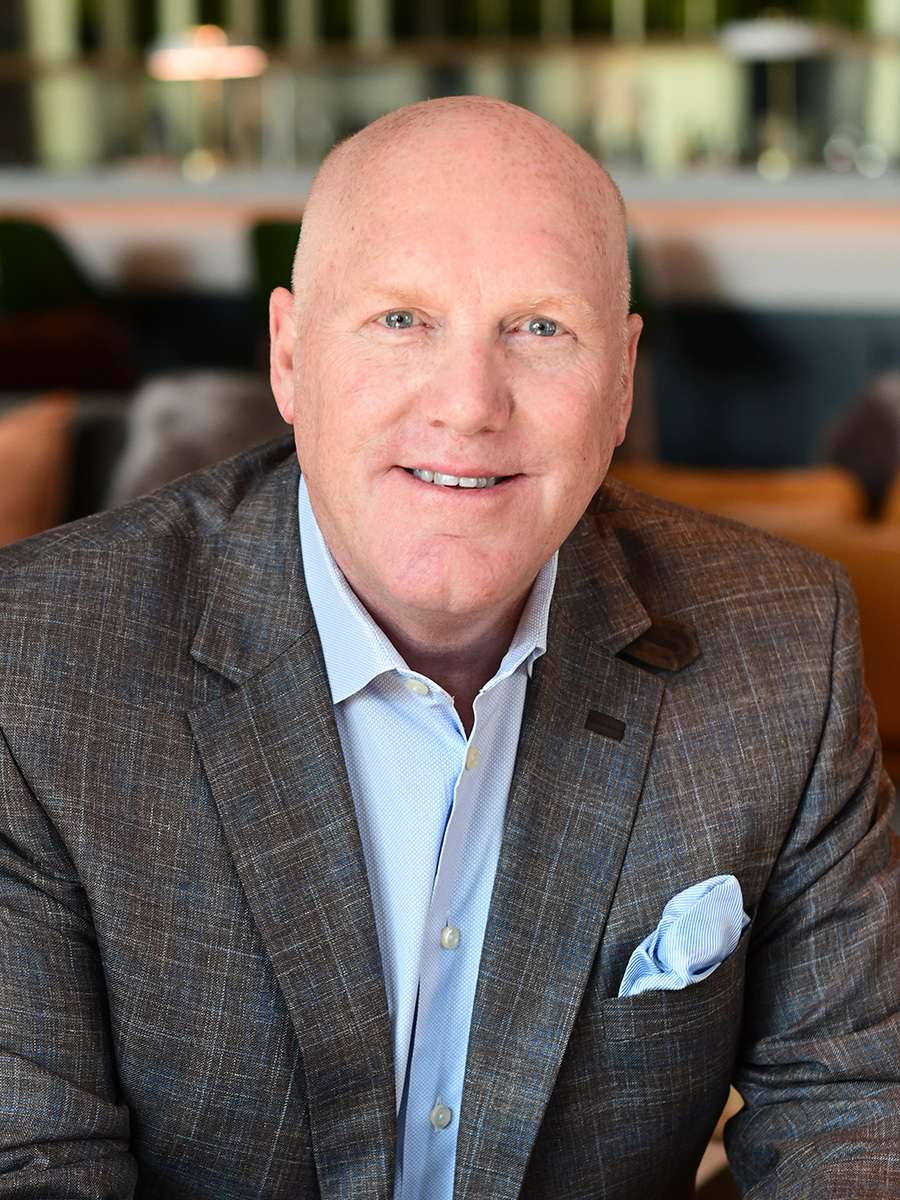
We were done with the pandemic, but the pandemic wasn't done with us. While for some 2022 would be a rebound year, for others the lights were going out and the curtain was closing. When the late Lee Knight, the founder of Exhibitor Media Group, was preparing to exit the business, Mark Johnson, the CEO of STAR Exhibits & Environments stepped in and bought the company. More than a purchase, it was a lifeline that kept what had become a singular institution going.
Now four years later, Johnson is turning the reins of Exhibitor Group over to the International Association of Exhibitions and Events (IAEE), in what the latter called a “bold strategic move.” As a new era now begins, we sat down with STAR owner Mark Johnson to reflect on what acquiring the company meant and why it was time to let it go.
EXHIBITOR Magazine: What was the biggest problem you were trying to solve by acquiring Exhibitor Group in 2022?
Mark Johnson: Honestly, when we stepped in during 2022, it felt less like a business decision and more like a responsibility. The industry had just gone through an incredibly difficult period, losing by some measures almost 80 percent of its worth. Events stopped, companies struggled, careers were disrupted, and there was a real possibility that an important industry voice like Exhibitor could simply disappear.
For me, that was bigger than a balance sheet. Exhibitor has helped shape careers, educate professionals, and connect our community for decades. Losing that platform would have meant losing a piece of our industry's collective memory and future. So the immediate goal was preservation — keeping something meaningful alive. But beyond that, it was about making sure the industry still had a place where professionals could learn, connect, and grow together.
EM: Back then you stressed that your priority as Exhibitor Group's new owner was to honor the 40-plus-year legacy of the brand. What were the most important guardrails you put in place to protect that legacy?
MJ: The biggest guardrail was trust. Exhibitor has always been respected because it serves the whole industry, not any one company, including mine.
We were very conscious about protecting editorial independence, maintaining the educational focus, and honoring the community that had grown around EXHIBITORLIVE and CTSM. I didn't want to impose change just because we could. I wanted to understand what people valued most and make sure those things stayed intact.
What people valued didn't surprise me. How much they valued these things touched me deeply. Their commitment to the exhibiting community was amazingly strong. Their desire to keep that community whole showed what kind of catalyst Exhibitor had been for them. CTSM and the esteem in which they held their education was incredible. CTSM and education meant a future to them, one they could shape by their own hand.
EM: When it came to taking on Exhibitor, what were the known unknowns and what were the unknown unknowns to you?
MJ: There were plenty of known business unknowns — attendance recovery, advertising confidence, and corporate marketing budgets. Those were expected.
I'd say the emotional and cultural shifts were the unknown unknowns. What surprised me the most was the way people came back to events with a renewed appreciation for human connection. They valued education differently. They wanted community more than ever. In many ways, the pandemic reminded us why this industry exists in the first place: to bring people together in meaningful ways.
EM: What do you think changed most about Exhibitor Group on your watch? What are you proudest of?
MJ: I'm probably proudest of how much we listened. That sounds simple, but it takes discipline to really hear what your community is telling you.
One example that was telling concerns the last EXHIBITORLIVE in Las Vegas right after we purchased the company. Because the show was held later than usual in summer, to turn it around for the customary February or March show would have been difficult. We thought it was better to take stock and reload, and plan it appropriately.
Well, that was the plan. I remember working the show floor in Vegas and everybody — everybody — wanted us to do the show right away again. I should actually say “demanding” and I understood why. With COVID, everybody had been put on hold, and taking a longer break between shows would have put them on hold yet again. So many exhibitors told me “You can't pause. We need the education. We need the show.” And so we went on blindly, on faith that we're serving the community, that it would work out. And it did.
One thing we heard consistently was a desire to experience EXHIBITORLIVE in different locations. People wanted fresh environments, new accessibility, and the energy that comes from change. Moving the show to different cities — we've held it in Louisville, Nashville, San Antonio, now Tampa, and next year in Denver — allowed more professionals to participate and experience new venues firsthand. The feedback has been incredibly encouraging — our surveys reflected strong appreciation for the locations and the renewed momentum those changes created.
We also heard loud and clear that the CTSM certification remained highly valued, but professionals needed a pathway that fit today's faster pace of business. By working closely with educators and advisors, we were able to redesign elements of the program and create the opportunity to cut the completion time roughly in half without compromising its integrity.
Beyond those specific changes, what I'm proudest of is that we preserved stability during a time of uncertainty. We kept the magazine strong, continued investing in education, protected the community, and positioned the platform for the future. Most of all, I'm proud that we treated Exhibitor as something bigger than ourselves — because it is.
EM: Along the way you recognized Exhibitor needed a dedicated owner to fully realize its potential as your own experiential business continued to grow. What was the tipping point where you concluded that IAEE, rather than STAR, was the right long-term home for it now?
MJ: From the beginning, I viewed it as stewardship. STAR stepped in because the industry needed stability at that moment.
As time went on, it became clear that IAEE's mission, global reach, advocacy strength, and research capabilities made them uniquely positioned to carry Exhibitor forward long term. They bring resources and perspective that can amplify what Exhibitor already does well. At some point, leadership means recognizing when something you care about will thrive even more in a broader ecosystem. That's how this decision ultimately felt.
EM: IAEE has talked about this acquisition as a way to bridge organizers and exhibitors who have traditionally operated in separate spheres. From your vantage point, what specific disconnects between those communities convinced you that a combined IAEE-Exhibitor platform could actually bring the two closer together?
MJ: I've lived on both sides of the industry, working with organizers while also supporting exhibitors and brands. I've seen firsthand how those groups sometimes operate separately, occasionally to their detriment, even though they ultimately depend on each other.
Exhibitors care deeply about ROI, engagement, and brand experience. Organizers focus on attendance, logistics, and event sustainability. When those perspectives align, events are stronger. Bringing IAEE and Exhibitor together creates an opportunity for more shared understanding, better research, and stronger collaboration. That's good for everyone, including attendees.
EM: How do you hope your stewardship is viewed in 10 years?
MJ: Honestly, I hope people say we did the right thing. That when the platform was vulnerable, we stepped in. That we preserved it thoughtfully. And that we ultimately placed it where it could continue growing and serving the industry long after we were involved.
If people continue building careers through Exhibitor, if the community stays strong, and if the industry benefits from it, that's what matters most to me. Sometimes leadership isn't about building something new. It's about protecting something meaningful and making sure it has a future.

Editorial
Measuring Meaning
CES revealed that what we value in theory doesn't always make it to the show floor.
Exhibitor Q & A
Lead Qualifying
How can I evaluate an attendee to determine if they're a qualified lead or just after the swag?
Ask Dan
Gen Z
The traditional annual review model seems like it doesn't work for Gen Z. How should I adapt it?
Advertorial
Modular Frames in 55 or 62?
That's Not the Question.
Exhibiting 101
Budgeting for Chaos
Costs swing, labor teams get behind, fees balloon. If you don't budget for surprises, your budget is already blown.
Fuel
Ideas That Work
Air Hockey, Fated Meetings, A Fish Tale, and More
Products
New Tools
Three Can't-Miss Product Launches
Conventional Wisdom
Fira Barcelona Gran Via
Gran Via is one of Europe's most capable large-scale exhibition venues
Fixing Snafus
Dog-gone It!
When a dog mistook a runway model for a fire hydrant, the team had to engineer a quick costume change
Archive
Reign Check
1924 -1925: A pair of queens stroll through streets at the British Empire Exhibition named by Rudyard Kipling.
Exhibit Design
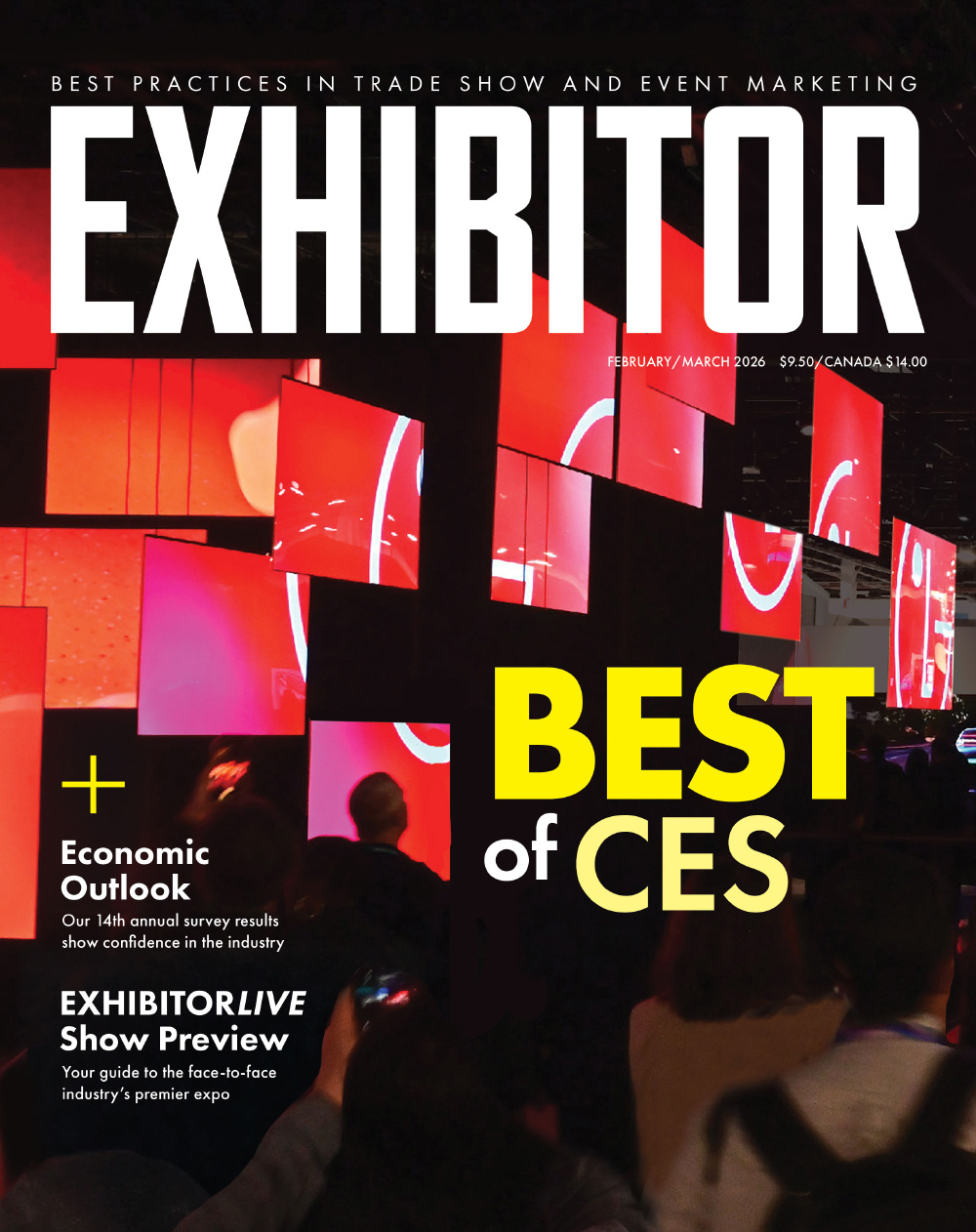
The Best of CES 2026
The exhibitors in our annual list stood apart from the crowd of more than 4,000 booths
Research
Economic Outlook
Our 2026 survey shows that the industry continues to hold the course as it steers through economic headwinds
Quiz
Measure Seekers
Do you know your CVL from your CTR, or do measurement acronyms deliver a TKO?
City Profile
Get Out! Barcelona, Spain
In Barcelona, history and modernity share space with a sensual energy that delivers inspiration around every corner.
Networking
Beyond the Bar
If the only thing keeping your networking event lively is an open bar, it's time to sober up.
Reflections
The Next Chapter
Mark Johnson reflects on IAEE's acquisition of Exhibitor Group.
Trends
Five Conference Trends from PCMA
Five trends conference producers need to understand.