Five Conference Trends from PCMA
By: Jessica Levco
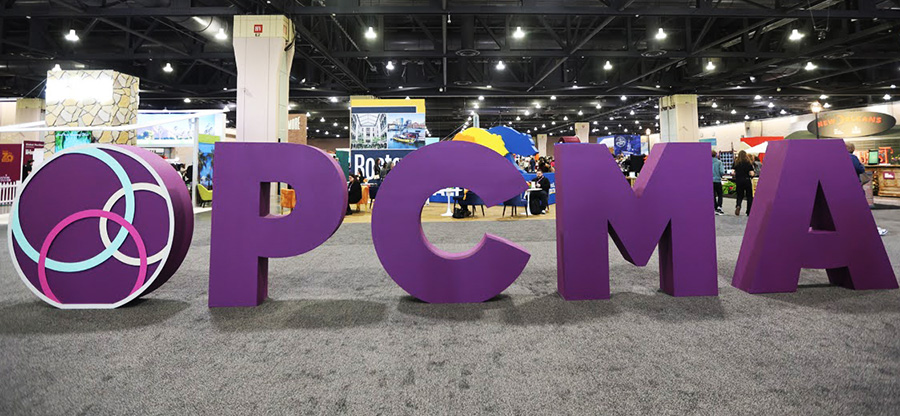
Each January, thousands of meeting professionals attend PCMA Convening Leaders to kick off the conference calendar. This year's gathering in Philadelphia brought more than 4,000 attendees from 40 countries to the Pennsylvania Convention Center, coinciding with PCMA's 70th anniversary and the city's role as the centerpiece of America's Semiquincentennial celebration. Between keynotes on global economic shifts and booths serving make-your-own hot toddies, several themes emerged about what's working (and what's not) in the conference industry. Based on conversations with attendees and observations from the show floor, here are five trends conference producers need to understand.
Global Frictions, Local Decisions: How Geopolitics Will Shape Your Next Event
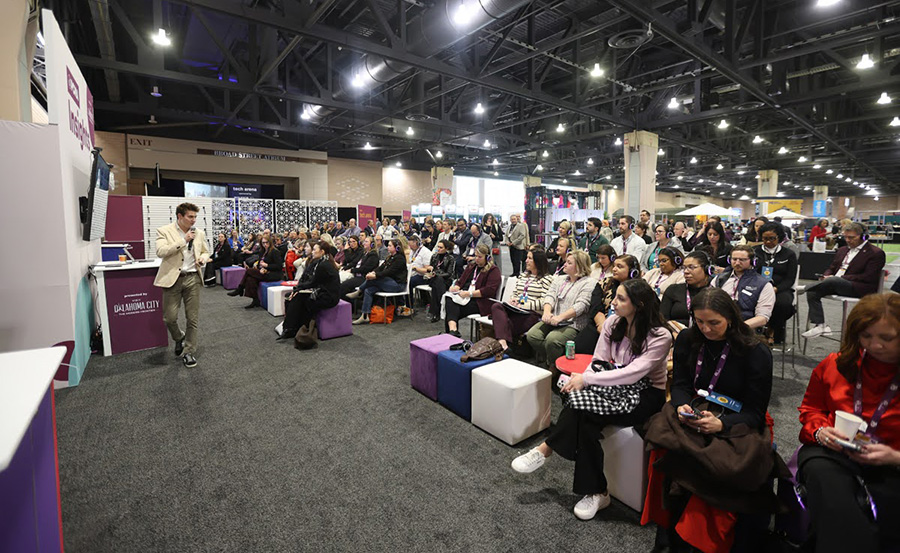
This is a heavy one, but let's dive in. Keynote speaker, Zanny Minton Beddoes, Economist editor-in-chief, gave attendees a crash course in today's economic outlook. She focused on three major shocks — geopolitical shifts, economic transformations, and AI.
“You can't separate economics from geopolitics from technology,” Minton Beddoes says. “You can't have a siloed approach in this world. You can't think of one industry alone. You need to think about how geopolitics affects the industry — and how economic changes and tech changes do, too.”
The international system based on rules, norms, and U.S. leadership that has existed since World War II has fundamentally collapsed within the past year, Beddoes says. In its place is a more unpredictable and power-based approach to global relations. Amid this disruption, she reminded conference producers of their purpose to build spaces where people can connect and engage in difficult conversations.
“For those of you whose job is to bring people together, it is easy to be scared,” Minton Beddoes says. “It's easy to not have the controversial and difficult conversations. But actually, it's more important now than ever that we have those conversations.”
Lori Marvel, manager of global accounts at HelmsBriscoe, a Scottsdale, Arizona, company that matches meeting planners with venues, says the presentation encouraged her to pay even more attention to the global news cycle. “The global outlook is full of change and uncertainty,” Marvel says. “Zanny's session was a good reminder for all of us to keep up with what's happening in the world.”
For P. Brian Tennyson, principal at LMN Architects, the conference struck a balance between optimism and realism. LMN has designed 70 convention center projects, from Canada to Cleveland, which gives Tennyson perspective on the industry. He's attended PCMA events since 2016, and says this year's mood felt enthusiastic about event growth. However, a session he attended, “Convene Meeting Trends: What's Changing — and What's Possible,” highlighted barriers that keep people from showing up to events. “Based on what I learned during the session, there are many success stories and situations where attendees don't have issues traveling to events, but there are also occurrences where things are not going right due to border crossing concerns or funding cuts for public sector attendees,” Tennyson says.
The current political upheaval makes The Great White North shine even brighter as a premier global destination. That's the message Team Canada, the collective name for the network of destination marketing organizations, tourism, and hospitality partners led by Destination Canada, brought to the event.
“Our proximity to the U.S., combined with strong sustainability credentials, a globally connected research community and facilitative trade and visa frameworks, makes Canada a natural partner for organizations ready to scale their events internationally,” says Virginie De Visscher, executive director, business events, Destination Canada. “After a period of regional focus, many business events producers — particularly in the U.S.— are looking to re-engage globally to reach new markets, audiences and sources of thought leadership.”
Localize, Localize, Localize
Whether your conference is in the United States or at an international locale, remember: Your CVB contact should be your BFF. Their intimate local knowledge is the answer to interchangeable conference venues that often have the same carpet patterns, same overhead lighting, same coffee.
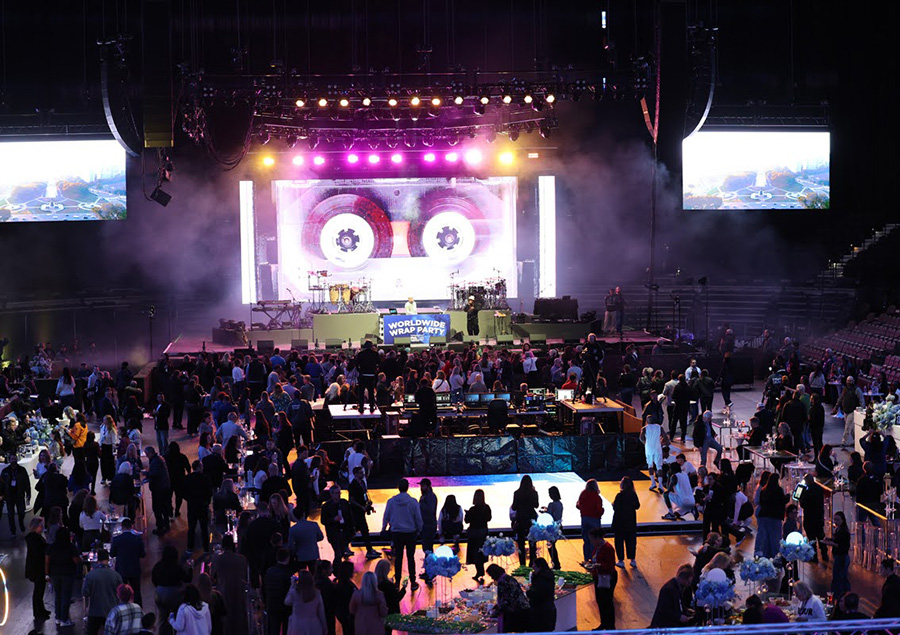
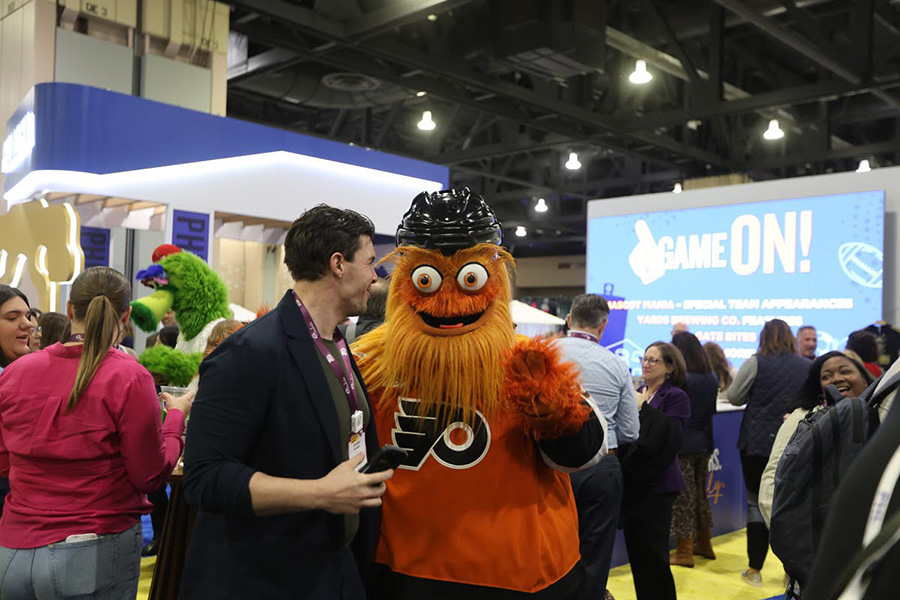
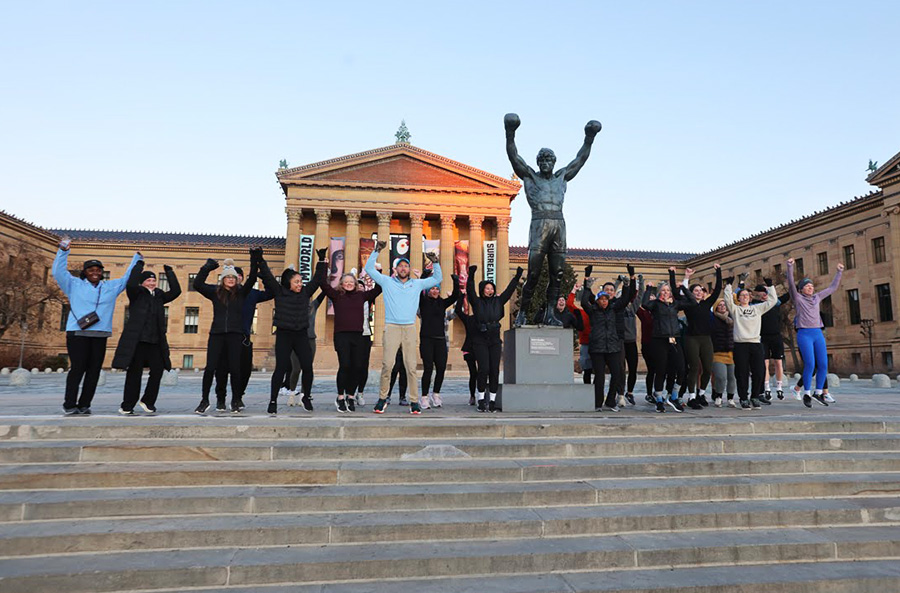
Don't be afraid to incorporate some city flair. Give attendees a sense of place. Make them feel like they're on vacation in that particular city, not just stuck inside all day at a hotel or convention center. For example, PCMA offered multiple opportunities to explore its host city of Philadelphia, from a sightseeing bus tour to a group run up The Rocky Steps. Over at The District (the central brand activation area within PCMA), all five major Philly mascots (Phang, Swoop, the Phanatic, Gritty, and Franklin) made an appearance at the Philadelphia Convention & Visitors Bureau Booth. The warm welcome continued with booths from the Philadelphia Convention & Visitors Bureau at each room-blocked hotel, along with a welcome to Philly speech from Mayor Cherelle L. Parker, which netted some local media coverage. DJ Jazzy Jeff (who was born in Philadelphia) and Pitbull capped off the event at the Worldwide Wrap Party at Xfinity Mobile Arena.
Booths Should Move People, Not Just Products
With so many exhibit booths to visit, the ones that create an experience are the ones that attendees remember (and share about on social media). Want a tour of The District? Here's what was going on: Make-your-own hot toddy (Louisville Tourism), a gourmet salt station (Visit Salt Lake) and charm bracelets (Visit Baltimore). A signature scent lab, from Safe Expo LLC on behalf of Marriott International. Pinnacle Live partnered with My Colors Pop for a “Color Lab” activation where attendees got a one-on-one consultation about which color palettes best matched their skin, hair, and eyes. Wait! There's more! Montreal Business Events worked with Les Cabinets to turn The District's main bathroom into upscale retreats: complete with scented hand products, styling essentials, dental care, and personal grooming supplies. Regional food galore (Visit Milwaukee cooked up a live bratwurst demo with celebrity chef, Adam Pawlak), a puppy park (Fit City Adventures), and numerous specialty drinks (café au lait with coconut from Discover Puerto Rico and/or golden hour latte from Visit California, anyone?)
Less Hassle, More Hello
Attendees are showing up to conferences more stressed and distracted than ever. Conference producers are responding by redesigning the entire experience to make it easier from beginning to end. Kate Southall, director of event experience and partnerships at SHRM, says what stood out to her was how many speakers emphasized removing friction from the attendee experience. From registration and planning their trip, to how content and networking are accessed onsite, going to a conference should be a seamless experience. “People are arriving at events carrying more stress, distraction and fatigue than ever before,” Southall says. “In-person convenings can be a counterbalance to that — an opportunity for a shared experience and connection. Rather than just delivering content, conferences are being positioned as places to restore a sense of belonging and perspective.”
PCMA provided several opportunities for attendees to connect that felt easy and natural, but which were purposely devised to help people meet each other. Beth Surmont, the head of strategy and design at 360 Live, and co-leader of the session, “The Pressure-Proof Event: Building Participant Ease from First Touch to Final Follow-up,” shared a few examples of how PCMA made networking easier:
▶ Activities galore: PCMA had special events, like an offsite volunteer project, puppy yoga and a soundbath (a meditative experience where participants lie down and are immersed in sound waves from instruments like gongs, tuning forks, and chimes ). “When the primary value proposition is connecting with like-minded people, self-select activities are great ways to find new relationships,” Surmont says.
▶ Conversation Starter Sessions: PCMA has hosted these small-group discussions for several years. “Instead of a speaker, it's a facilitated conversation with other participants who are curious about the same challenges that you are having,” Surmont says.
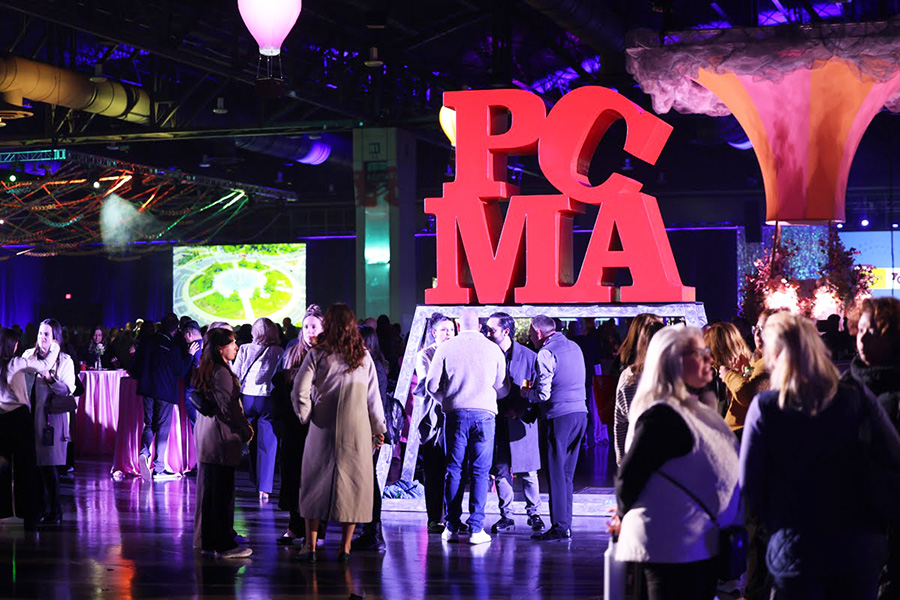
▶ The District: Surmont says The District has taken many forms over the years, and it is at its best when it becomes a central hub of activity. “With content, meals, activations, and more, The District felt like it was intentionally designed as a collision space for people to run into each other,” Surmont says.
Welcome Every Brain
Inclusive event design starts with understanding that not every brain experiences a conference the same way. Lori MacNett, senior project manager at Informa Connect, says it was important for her to learn about ways to make her company's events more welcoming for all. “Neurodiverse people are the canary in the coal mine,” MacNett says. “If they are feeling overwhelmed and overstimulated, chances are the rest of your attendees will soon be feeling the same way.”
At PCMA, MacNett learned about “satellite rooms,” any area outside the main stage where attendees can consume content with lower stimulation. It could be an overflow room with dimmed lights and lower sound levels, a dedicated space with secondary screens or even just a quiet section where people can watch the livestream on their personal devices. The rooms serve dual purposes: they're an accessibility feature for neurodivergent attendees and a practical solution for overcrowding at popular sessions.
More to Manage, More to Master
PCMA made it clear that conference producers are managing more tasks than ever before. Geopolitical instability is forcing producers to think harder about where they hold events and who can attend them. Conference producers need to encourage vendors and sponsors to create booths that offer memorable, Instagram-worthy experiences. They also have to rethink how attendees connect, by removing friction from registration to creating like-minded networking events. Inclusive design is becoming standard practice, with features serving neurodivergent attendees and anyone who needs a break from sensory overload. The message: successful conferences in 2026 require strategic thinking about location, deliberate design for connection and creating environments where different brains and bodies can thrive. E
Global Frictions, Local Decisions: How Geopolitics Will Shape Your Next Event
This is a heavy one, but let's dive in. Keynote speaker, Zanny Minton Beddoes, Economist editor-in-chief, gave attendees a crash course in today's economic outlook. She focused on three major shocks — geopolitical shifts, economic transformations, and AI.
“You can't separate economics from geopolitics from technology,” Minton Beddoes says. “You can't have a siloed approach in this world. You can't think of one industry alone. You need to think about how geopolitics affects the industry — and how economic changes and tech changes do, too.”
The international system based on rules, norms, and U.S. leadership that has existed since World War II has fundamentally collapsed within the past year, Beddoes says. In its place is a more unpredictable and power-based approach to global relations. Amid this disruption, she reminded conference producers of their purpose to build spaces where people can connect and engage in difficult conversations.
“For those of you whose job is to bring people together, it is easy to be scared,” Minton Beddoes says. “It's easy to not have the controversial and difficult conversations. But actually, it's more important now than ever that we have those conversations.”
Lori Marvel, manager of global accounts at HelmsBriscoe, a Scottsdale, Arizona, company that matches meeting planners with venues, says the presentation encouraged her to pay even more attention to the global news cycle. “The global outlook is full of change and uncertainty,” Marvel says. “Zanny's session was a good reminder for all of us to keep up with what's happening in the world.”
For P. Brian Tennyson, principal at LMN Architects, the conference struck a balance between optimism and realism. LMN has designed 70 convention center projects, from Canada to Cleveland, which gives Tennyson perspective on the industry. He's attended PCMA events since 2016, and says this year's mood felt enthusiastic about event growth. However, a session he attended, “Convene Meeting Trends: What's Changing — and What's Possible,” highlighted barriers that keep people from showing up to events. “Based on what I learned during the session, there are many success stories and situations where attendees don't have issues traveling to events, but there are also occurrences where things are not going right due to border crossing concerns or funding cuts for public sector attendees,” Tennyson says.
The current political upheaval makes The Great White North shine even brighter as a premier global destination. That's the message Team Canada, the collective name for the network of destination marketing organizations, tourism, and hospitality partners led by Destination Canada, brought to the event.
“Our proximity to the U.S., combined with strong sustainability credentials, a globally connected research community and facilitative trade and visa frameworks, makes Canada a natural partner for organizations ready to scale their events internationally,” says Virginie De Visscher, executive director, business events, Destination Canada. “After a period of regional focus, many business events producers — particularly in the U.S.— are looking to re-engage globally to reach new markets, audiences and sources of thought leadership.”
Localize, Localize, Localize
Whether your conference is in the United States or at an international locale, remember: Your CVB contact should be your BFF. Their intimate local knowledge is the answer to interchangeable conference venues that often have the same carpet patterns, same overhead lighting, same coffee.
Don't be afraid to incorporate some city flair. Give attendees a sense of place. Make them feel like they're on vacation in that particular city, not just stuck inside all day at a hotel or convention center. For example, PCMA offered multiple opportunities to explore its host city of Philadelphia, from a sightseeing bus tour to a group run up The Rocky Steps. Over at The District (the central brand activation area within PCMA), all five major Philly mascots (Phang, Swoop, the Phanatic, Gritty, and Franklin) made an appearance at the Philadelphia Convention & Visitors Bureau Booth. The warm welcome continued with booths from the Philadelphia Convention & Visitors Bureau at each room-blocked hotel, along with a welcome to Philly speech from Mayor Cherelle L. Parker, which netted some local media coverage. DJ Jazzy Jeff (who was born in Philadelphia) and Pitbull capped off the event at the Worldwide Wrap Party at Xfinity Mobile Arena.
Booths Should Move People, Not Just Products
With so many exhibit booths to visit, the ones that create an experience are the ones that attendees remember (and share about on social media). Want a tour of The District? Here's what was going on: Make-your-own hot toddy (Louisville Tourism), a gourmet salt station (Visit Salt Lake) and charm bracelets (Visit Baltimore). A signature scent lab, from Safe Expo LLC on behalf of Marriott International. Pinnacle Live partnered with My Colors Pop for a “Color Lab” activation where attendees got a one-on-one consultation about which color palettes best matched their skin, hair, and eyes. Wait! There's more! Montreal Business Events worked with Les Cabinets to turn The District's main bathroom into upscale retreats: complete with scented hand products, styling essentials, dental care, and personal grooming supplies. Regional food galore (Visit Milwaukee cooked up a live bratwurst demo with celebrity chef, Adam Pawlak), a puppy park (Fit City Adventures), and numerous specialty drinks (café au lait with coconut from Discover Puerto Rico and/or golden hour latte from Visit California, anyone?)
Less Hassle, More Hello
Attendees are showing up to conferences more stressed and distracted than ever. Conference producers are responding by redesigning the entire experience to make it easier from beginning to end. Kate Southall, director of event experience and partnerships at SHRM, says what stood out to her was how many speakers emphasized removing friction from the attendee experience. From registration and planning their trip, to how content and networking are accessed onsite, going to a conference should be a seamless experience. “People are arriving at events carrying more stress, distraction and fatigue than ever before,” Southall says. “In-person convenings can be a counterbalance to that — an opportunity for a shared experience and connection. Rather than just delivering content, conferences are being positioned as places to restore a sense of belonging and perspective.”
PCMA provided several opportunities for attendees to connect that felt easy and natural, but which were purposely devised to help people meet each other. Beth Surmont, the head of strategy and design at 360 Live, and co-leader of the session, “The Pressure-Proof Event: Building Participant Ease from First Touch to Final Follow-up,” shared a few examples of how PCMA made networking easier:
▶ Activities galore: PCMA had special events, like an offsite volunteer project, puppy yoga and a soundbath (a meditative experience where participants lie down and are immersed in sound waves from instruments like gongs, tuning forks, and chimes ). “When the primary value proposition is connecting with like-minded people, self-select activities are great ways to find new relationships,” Surmont says.
▶ Conversation Starter Sessions: PCMA has hosted these small-group discussions for several years. “Instead of a speaker, it's a facilitated conversation with other participants who are curious about the same challenges that you are having,” Surmont says.
▶ The District: Surmont says The District has taken many forms over the years, and it is at its best when it becomes a central hub of activity. “With content, meals, activations, and more, The District felt like it was intentionally designed as a collision space for people to run into each other,” Surmont says.
Welcome Every Brain
Inclusive event design starts with understanding that not every brain experiences a conference the same way. Lori MacNett, senior project manager at Informa Connect, says it was important for her to learn about ways to make her company's events more welcoming for all. “Neurodiverse people are the canary in the coal mine,” MacNett says. “If they are feeling overwhelmed and overstimulated, chances are the rest of your attendees will soon be feeling the same way.”
At PCMA, MacNett learned about “satellite rooms,” any area outside the main stage where attendees can consume content with lower stimulation. It could be an overflow room with dimmed lights and lower sound levels, a dedicated space with secondary screens or even just a quiet section where people can watch the livestream on their personal devices. The rooms serve dual purposes: they're an accessibility feature for neurodivergent attendees and a practical solution for overcrowding at popular sessions.
More to Manage, More to Master
PCMA made it clear that conference producers are managing more tasks than ever before. Geopolitical instability is forcing producers to think harder about where they hold events and who can attend them. Conference producers need to encourage vendors and sponsors to create booths that offer memorable, Instagram-worthy experiences. They also have to rethink how attendees connect, by removing friction from registration to creating like-minded networking events. Inclusive design is becoming standard practice, with features serving neurodivergent attendees and anyone who needs a break from sensory overload. The message: successful conferences in 2026 require strategic thinking about location, deliberate design for connection and creating environments where different brains and bodies can thrive. E

Editorial
Measuring Meaning
CES revealed that what we value in theory doesn't always make it to the show floor.
Exhibitor Q & A
Lead Qualifying
How can I evaluate an attendee to determine if they're a qualified lead or just after the swag?
Ask Dan
Gen Z
The traditional annual review model seems like it doesn't work for Gen Z. How should I adapt it?
Advertorial
Modular Frames in 55 or 62?
That's Not the Question.
Exhibiting 101
Budgeting for Chaos
Costs swing, labor teams get behind, fees balloon. If you don't budget for surprises, your budget is already blown.
Fuel
Ideas That Work
Air Hockey, Fated Meetings, A Fish Tale, and More
Products
New Tools
Three Can't-Miss Product Launches
Conventional Wisdom
Fira Barcelona Gran Via
Gran Via is one of Europe's most capable large-scale exhibition venues
Fixing Snafus
Dog-gone It!
When a dog mistook a runway model for a fire hydrant, the team had to engineer a quick costume change
Archive
Reign Check
1924 -1925: A pair of queens stroll through streets at the British Empire Exhibition named by Rudyard Kipling.
Exhibit Design
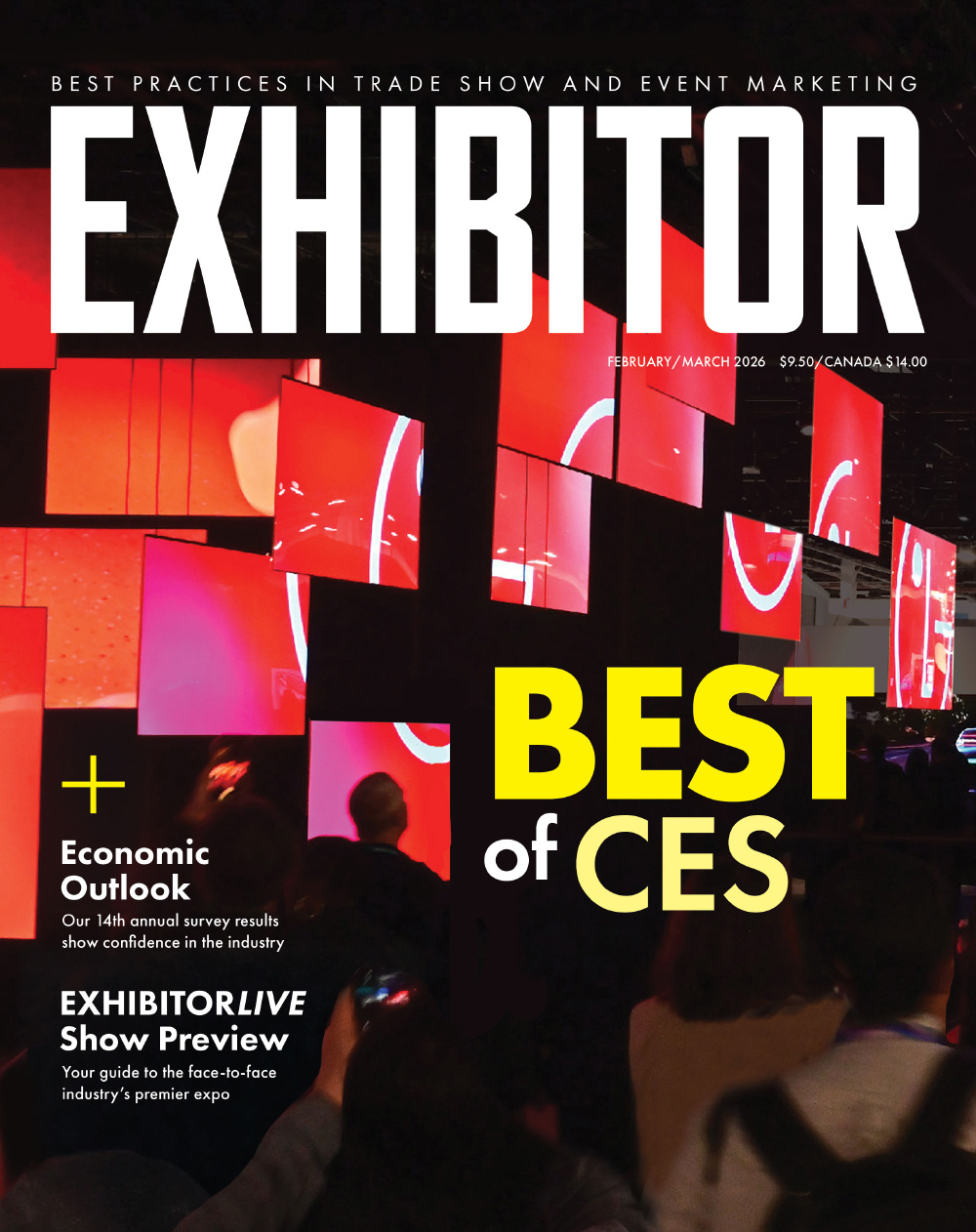
The Best of CES 2026
The exhibitors in our annual list stood apart from the crowd of more than 4,000 booths
Research
Economic Outlook
Our 2026 survey shows that the industry continues to hold the course as it steers through economic headwinds
Quiz
Measure Seekers
Do you know your CVL from your CTR, or do measurement acronyms deliver a TKO?
City Profile
Get Out! Barcelona, Spain
In Barcelona, history and modernity share space with a sensual energy that delivers inspiration around every corner.
Networking
Beyond the Bar
If the only thing keeping your networking event lively is an open bar, it's time to sober up.
Reflections
The Next Chapter
Mark Johnson reflects on IAEE's acquisition of Exhibitor Group.
Trends
Five Conference Trends from PCMA
Five trends conference producers need to understand.